
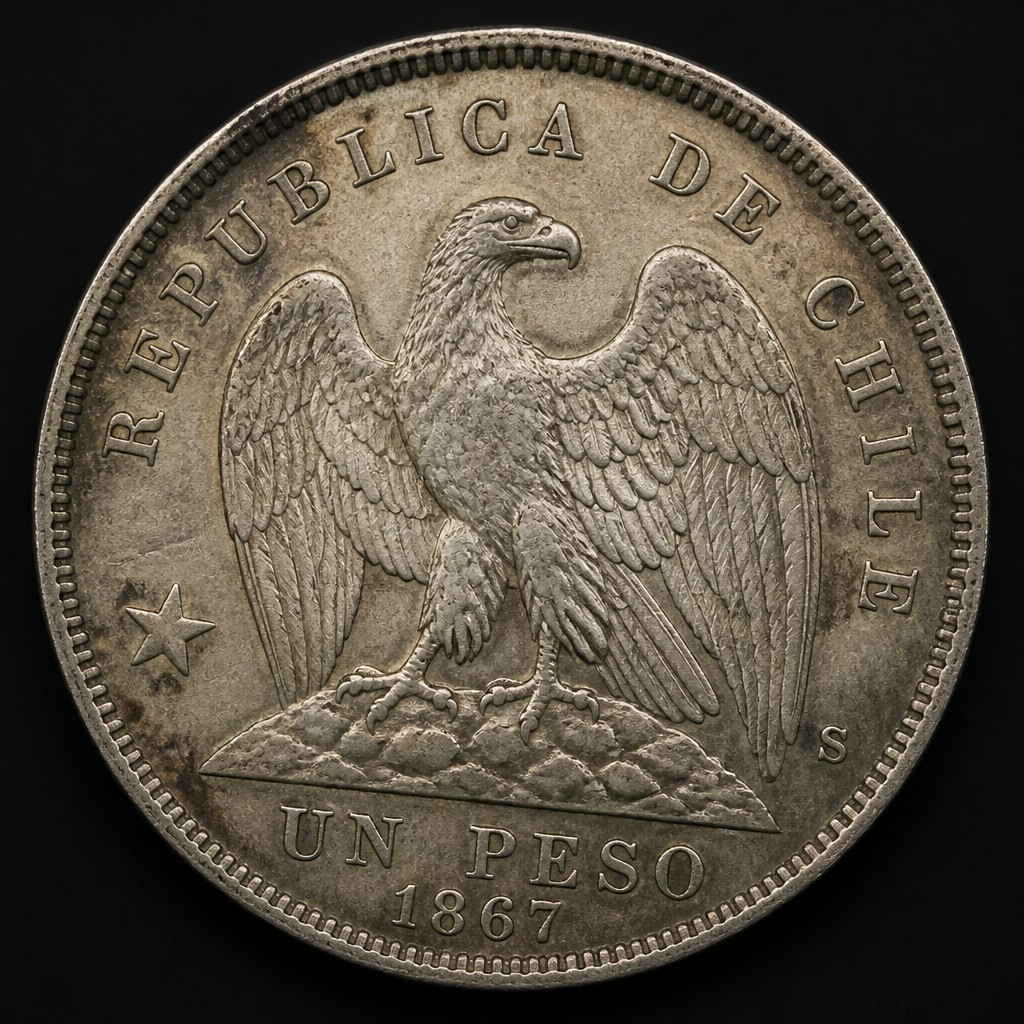
Chilean Peso Silver 'Condor'
Chile's standard silver peso coin, nicknamed the "condor" for the great Andean bird featured as a supporter on the national coat of arms depicted on the coin.
- Country
- Chile
- Denomination
- 1 Peso
- Metal
- Silver, .900 fine (fineness reduced in later issues)
Got a coin like this?
Identify any coin from a photo, free.
Overview
The Chilean silver peso was the backbone of Chile's decimal coinage system introduced in the 1860s, replacing older Spanish colonial-based denominations. Its popular nickname, the "condor," refers to the Andean condor that appears as one of the heraldic supporters of the Chilean coat of arms on the coin's design, a bird deeply tied to Chilean national identity.
Over its long production run the peso underwent various weight and fineness adjustments in response to Chile's silver market conditions and monetary policy, making it a coin with numerous recognizable sub-types for specialists, while remaining broadly familiar in general design across the decades.
History & Background
Chile adopted a decimal currency system in 1851 based on the peso, and by the 1860s and 1870s was striking a full range of silver decimal coins including the one peso piece at the Santiago mint. The condor and huemul deer supporting the national shield, both native Chilean symbols, gave the coin its enduring popular name.
As global silver prices fluctuated in the late 19th century, Chile periodically adjusted the silver peso's weight and fineness, and eventually reduced silver coinage in favor of gold-based and later fiduciary currency reforms in the 20th century, gradually diminishing the role of the large silver peso in everyday circulation.
How to Identify
The obverse of the classic type displays the Chilean coat of arms, a shield flanked by a huemul (Andean deer) and a condor, surmounted by a five-pointed star, with the national motto "POR LA RAZÓN O LA FUERZA" often appearing on a ribbon beneath. The reverse shows the denomination within a wreath along with the date and mint mark.
Diameter and weight vary somewhat by sub-type and era as Chile's silver standard was revised over time, so identifying the specific date range requires comparing the coin's exact dimensions and edge treatment (typically reeded) against a reference catalog. The Santiago mint mark generally appears alongside an assayer's initial on earlier issues.
Because the condor and huemul design was used across a long span with only incremental changes, distinguishing early higher-fineness pesos from later, more debased issues largely comes down to date and careful weight comparison rather than obvious stylistic differences.
Value & Collectibility
Common worn examples of the Chilean silver peso are generally inexpensive and readily available to collectors, trading not far above silver melt value, while well-struck, high-grade examples and scarcer early dates can bring meaningfully higher prices.
As with most widely circulated 19th and early 20th century silver coins, condition and date rarity are the chief value drivers, with exceptional uncirculated survivors of any date commanding a real premium over the run-of-the-mill circulated pieces that make up most of the surviving population.
Frequently asked questions
Why is the coin called a "condor"?
The nickname comes from the Andean condor depicted as a supporter on the Chilean coat of arms shown on the coin.
What other animal appears on the coin?
A huemul, a native Andean deer, appears on the other side of the shield opposite the condor.
Is this the same as the later gold Condor coins?
No, this is the silver one peso circulating coin; Chile separately issued gold coins in denominations like 20, 50, and 100 pesos that are also sometimes called condors.
Did the silver content change over time?
Yes, Chile periodically adjusted the peso's weight and fineness in response to silver market conditions during the late 19th and early 20th centuries.
Other coins you may enjoy
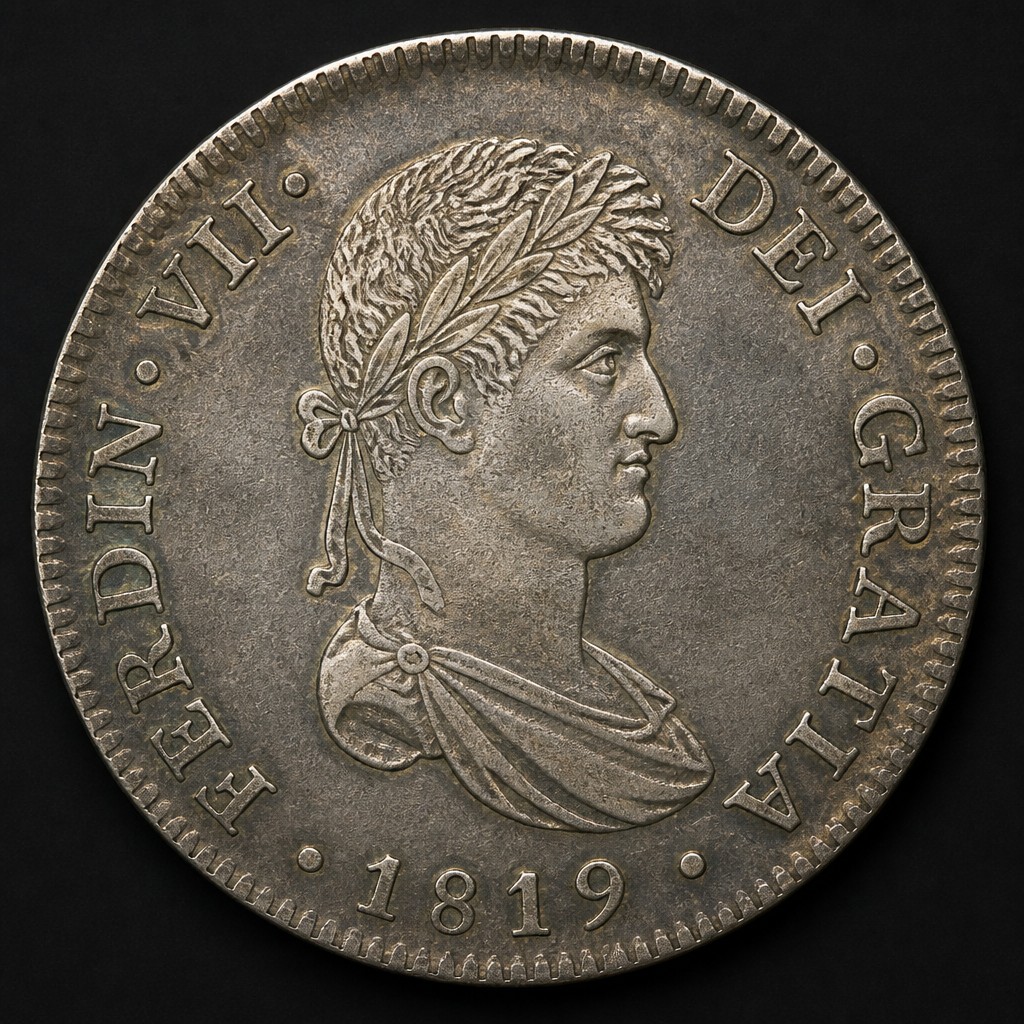
Colombia 8 Reales
Colonial issues through late 18th/early 19th century; republican issues 1820s–1830s
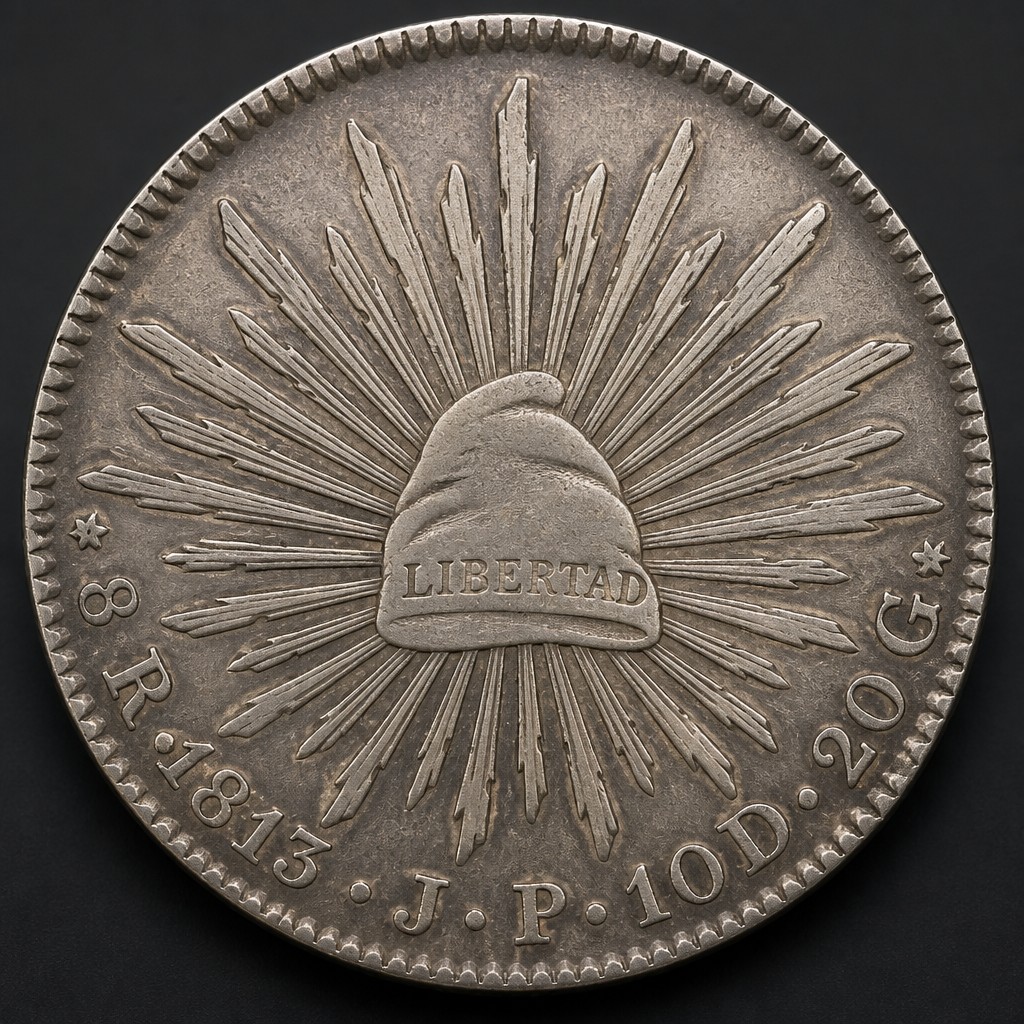
Argentina 8 Reales
c. 1813–1836
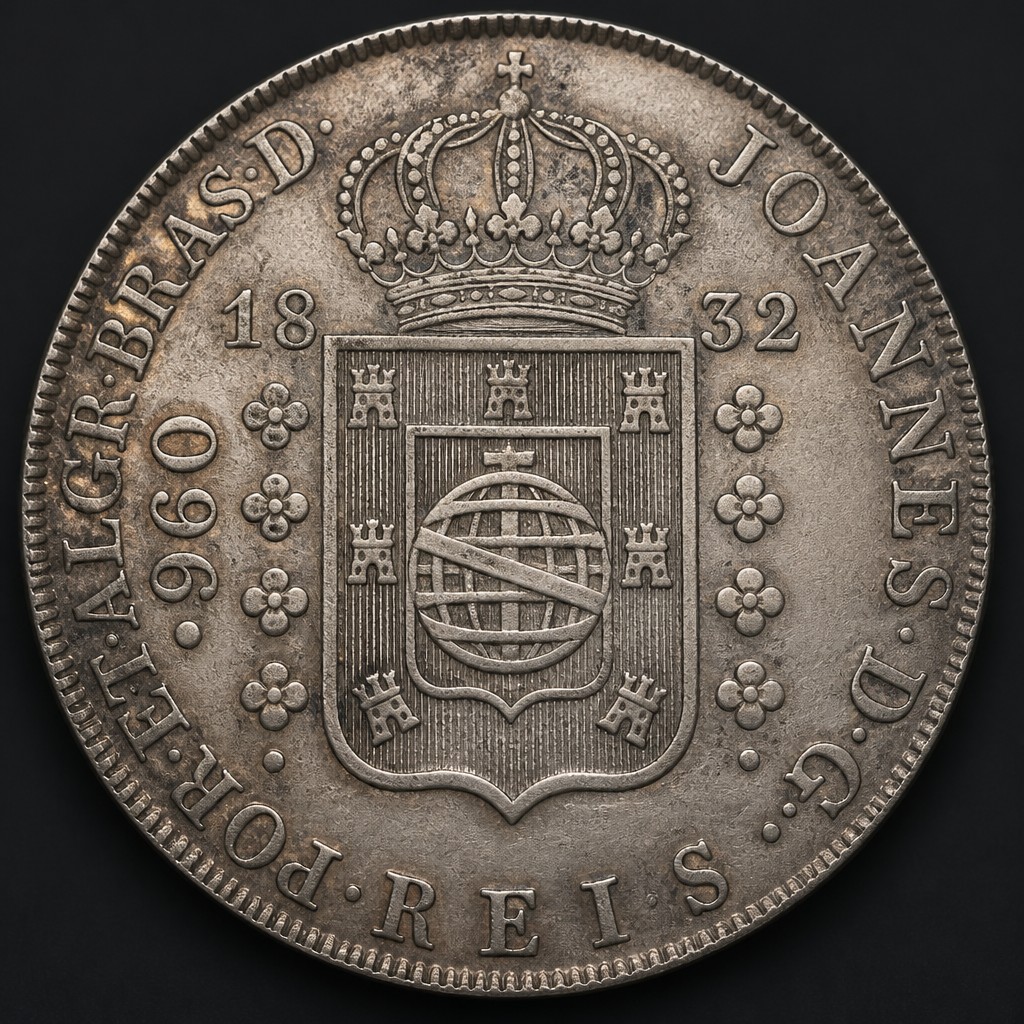
Brazil 960 Reis
1809–1832
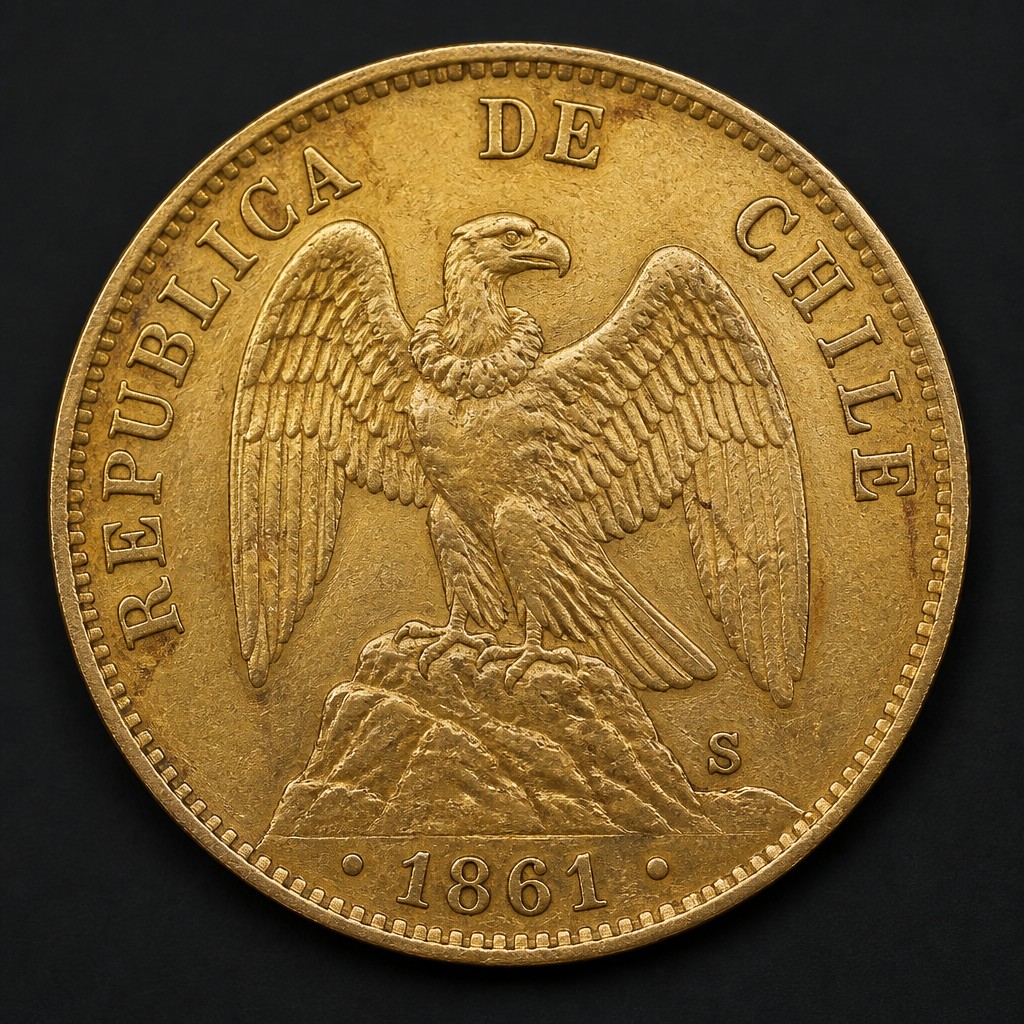
Chile Peso (Condor)
1851–1873 (gold condor series); modern base-metal peso 1990s–present
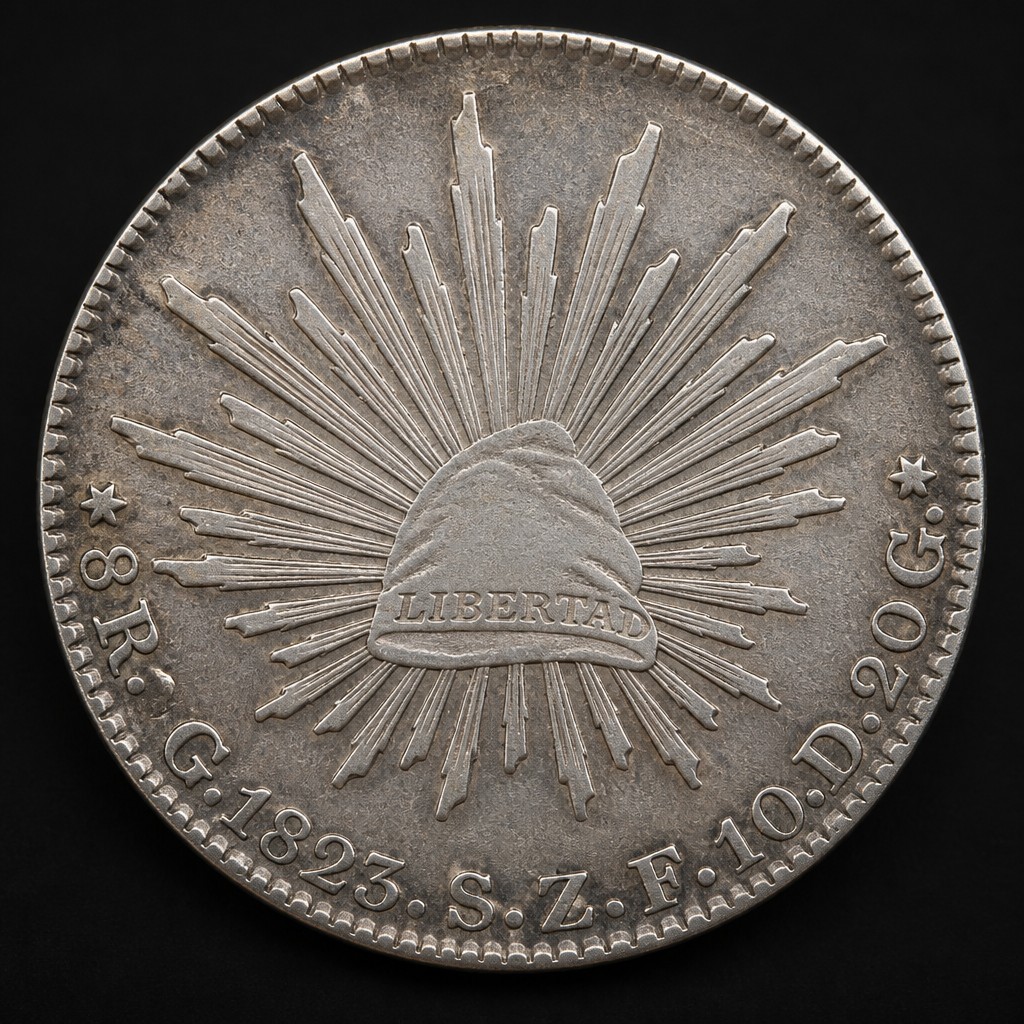
Mexican 8 Reales Cap and Rays
1823-1897
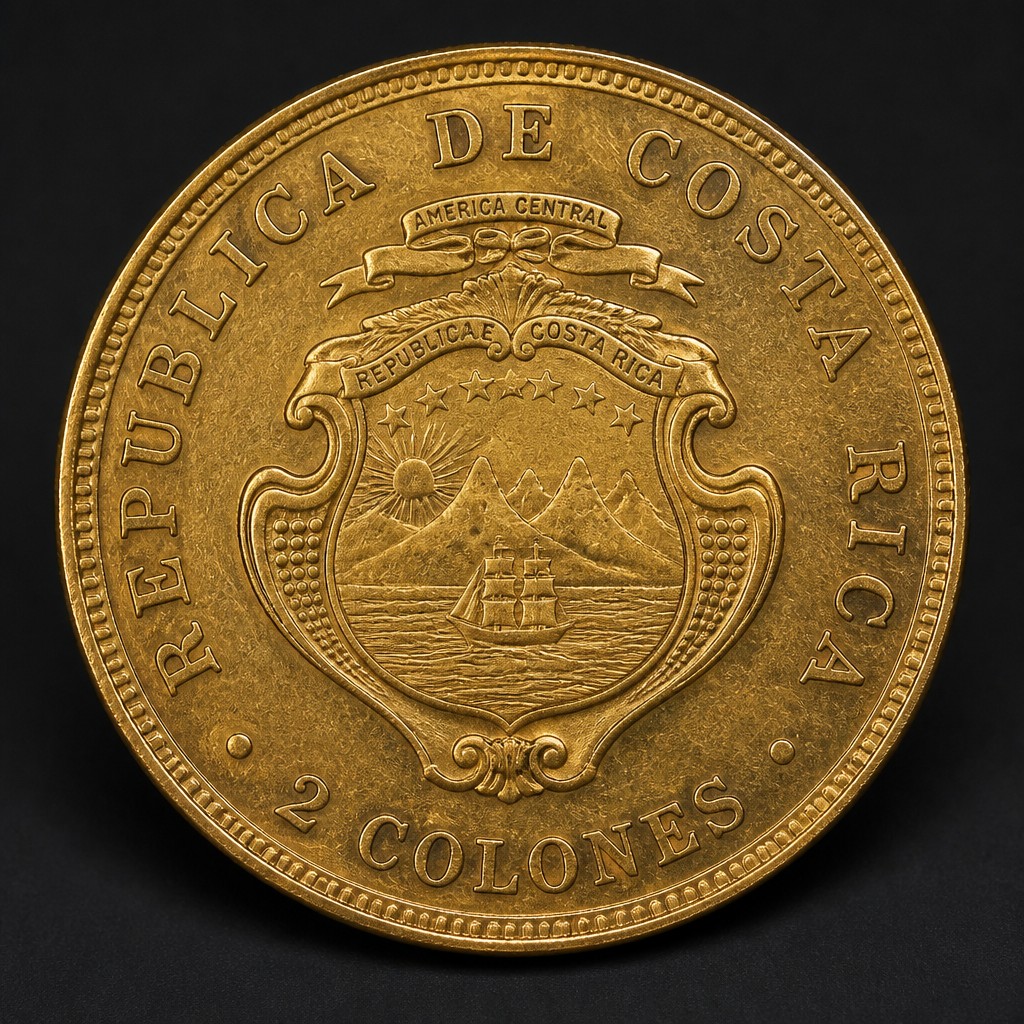
Costa Rica 2 Colones Gold
Late 1890s–early 1900s
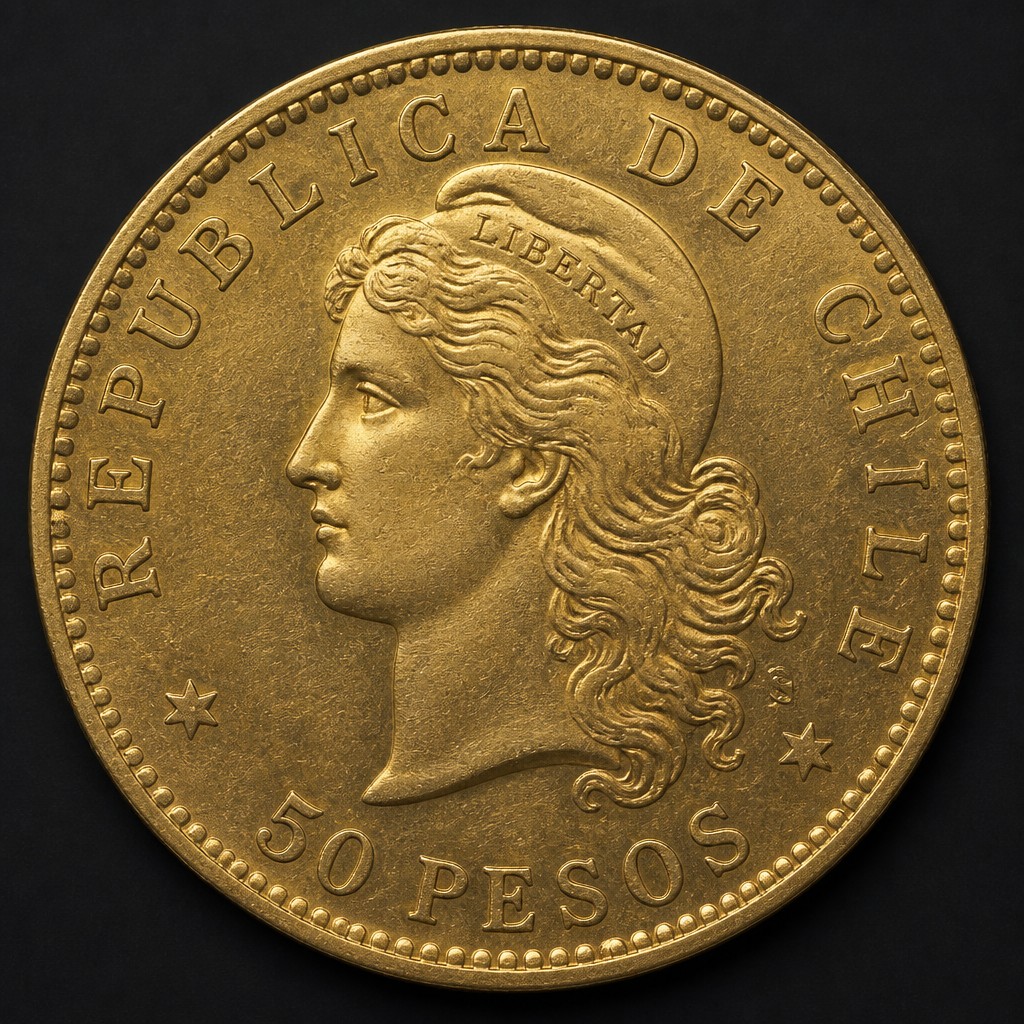
Chilean 50 Pesos Gold
1926–1980 (with interruptions)
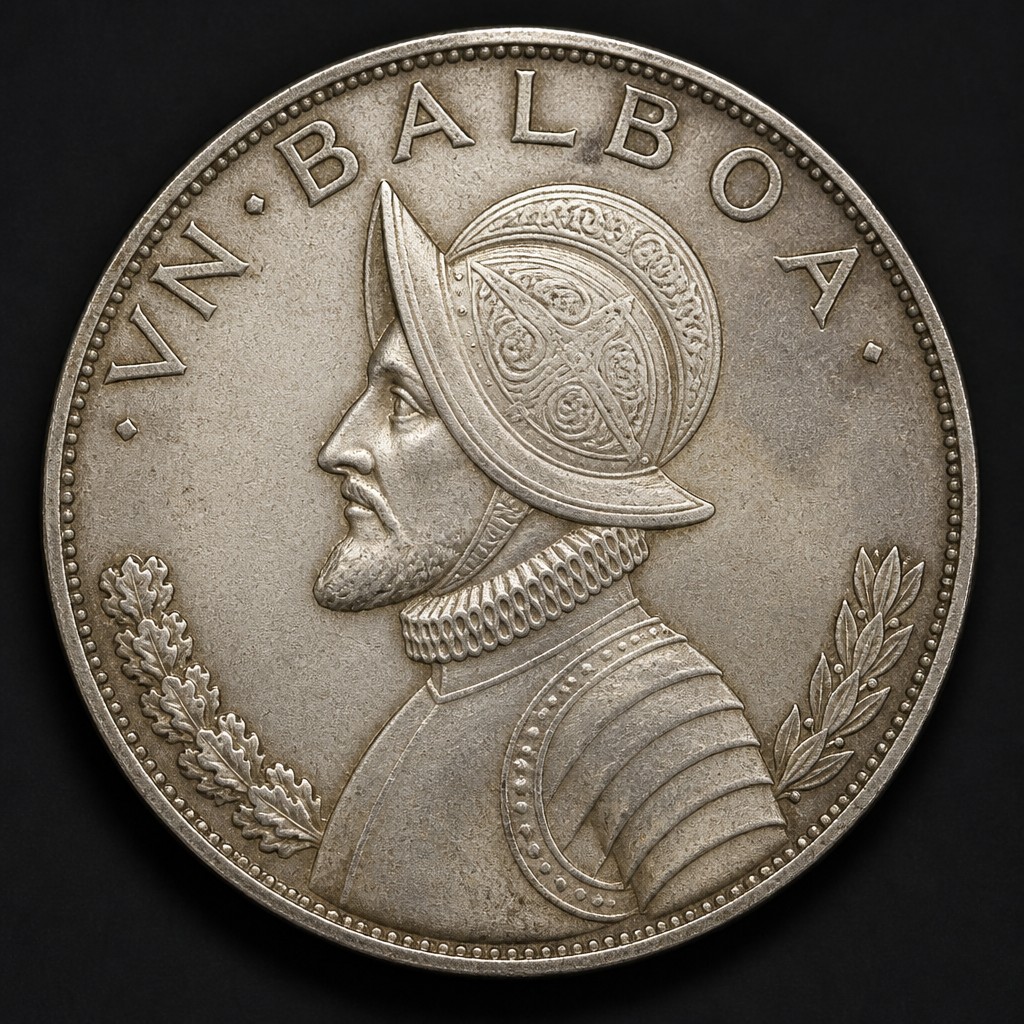
Panama Balboa Silver
1904, 1931, 1934, 1947, 1953, 1966 (various dates)
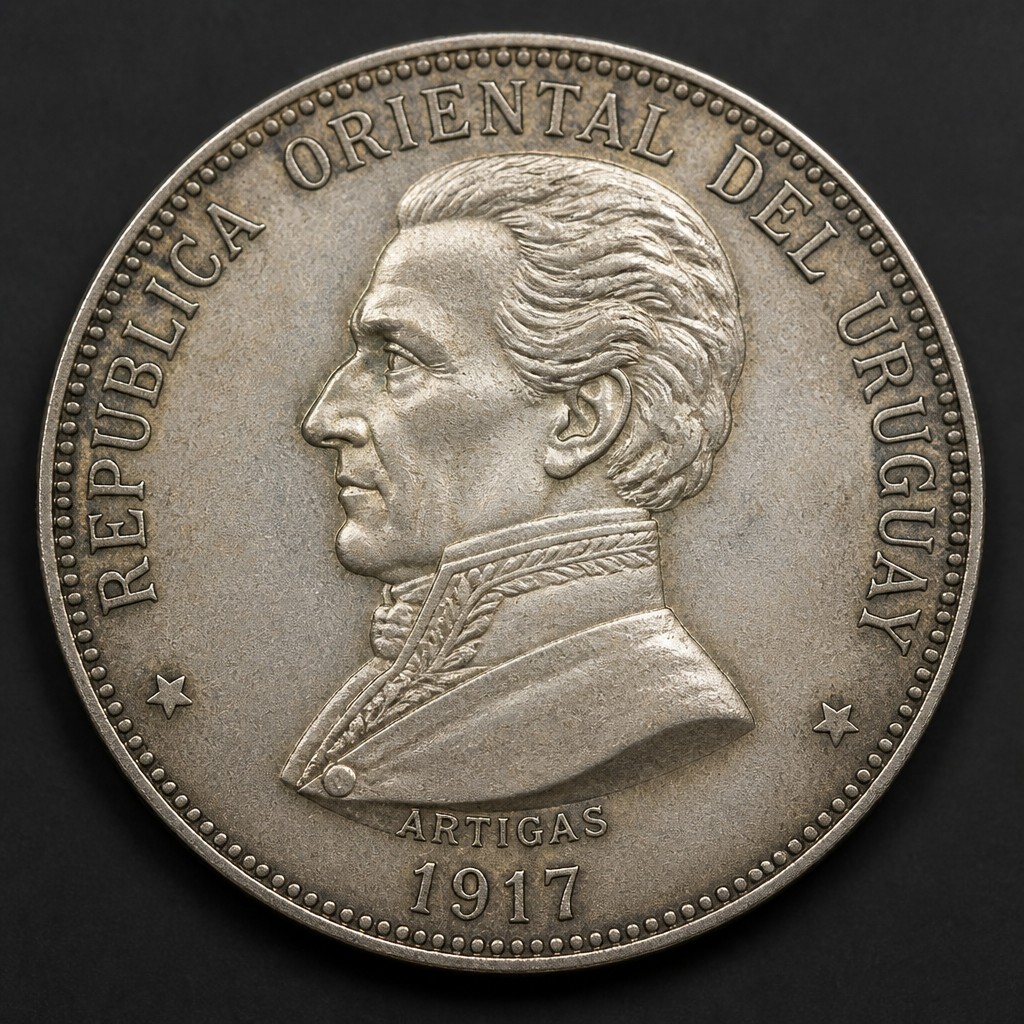
Uruguay Peso Silver 'Artigas'
1917–1920 (with related commemorative issues in later decades)
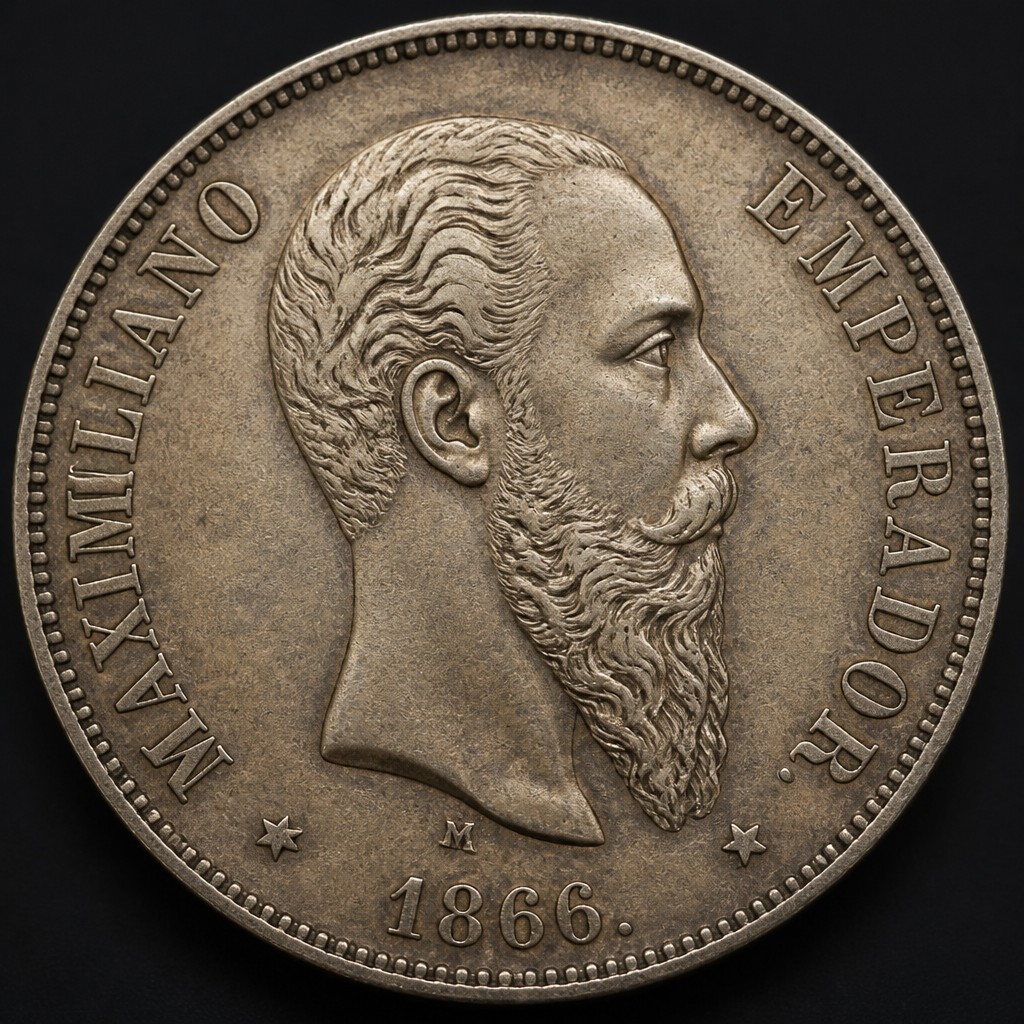
Mexican Emperor Maximilian Peso
1866–1867
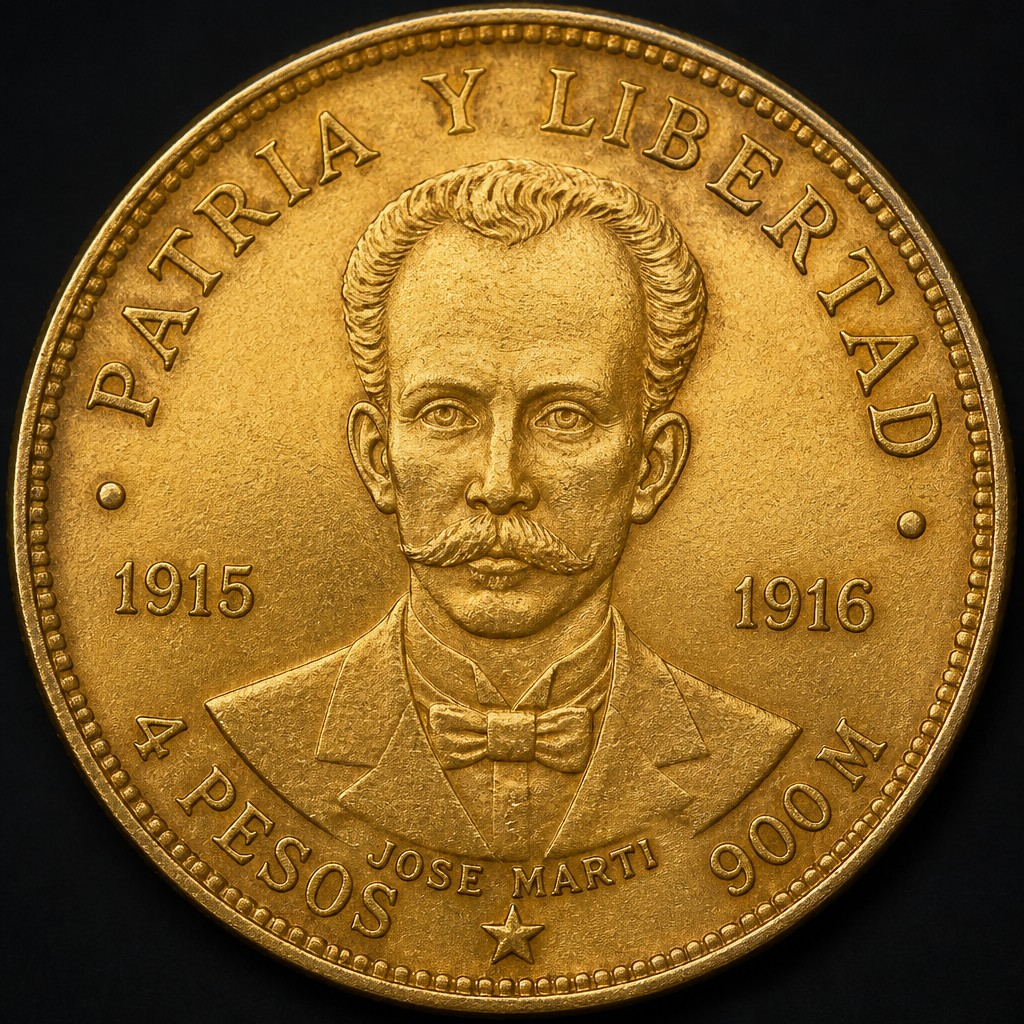
Cuba 4 Pesos Gold Jose Marti
1915–1916
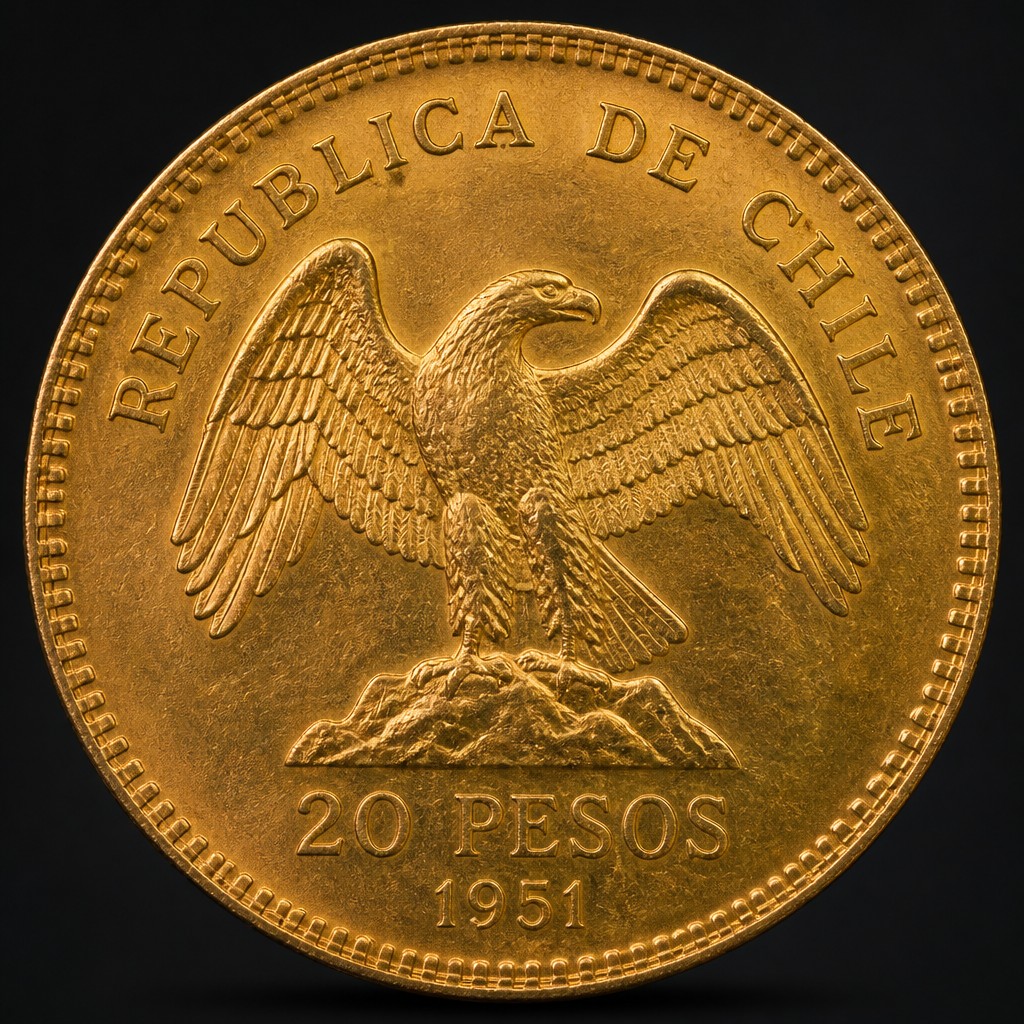
Chilean 20 Pesos Gold
19th century issues and 1926–1980 condor series