
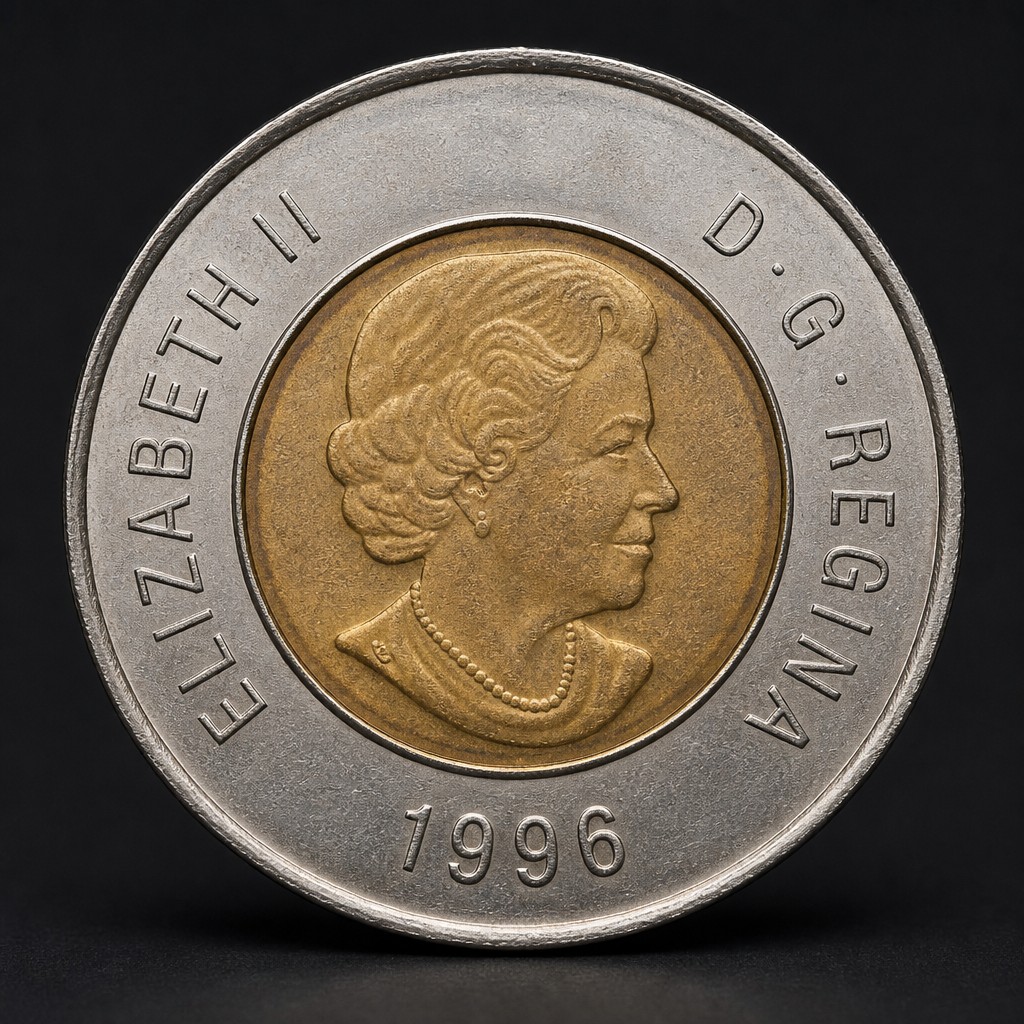
Canadian Toonie
Canada's bimetallic two dollar coin, introduced in 1996 with a polar bear reverse, whose nickname blends "two" with "loonie."
- Country
- Canada
- Denomination
- Two Dollars
- Metal
- Bimetallic: Aluminum-Bronze Center, Nickel Outer Ring
Got a coin like this?
Identify any coin from a photo, free.
Overview
The Canadian two dollar coin, popularly called the "toonie," was introduced in 1996 to replace the paper two dollar bill, following the successful introduction of the one dollar "loonie" nine years earlier. Its distinctive bimetallic construction, a silver-colored outer ring around a gold-colored center, made it immediately recognizable and helped deter counterfeiting of the new, higher-value coin.
The coin's standard reverse features a polar bear on an ice floe, a design that, together with the loonie's loon, has made Canadian dollar-denomination coins closely associated with the country's wildlife on the world numismatic stage.
History & Background
Following the successful replacement of the one dollar bill with the loonie in 1987, the Canadian government moved to replace the two dollar bill as well, introducing the bimetallic two dollar coin in February 1996. The bimetallic construction, combining a nickel outer ring with an aluminum bronze center, was chosen partly to make the higher-value coin harder to counterfeit than a single-metal design would be.
The reverse design, a polar bear standing on an ice floe, was created by wildlife artist Brent Townsend and was selected through a design competition, continuing the Mint's practice of using distinctly Canadian wildlife imagery for its dollar-denomination coins.
Since its introduction, the toonie has periodically been issued with special commemorative reverse designs, most famously the 2004 "poppy" Remembrance Day toonie, believed to be one of the first coins in the world to feature coloured enamel applied during the minting process for general circulation.
How to Identify
The coin is immediately identifiable by its bimetallic construction: a silver-colored (nickel) outer ring surrounding a gold-colored (aluminum bronze) center, larger in diameter than the one dollar loonie.
The obverse bears the reigning monarch's portrait, while the standard reverse depicts a polar bear on an ice floe, with the denomination and year. The coin's edge features an interrupted milled pattern (alternating smooth and reeded sections) as an additional anti-counterfeiting measure.
Commemorative toonies substitute special reverse designs, such as the coloured poppy design, while retaining the same overall bimetallic format and size, making the two dollar denomination easy to distinguish from all other circulating Canadian coins.
Value & Collectibility
Standard toonies in circulated condition are worth only face value given the large mintages produced since 1996. Certain commemorative issues, particularly early coloured designs like the 2004 poppy toonie in uncirculated condition, and documented mint errors such as coins with a missing or shifted center, can carry a premium among collectors, generally ranging from a few dollars to somewhat more for scarce, well-preserved examples.
As with the loonie, the toonie's collecting appeal lies more in its commemorative variety and cultural recognition than in dramatic scarcity, though specialized collectors actively pursue specific error and low-mintage commemorative pieces.
Frequently asked questions
Why is it called the "toonie"?
The nickname blends "two" with "loonie," following the popular name of Canada's one dollar coin.
What metals make up the toonie?
A nickel outer ring surrounding an aluminum bronze center, giving it a two-tone appearance.
What is the standard reverse design?
A polar bear standing on an ice floe, designed by wildlife artist Brent Townsend.
Is the 2004 poppy toonie special?
Yes, it is widely credited as one of the first circulating coins in the world to use coloured enamel applied during minting.
Other coins you may enjoy
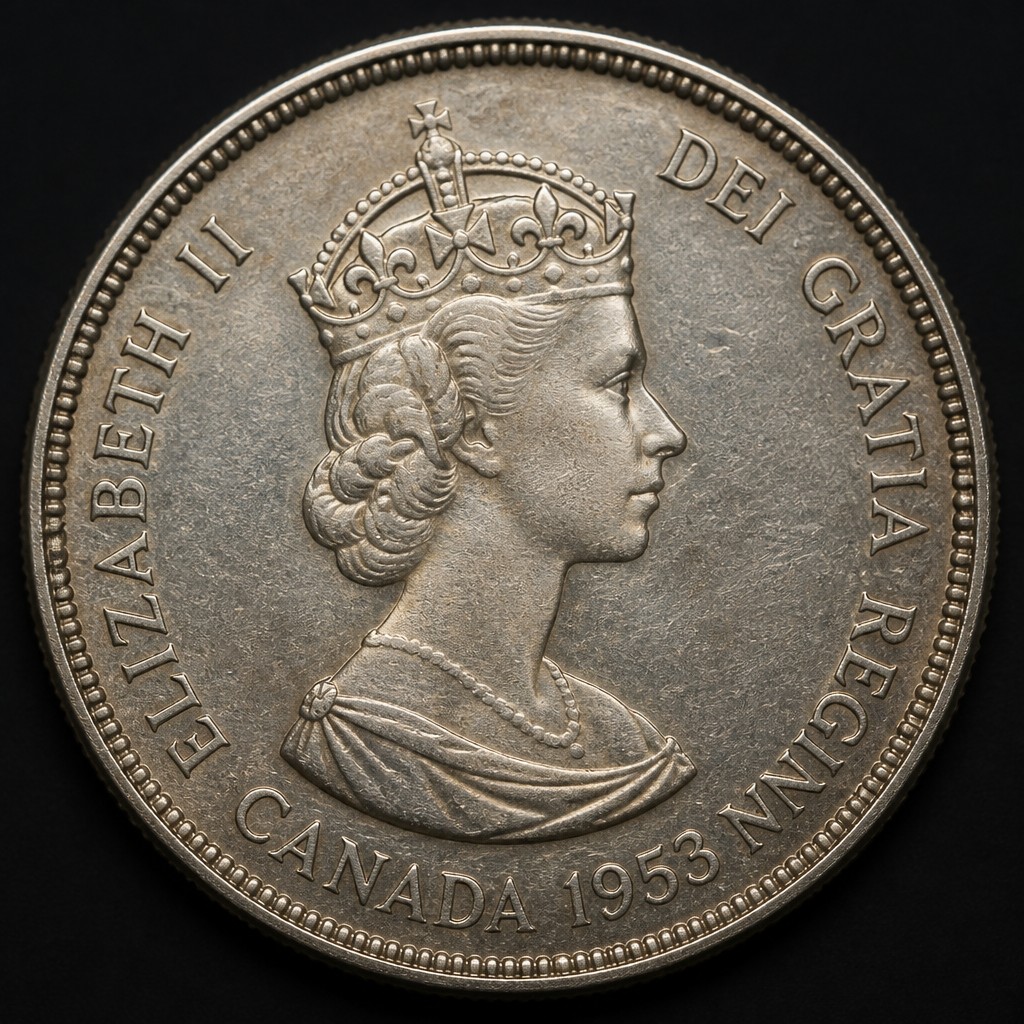
1953 Coronation Voyageur Dollar
1953
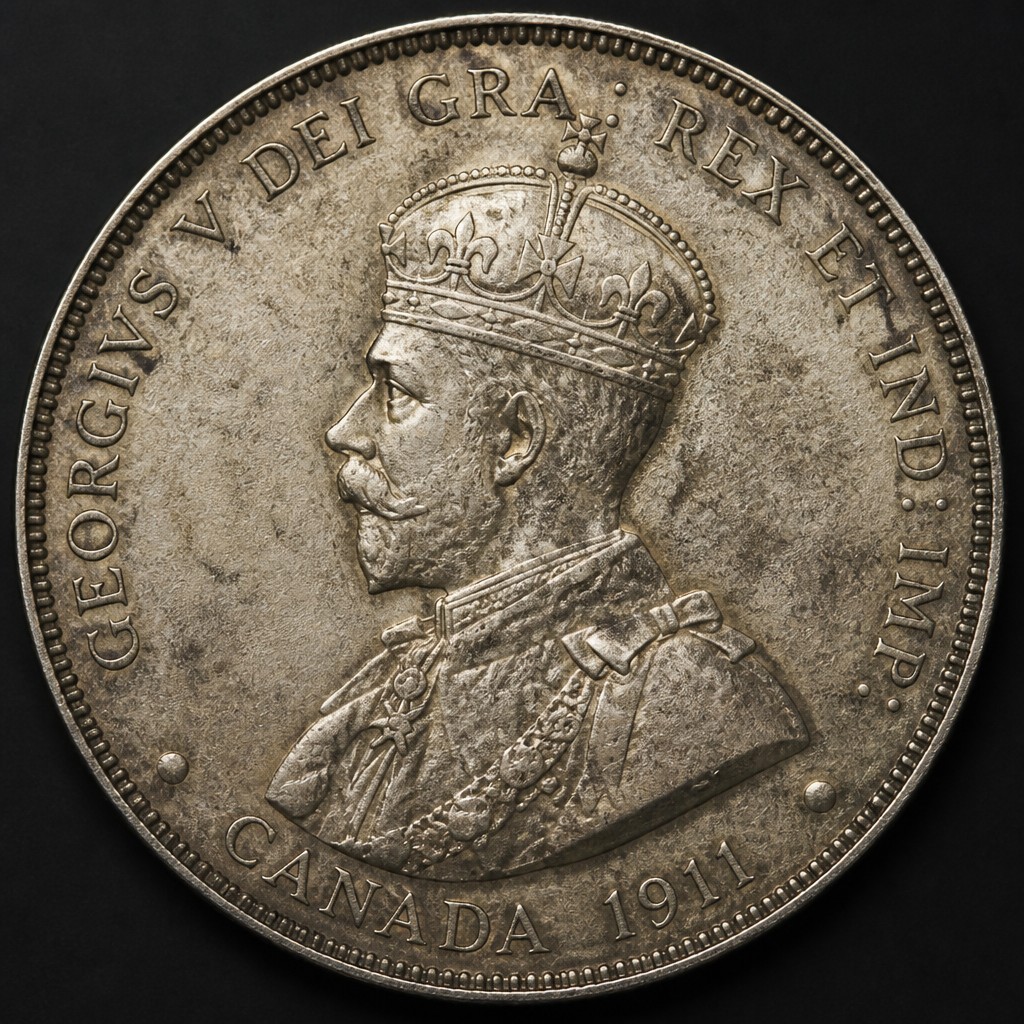
1911 Canadian Silver Dollar (Pattern)
1911
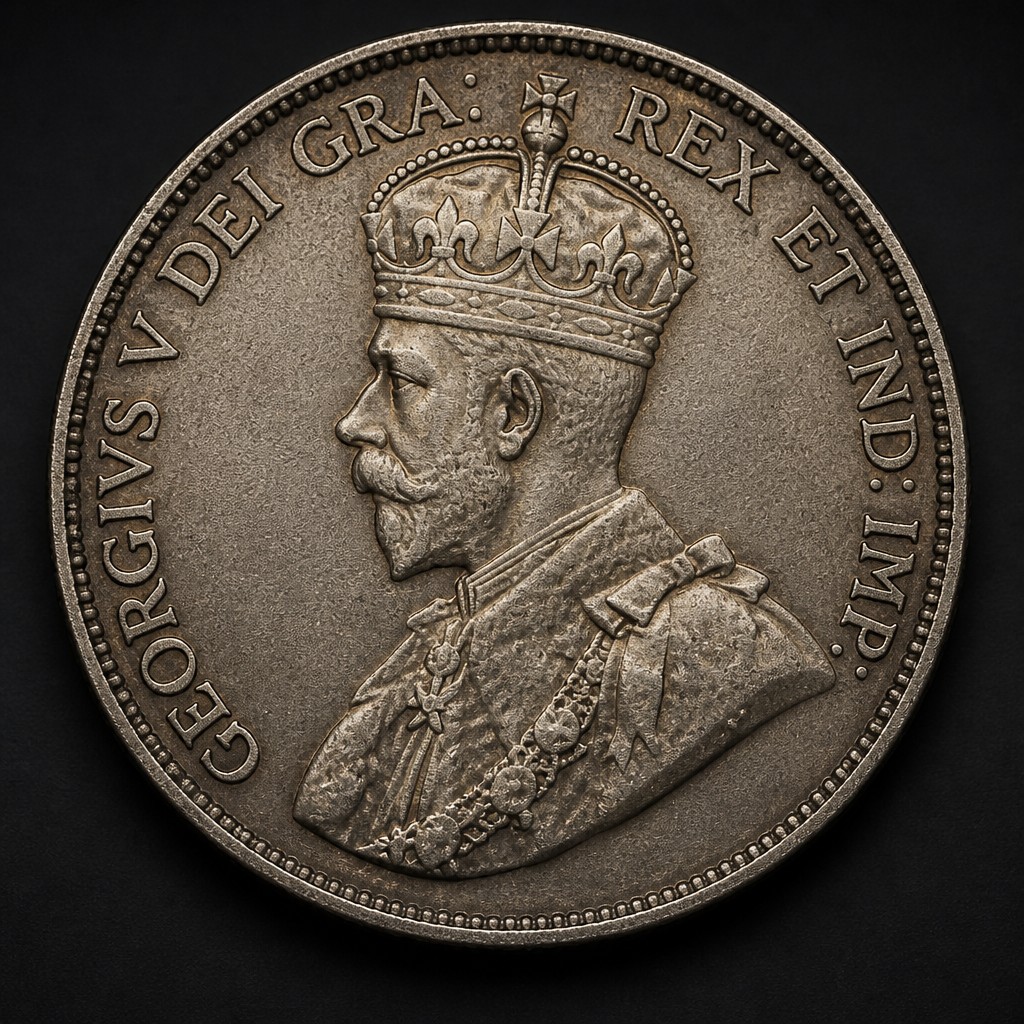
George V Twenty-Five Cents (silver)
1911–1936
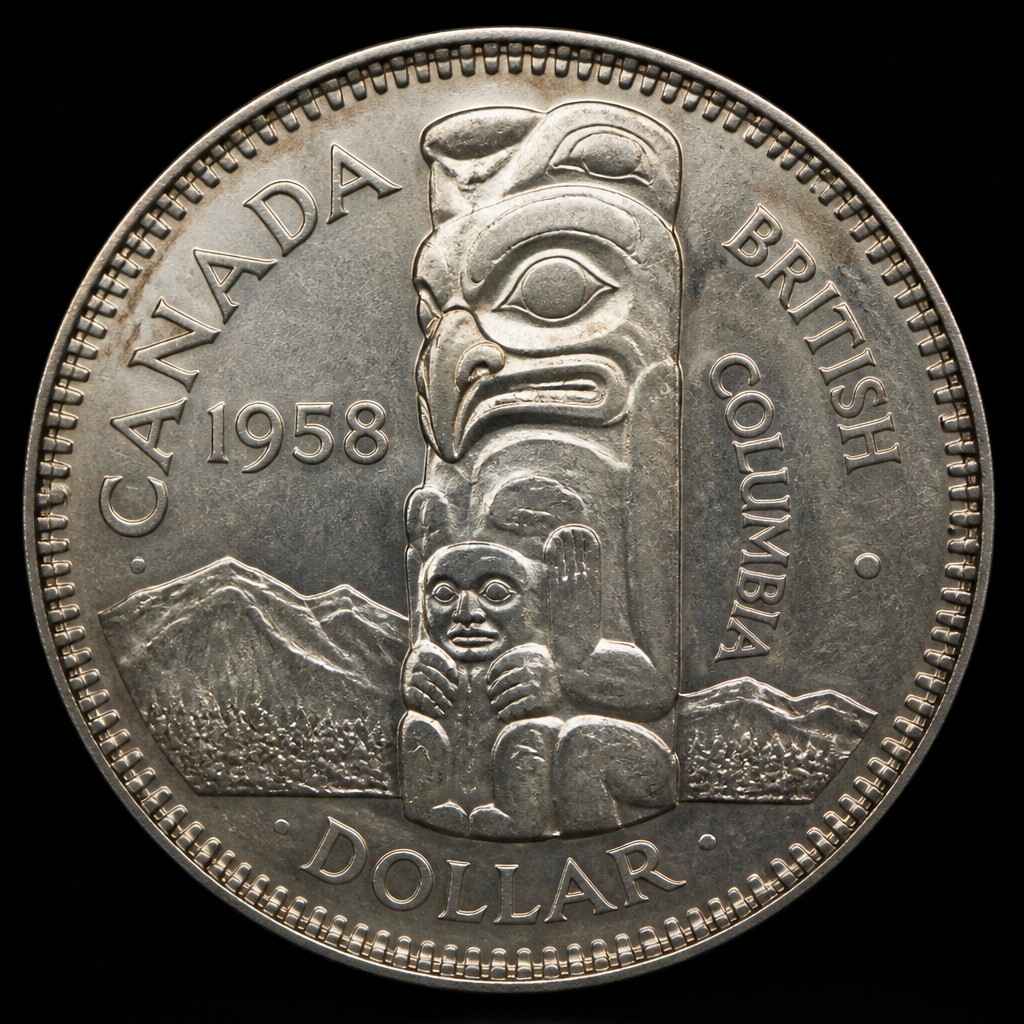
1958 British Columbia Totem Pole Dollar
1958
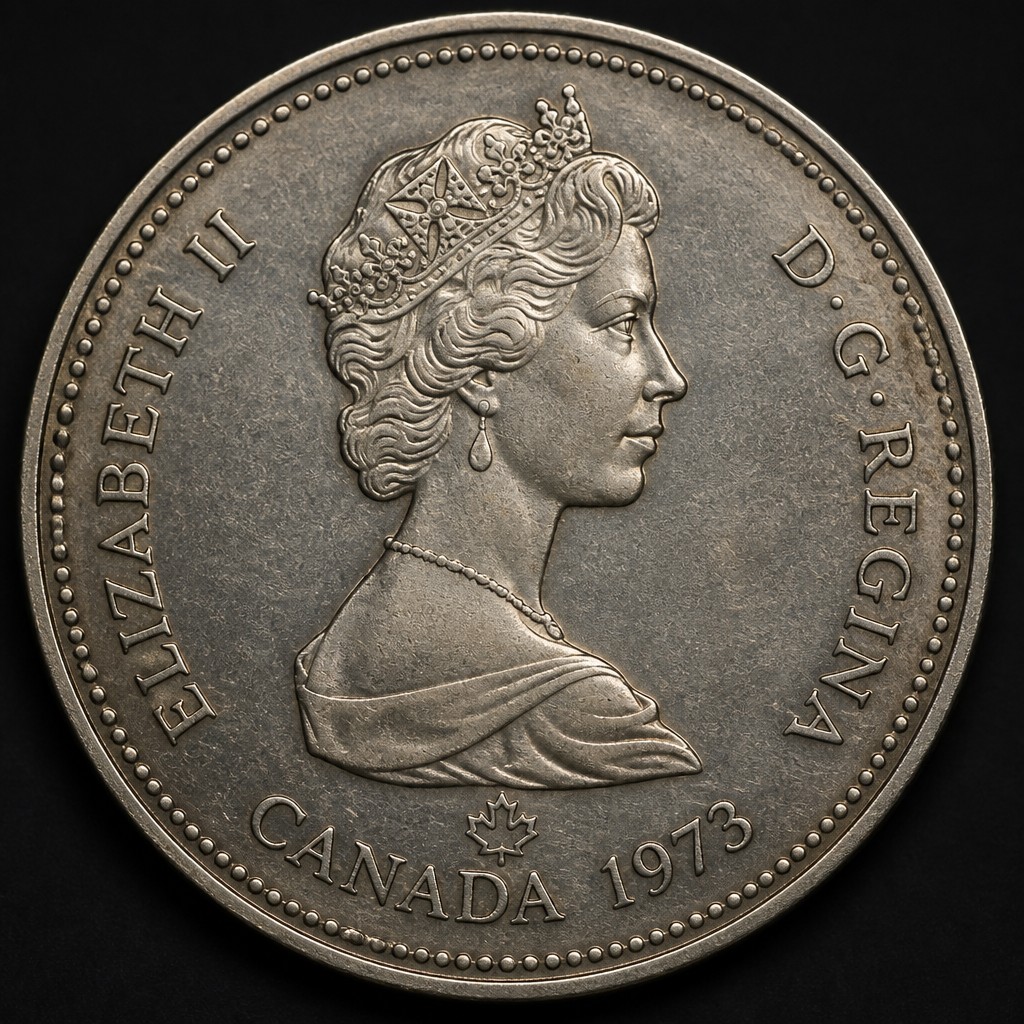
1973 RCMP Centennial Dollar
1973
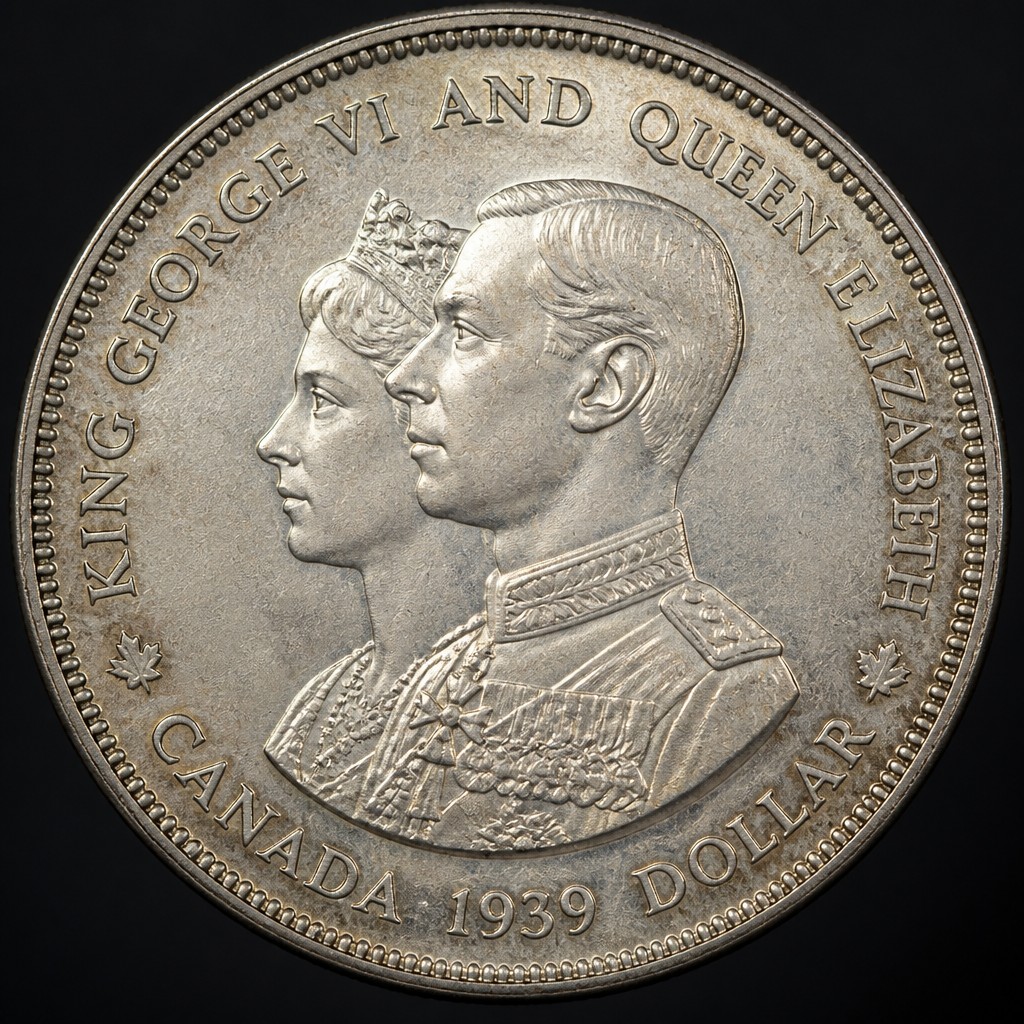
1939 Royal Visit Silver Dollar (Parliament)
1939
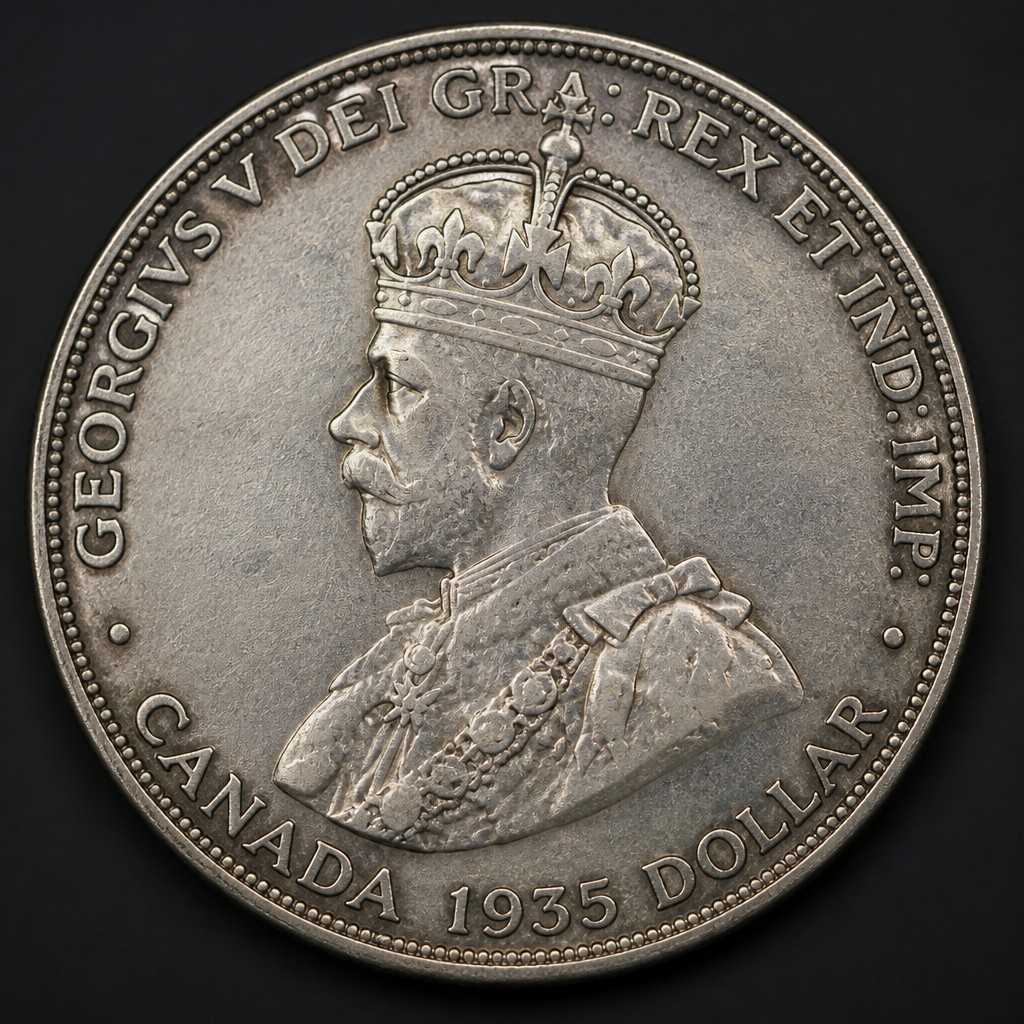
1935 George V Silver Jubilee Dollar (Voyageur)
1935
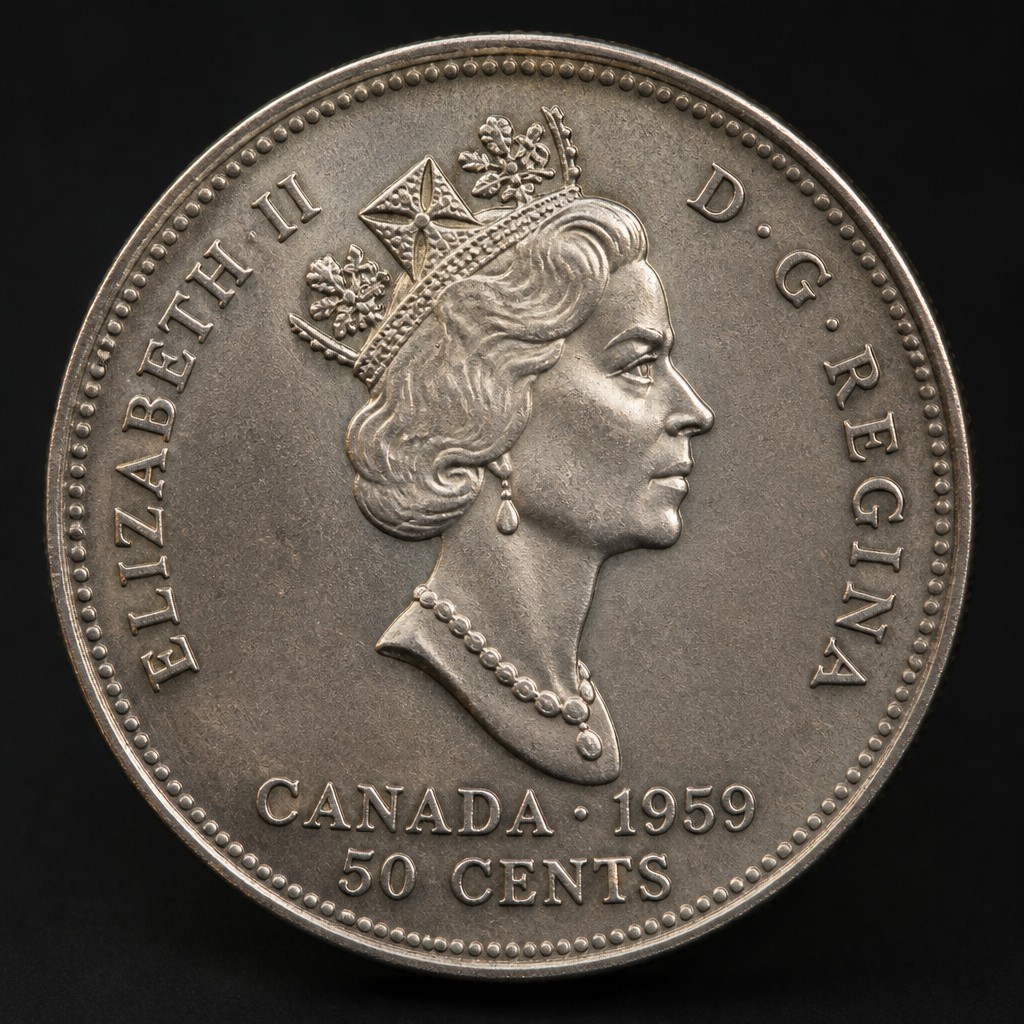
Coat of Arms Fifty Cents (Elizabeth II)
1959–present
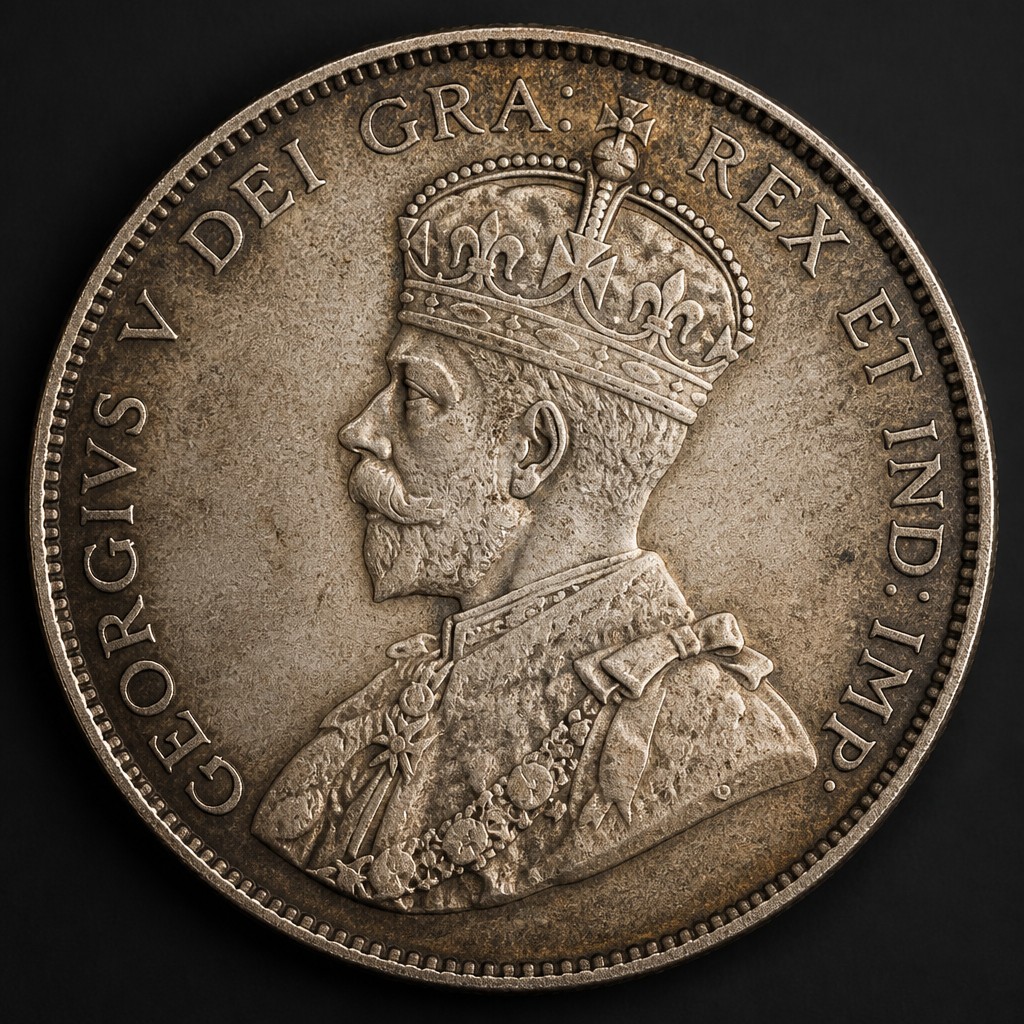
1921 Fifty Cents (King of Canadian Coins)
1921
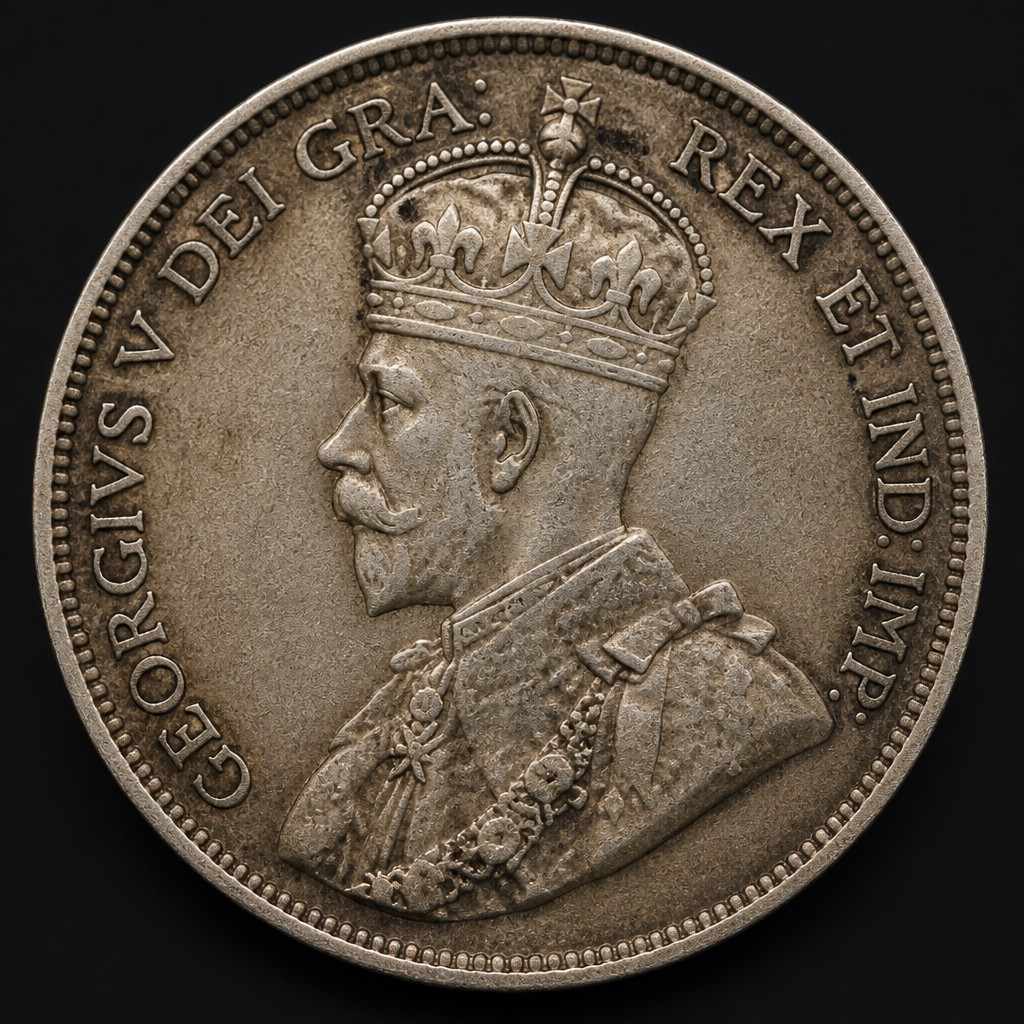
George V Fifty Cents
1911–1936
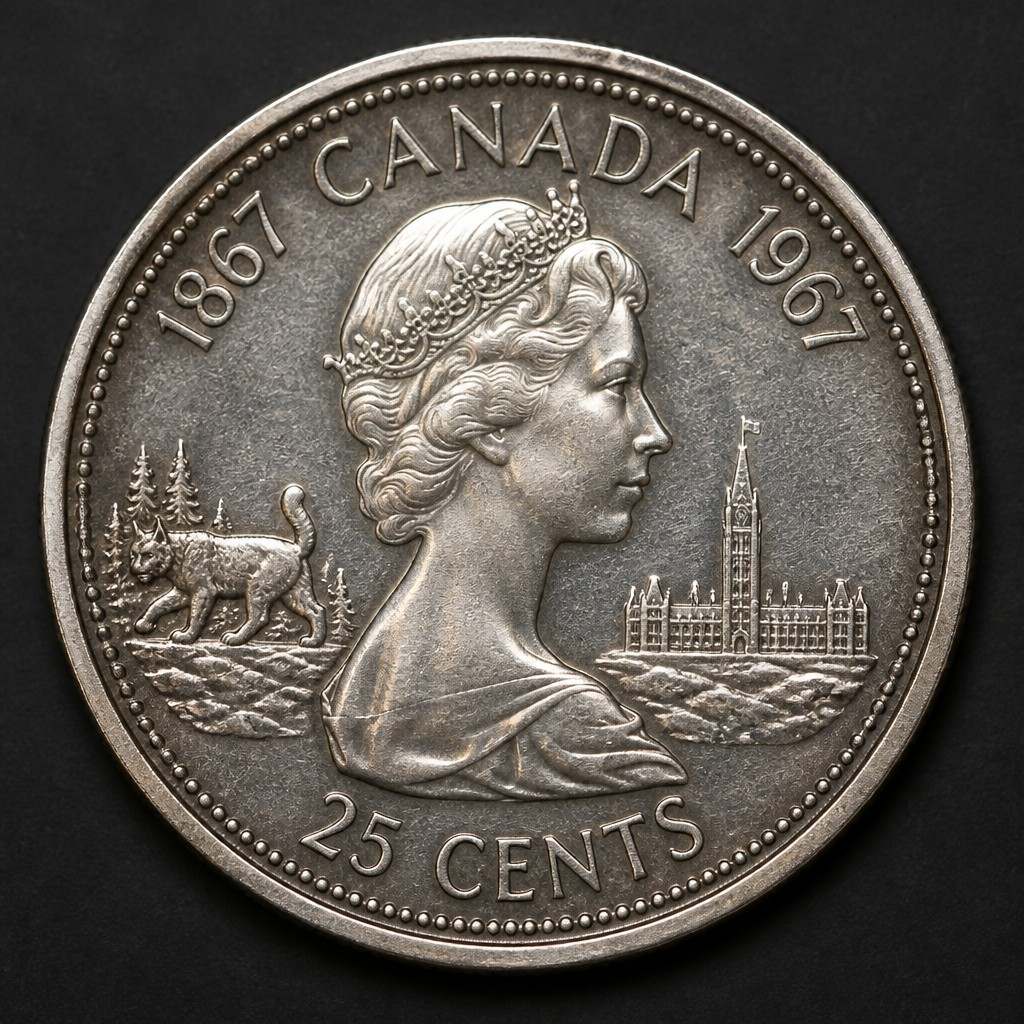
1967 Bobcat Centennial Quarter
1967
Caribou Twenty-Five Cents (quarter)
1937–present