
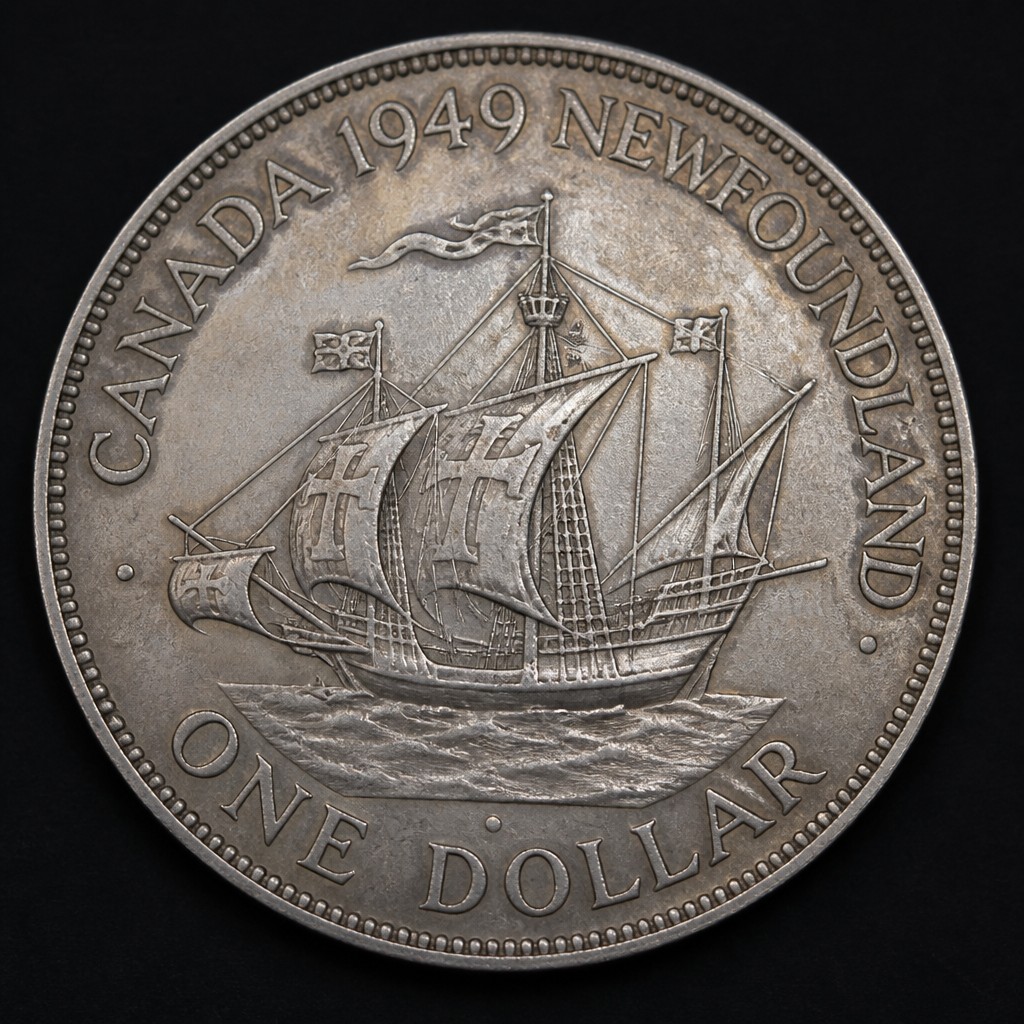
1949 Newfoundland Silver Dollar (Matthew ship)
A commemorative Canadian silver dollar marking Newfoundland's entry into Confederation in 1949, its reverse depicting John Cabot's ship the Matthew.
- Country
- Canada
- Denomination
- One Dollar
- Metal
- 80% Silver
Got a coin like this?
Identify any coin from a photo, free.
Overview
The 1949 dollar commemorates one of the most significant events in twentieth-century Canadian history: the union of the Dominion of Newfoundland with Canada, making it the country's tenth province. Rather than the usual Voyageur canoe scene, the reverse depicts the sailing ship Matthew, associated with explorer John Cabot's voyage to the shores of Newfoundland centuries earlier.
The coin is a favorite among collectors interested in Canadian confederation history as well as those pursuing a complete run of Canadian commemorative silver dollars.
History & Background
Newfoundland had remained a separate British dominion for decades after Canadian Confederation in 1867, but economic hardship and a series of referendums in the late 1940s led to its decision to join Canada. Newfoundland officially became Canada's tenth province on March 31, 1949.
To mark this historic union, the Royal Canadian Mint issued a special silver dollar featuring the Matthew, the ship traditionally associated with John Cabot's 1497 voyage that is credited with European discovery of the Newfoundland coastline, linking the province's storied maritime history to its new status within Canada.
How to Identify
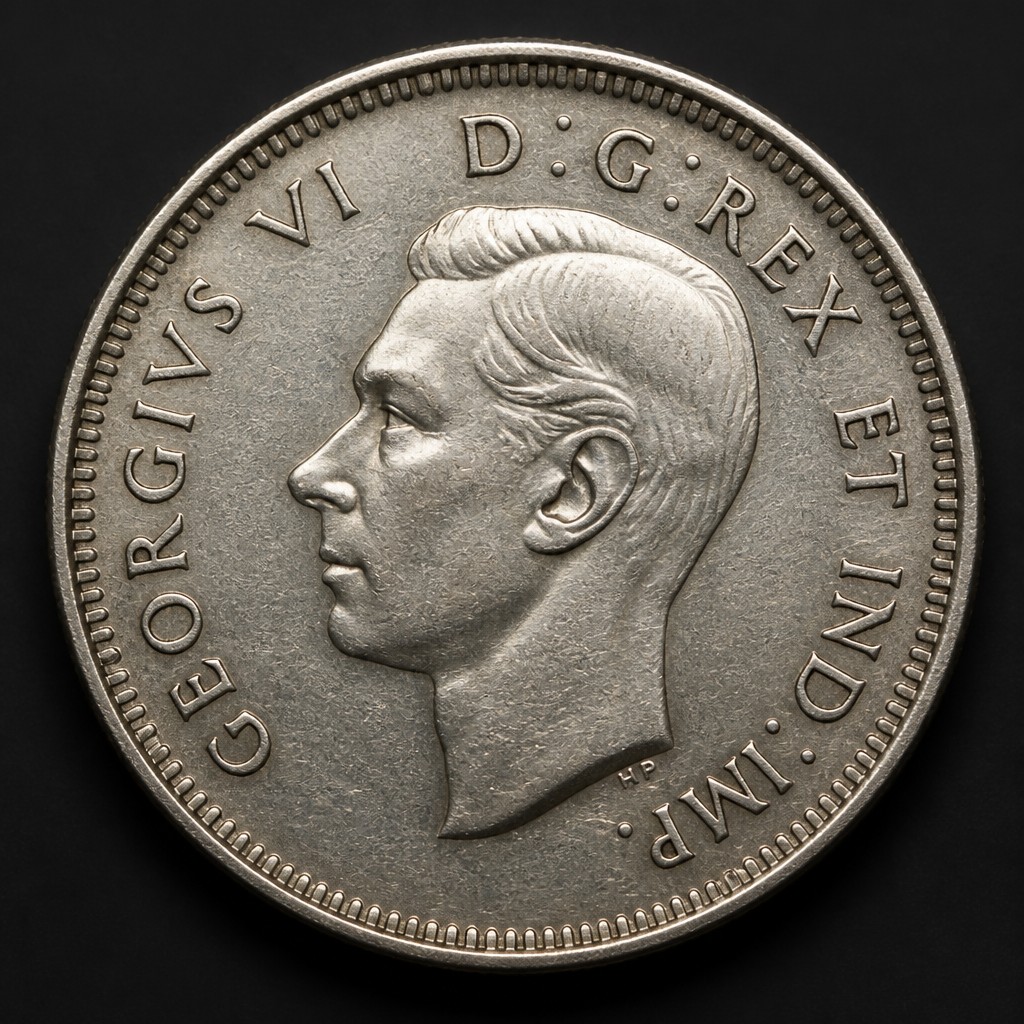
The obverse carries King George VI's portrait with the standard royal titles and the date 1949. The reverse depicts a three-masted sailing ship under full sail, representing the Matthew, with "CANADA" and "ONE DOLLAR" around the design.
The coin is struck in .800 fine silver at the standard weight and diameter for the Canadian dollar series of the period, with a reeded edge. Its ship reverse clearly distinguishes it from the standard Voyageur design and other commemorative dollars of the era.
As with other Canadian issues of this period, there is no mint mark, since production occurred solely at the Royal Canadian Mint in Ottawa.
Value & Collectibility
The 1949 Newfoundland dollar was struck in a moderate mintage and is generally available to collectors in circulated and uncirculated grades at prices reflecting a solid but not extreme premium over base silver dollar values.
High-grade, well-struck examples with strong luster are particularly desirable, and the coin's historical significance tied to Newfoundland's confederation keeps steady collector demand relative to some other commemorative dollars of the period.
Frequently asked questions
What does the 1949 dollar commemorate?
It marks Newfoundland officially joining Canada as its tenth province in 1949.
What ship is shown on the reverse?
The Matthew, traditionally associated with John Cabot's 1497 voyage to Newfoundland.
What is the coin's composition?
It is .800 fine silver, consistent with other Canadian dollars of the late 1940s.
Is the 1949 dollar considered rare?
It is not extremely rare but is a popular and historically significant commemorative among Canadian dollar collectors.
Other coins you may enjoy
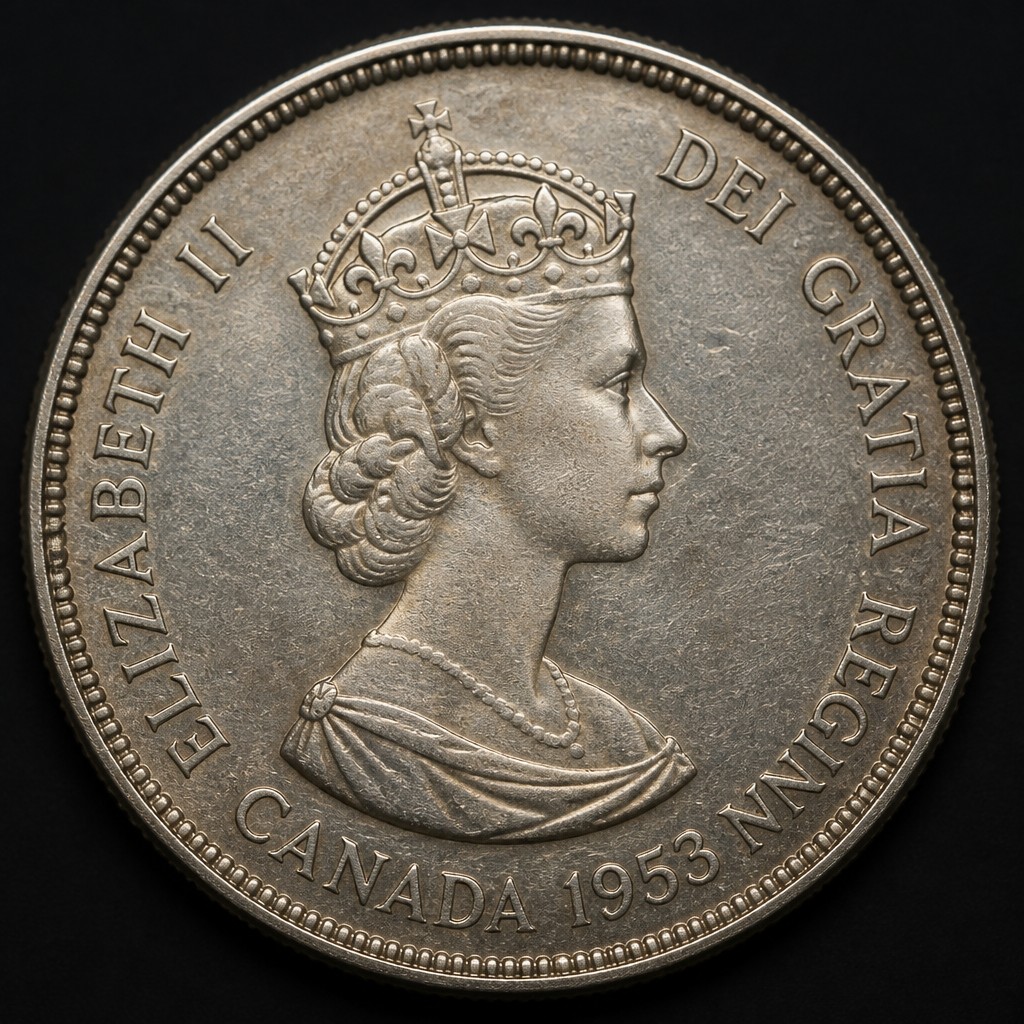
1953 Coronation Voyageur Dollar
1953
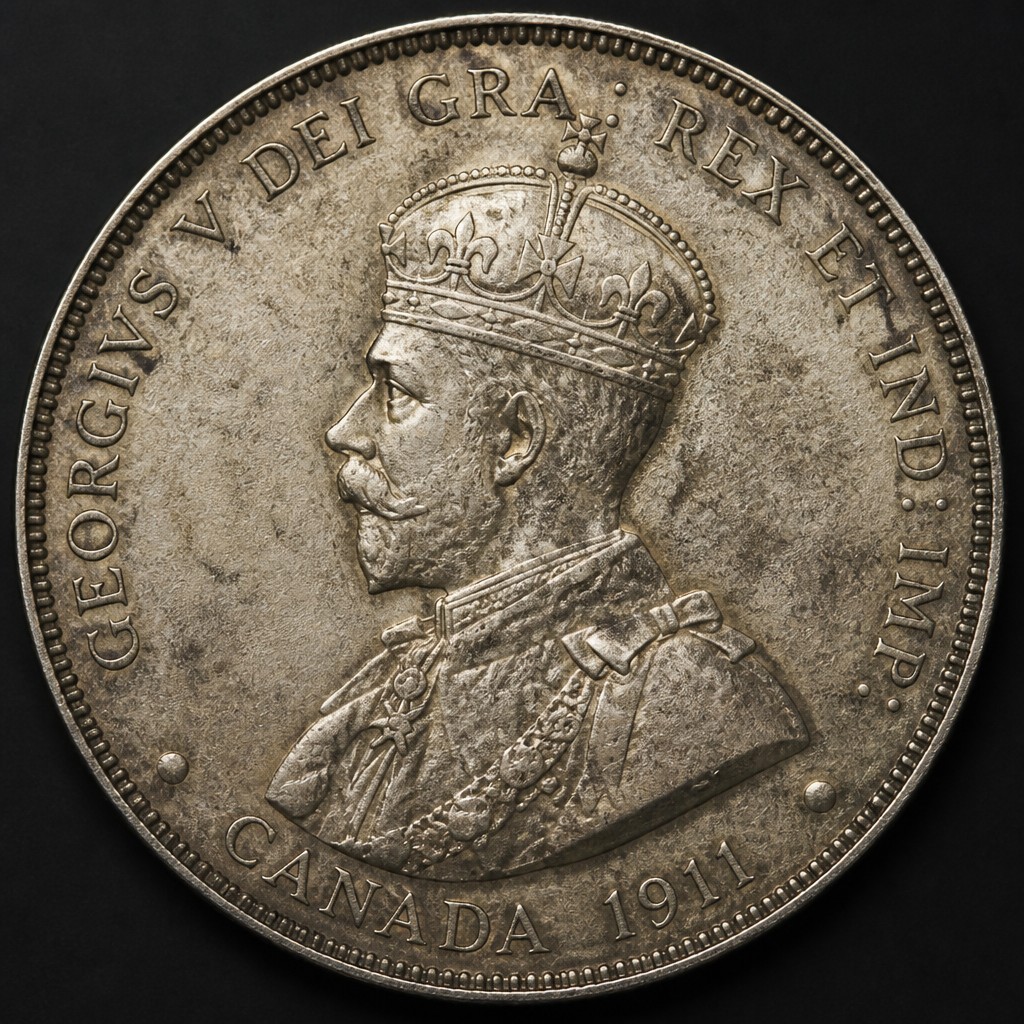
1911 Canadian Silver Dollar (Pattern)
1911
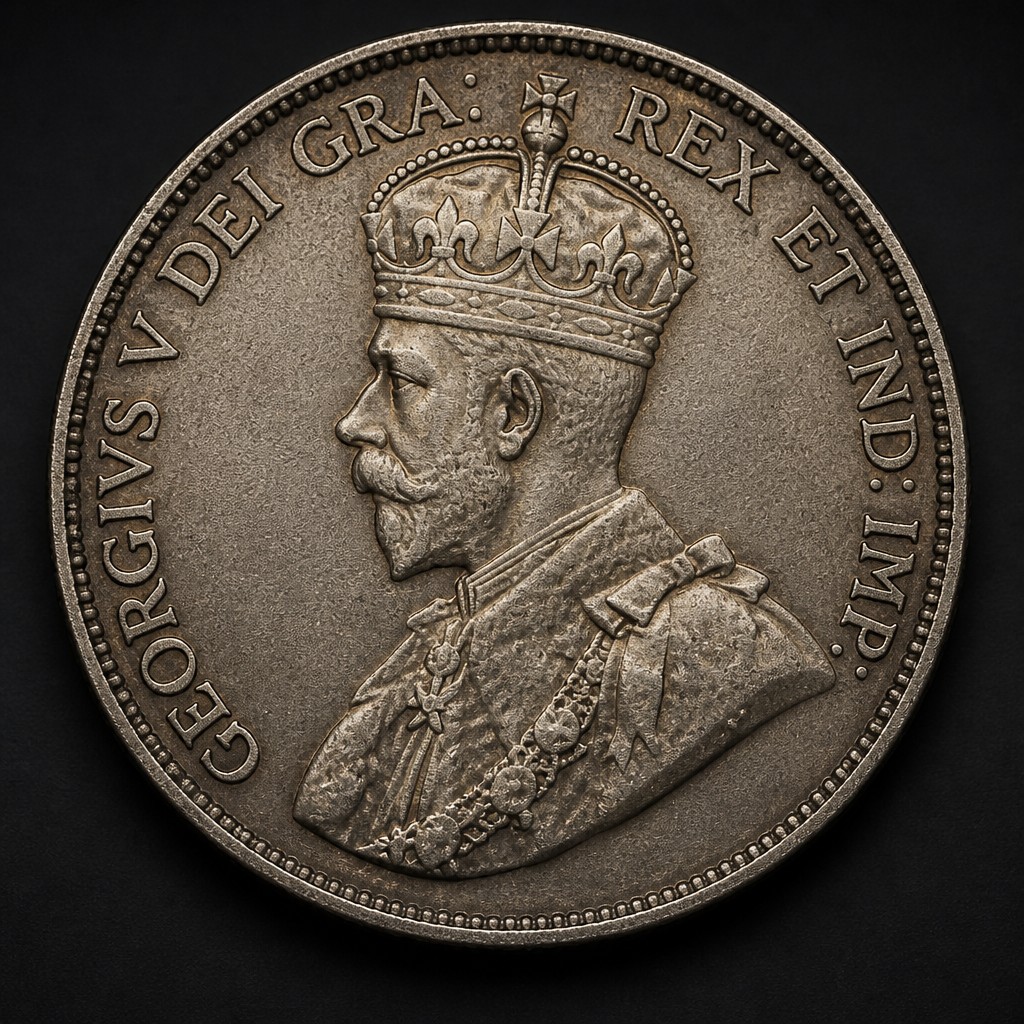
George V Twenty-Five Cents (silver)
1911–1936
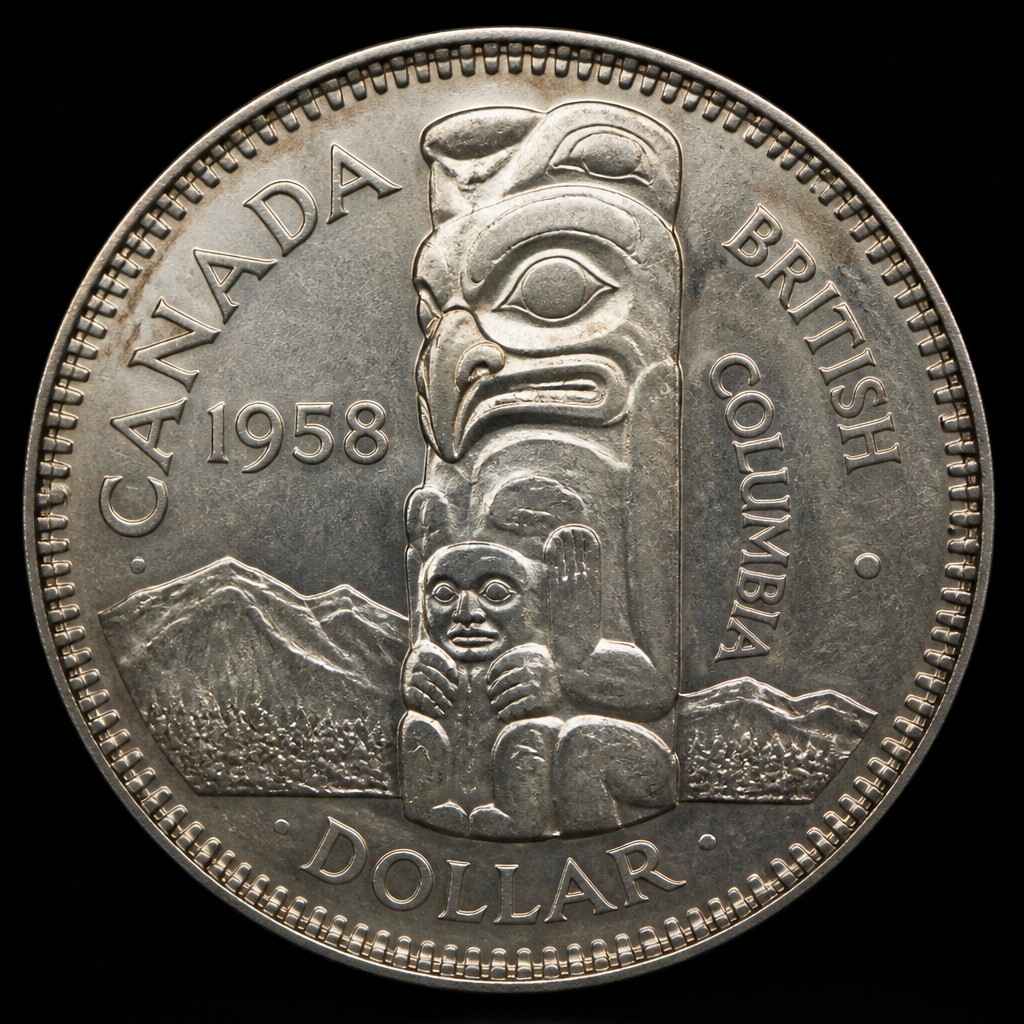
1958 British Columbia Totem Pole Dollar
1958
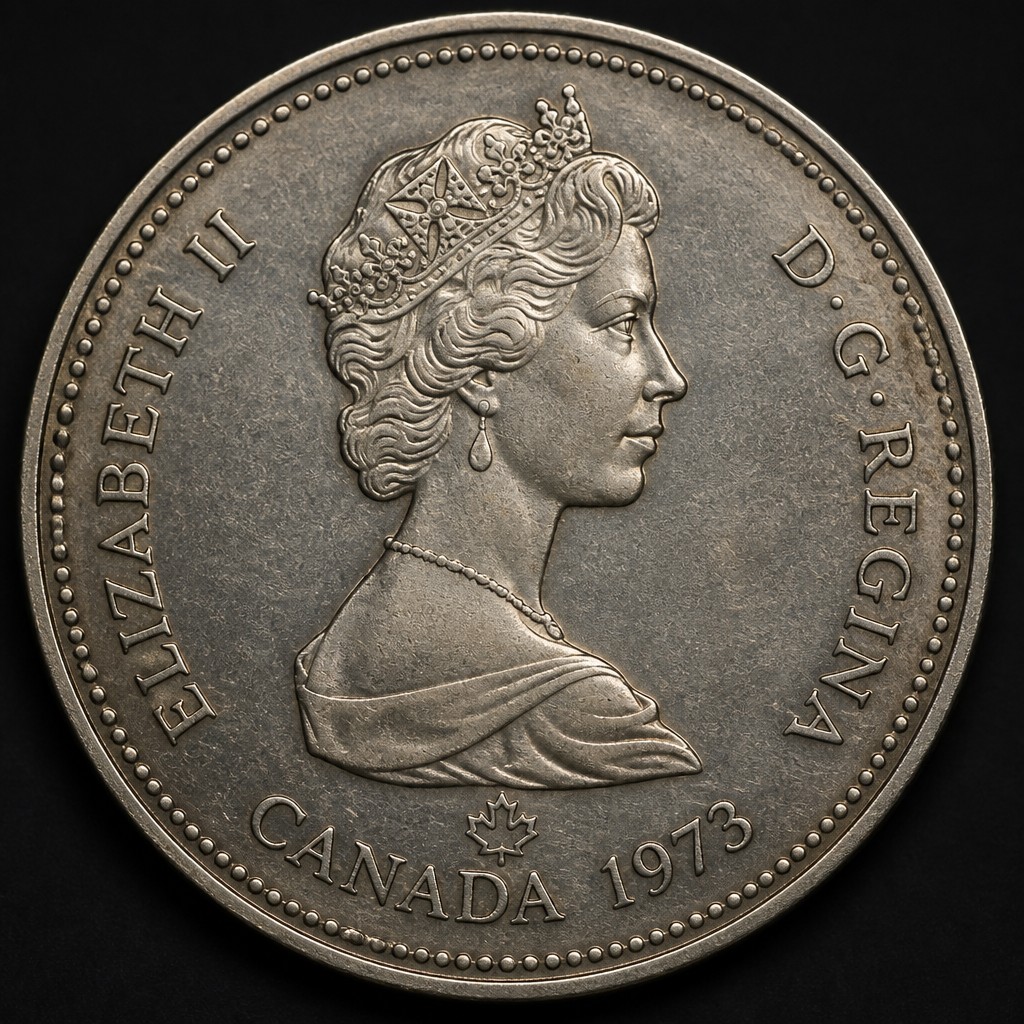
1973 RCMP Centennial Dollar
1973
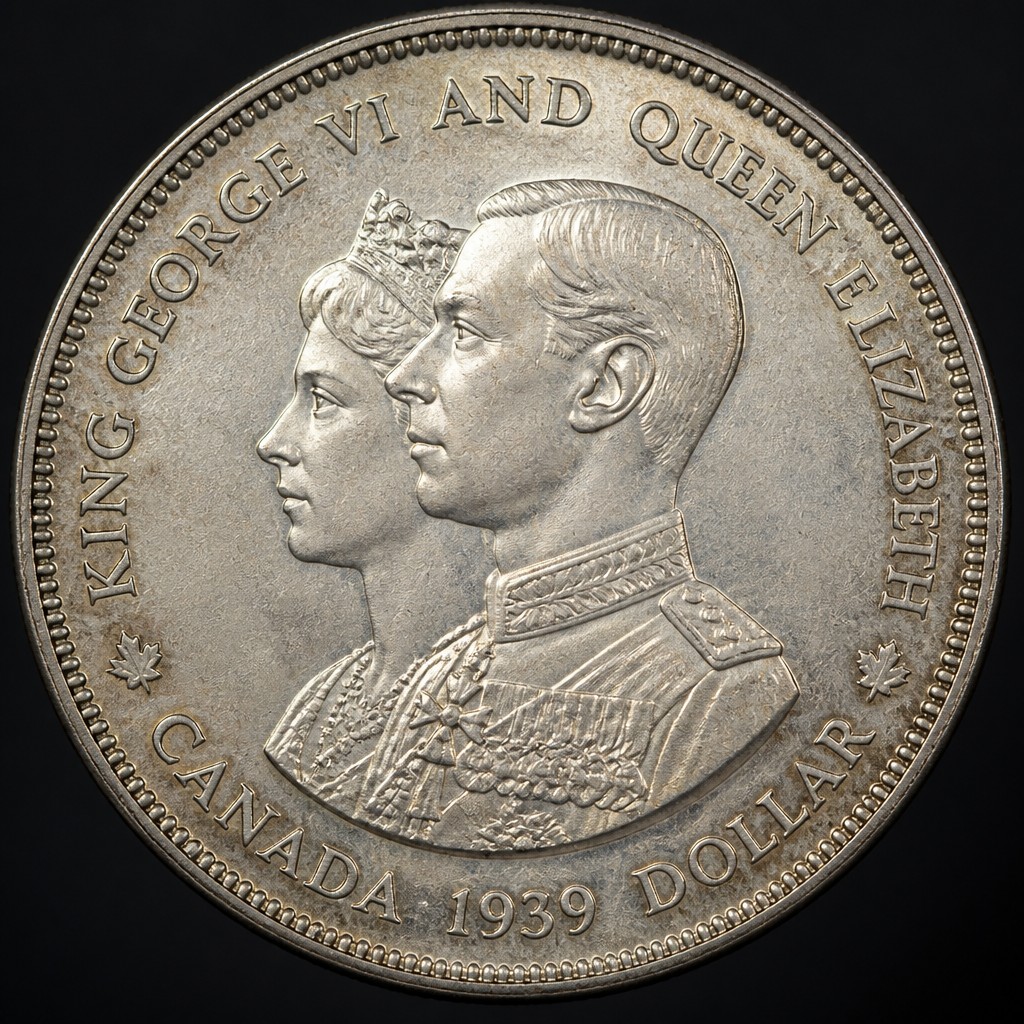
1939 Royal Visit Silver Dollar (Parliament)
1939
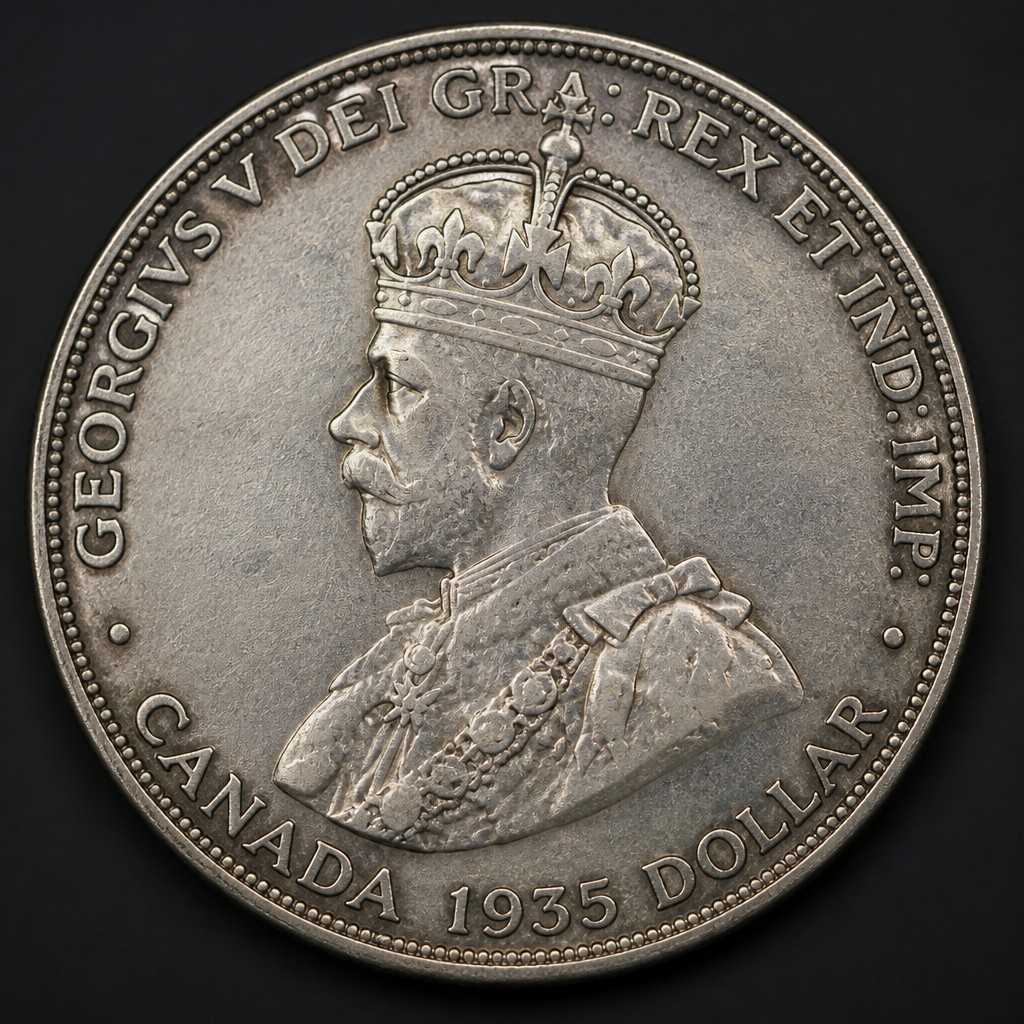
1935 George V Silver Jubilee Dollar (Voyageur)
1935
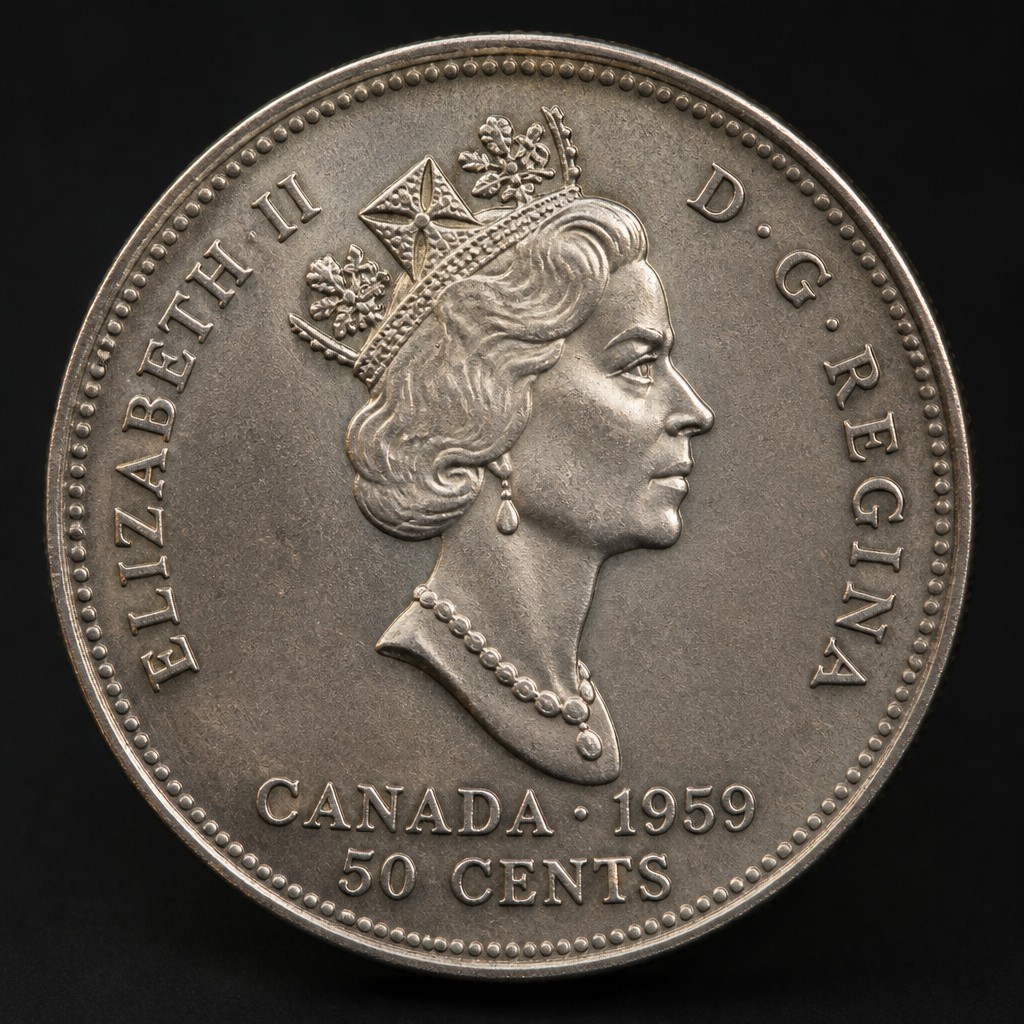
Coat of Arms Fifty Cents (Elizabeth II)
1959–present
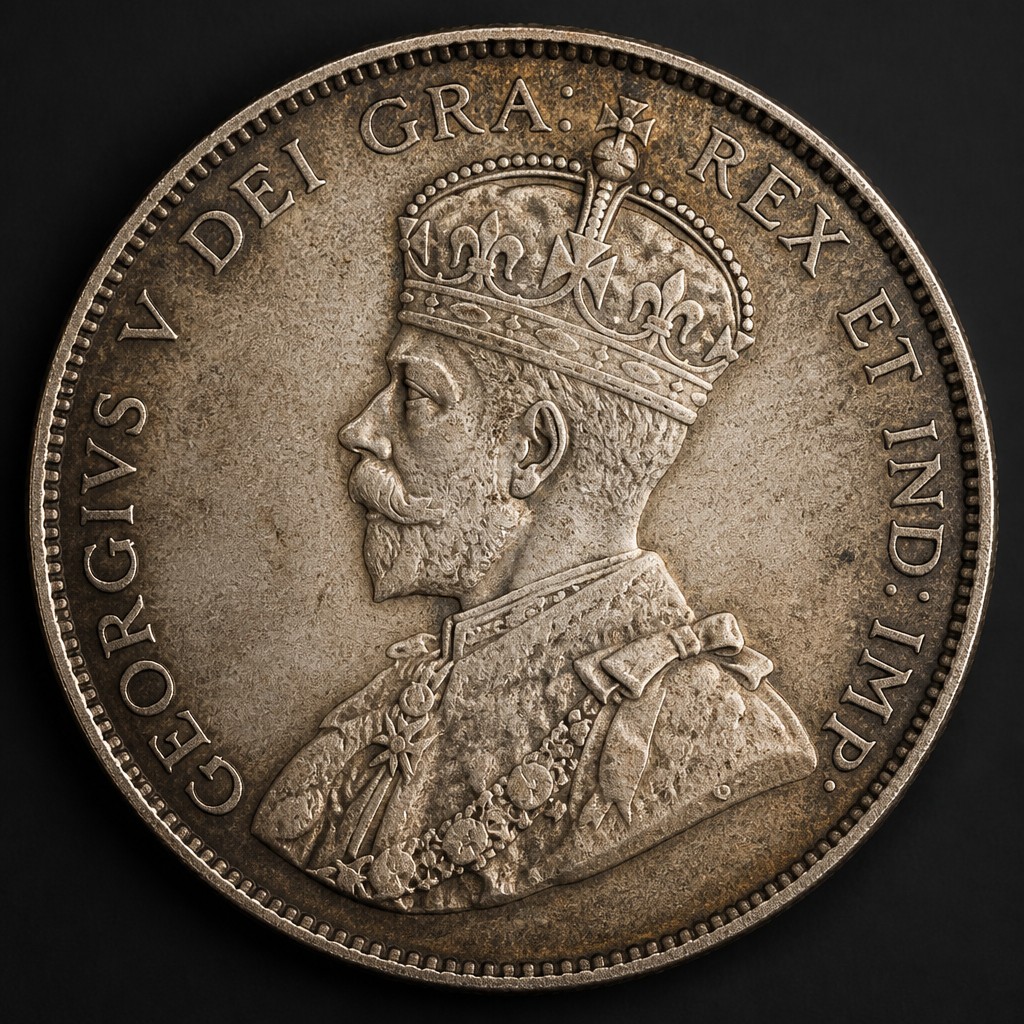
1921 Fifty Cents (King of Canadian Coins)
1921
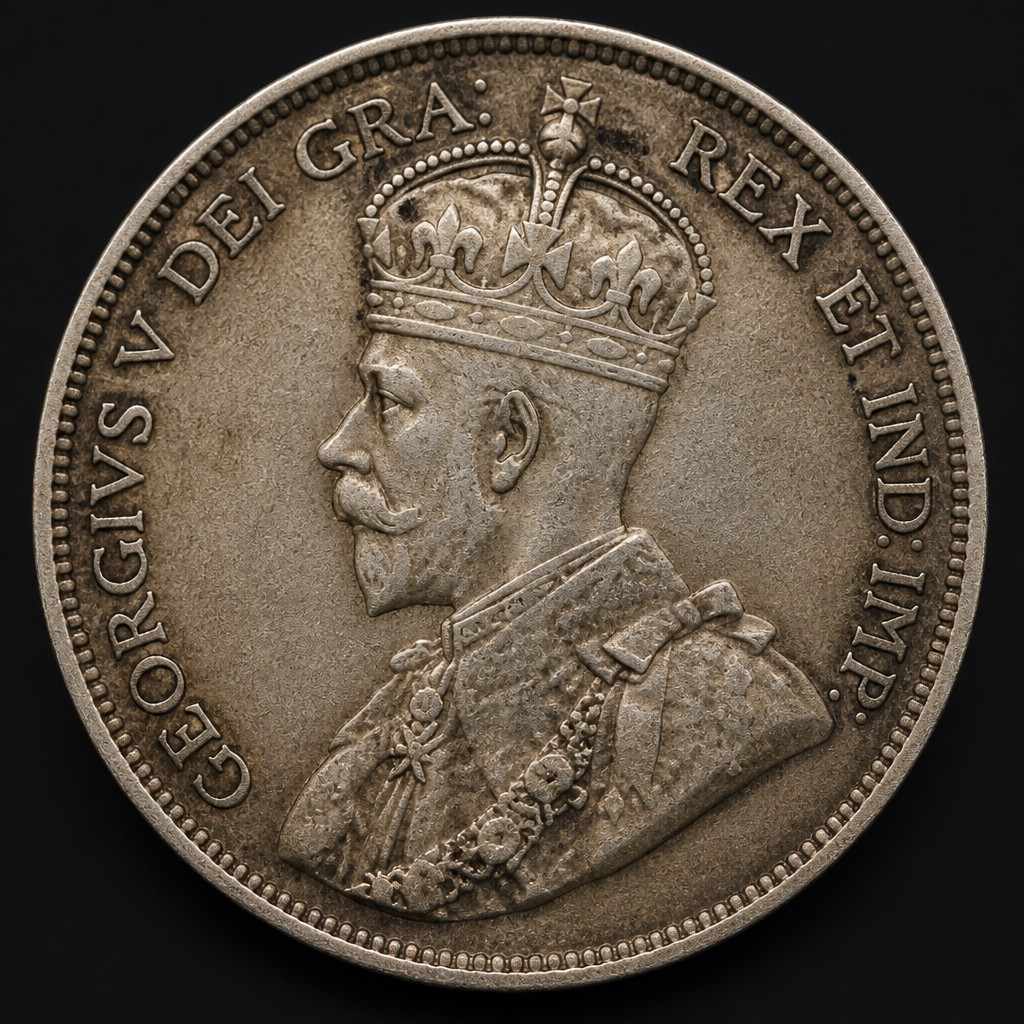
George V Fifty Cents
1911–1936
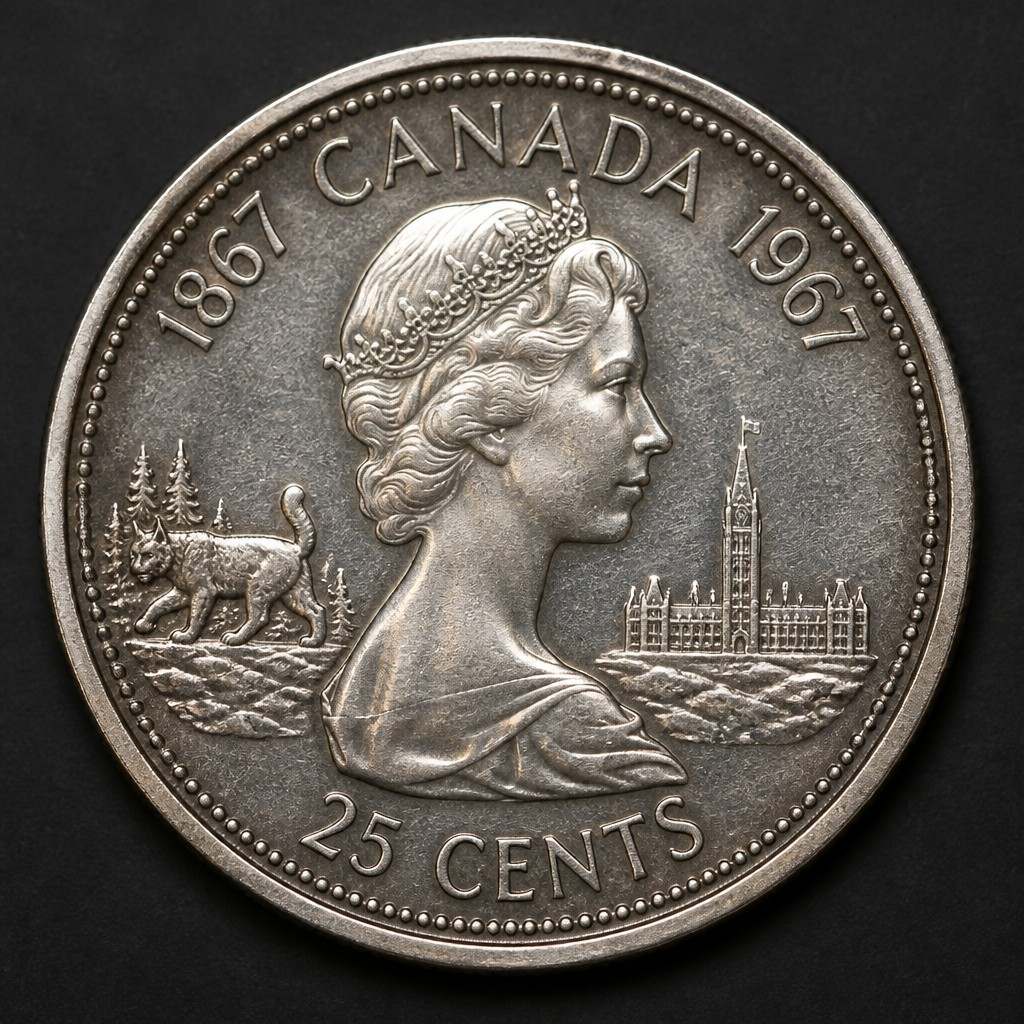
1967 Bobcat Centennial Quarter
1967
Caribou Twenty-Five Cents (quarter)
1937–present