
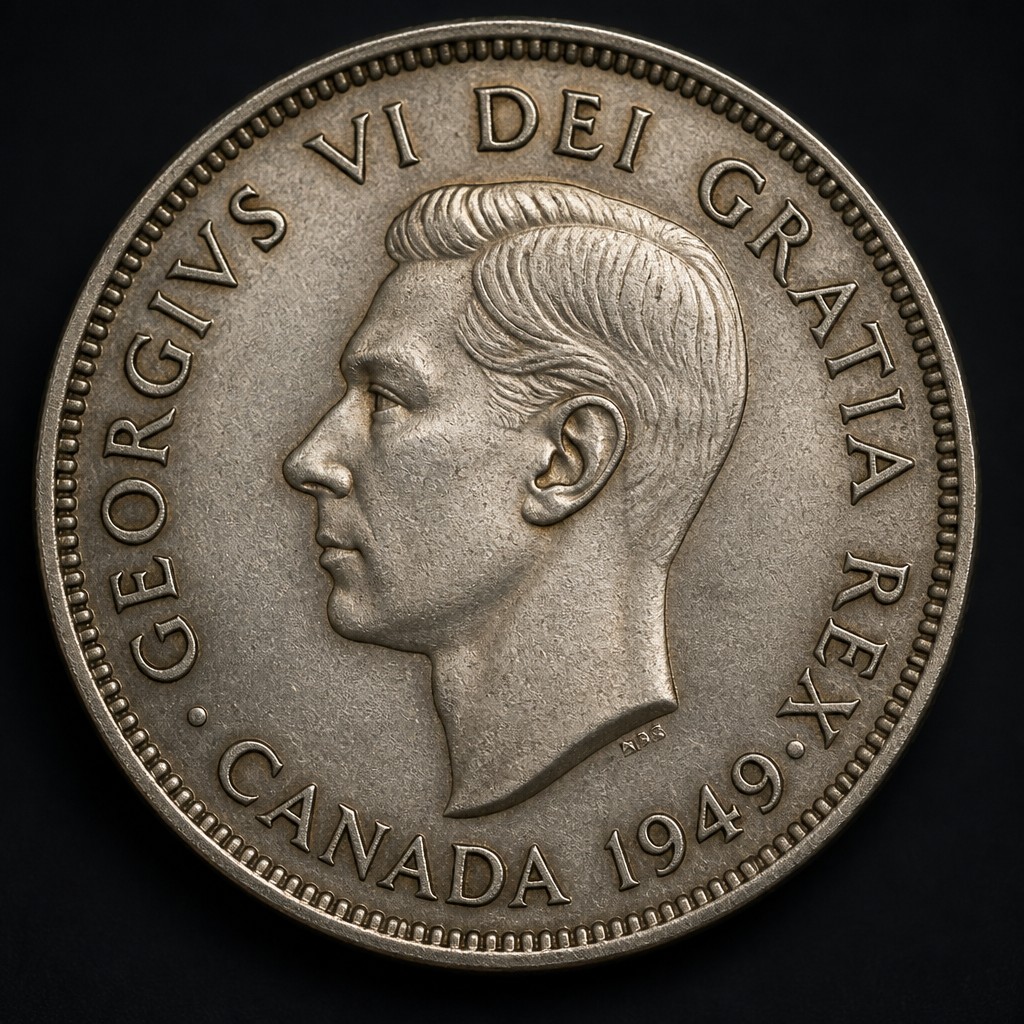
1949 King George VI Silver Dollar
A one-year Canadian silver dollar issued to mark Newfoundland's entry into Confederation, depicting John Cabot's ship the Matthew on the reverse.
- Country
- Canada
- Denomination
- One Dollar
- Metal
- 80% Silver, 20% Copper
Got a coin like this?
Identify any coin from a photo, free.
Overview
The 1949 silver dollar is a special commemorative issue struck to mark Newfoundland joining Canada as its tenth province on March 31, 1949. Unlike the regular Voyageur-design dollars of the period, this coin carries a unique reverse commemorating Newfoundland's seafaring heritage.
Collectors prize it as one of the more historically meaningful one-year types in the Canadian dollar series, bridging the country's territorial history with its standard silver dollar coinage.
History & Background
Newfoundland had remained a separate British dominion for decades after Canadian Confederation in 1867, only voting to join Canada following referendums held in 1948. To mark this significant expansion of Confederation, the Royal Canadian Mint replaced the standard Voyageur reverse used on Canadian silver dollars since 1935 with a special design for the 1949 issue only.
The reverse was designed by Thomas Shingles and depicts the Matthew, the ship in which the Italian explorer John Cabot sailed to Newfoundland in 1497, symbolically linking Newfoundland's centuries of maritime history to its new status as a Canadian province.
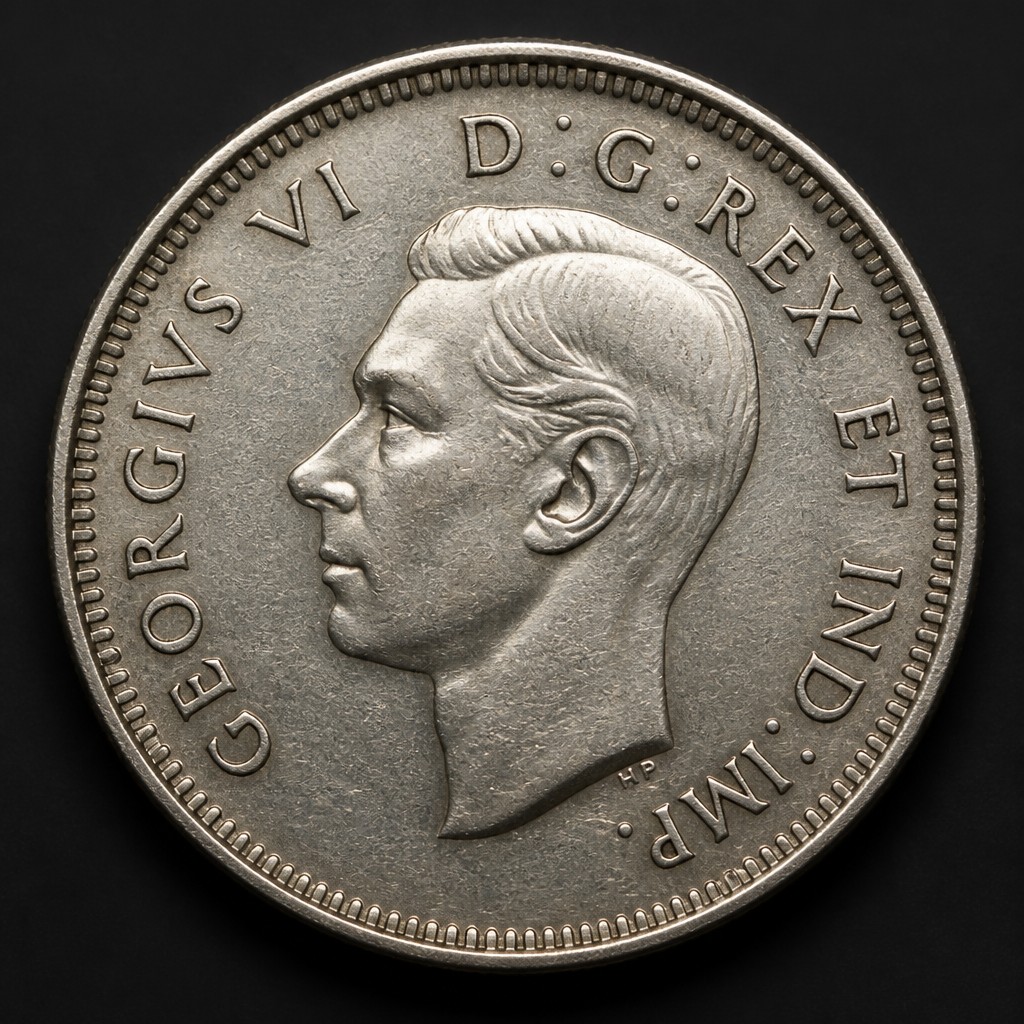
The obverse retained the standard portrait of King George VI used across Canadian coinage of the period, making 1949 the final Confederation-anniversary-style commemorative dollar issued during his reign.
How to Identify
The obverse shows King George VI in profile facing left, with the legend "GEORGIVS VI DEI GRATIA REX ET IND: IMP:" and the date. The reverse depicts a three-masted sailing ship, the Matthew, sailing on stylized waves, with "NEWFOUNDLAND" and "CANADA" legends and the denomination.
The coin is struck in 80% silver with a diameter of about 36mm, matching the standard size of other Canadian silver dollars of the era. Its distinguishing feature is the ship reverse, which sets it apart at a glance from the canoe-and-paddlers Voyageur reverse used in most other years of the series.
Value & Collectibility
The 1949 dollar was struck in relatively ample numbers for a commemorative and is affordable in circulated grades, with value rising for coins in choice uncirculated condition with strong luster and minimal bag marks. As with most classic Canadian silver dollars, well-preserved gem examples command a significant premium over typical circulated pieces.
Because it is a one-year design tied to a specific historical event, collectors building a Canadian dollar type set often seek this issue specifically, which supports steady demand even though it is not considered a great rarity.
Frequently asked questions
Why does the 1949 dollar look different from other Canadian silver dollars?
It commemorates Newfoundland joining Canada in 1949 and uses a special one-year reverse showing the ship Matthew instead of the usual Voyageur canoe design.
What is the silver content of the 1949 dollar?
It is struck in an alloy of 80% silver and 20% copper, the standard fineness for Canadian silver dollars of that era.
Is the 1949 dollar rare?
It is not considered a key rarity, but well-preserved uncirculated examples are harder to find and command higher prices than typical circulated coins.
Who designed the reverse?
Canadian Mint engraver Thomas Shingles designed the ship reverse commemorating Newfoundland's maritime history.
Other coins you may enjoy
1953 Coronation Voyageur Dollar
1953
1911 Canadian Silver Dollar (Pattern)
1911
George V Twenty-Five Cents (silver)
1911–1936
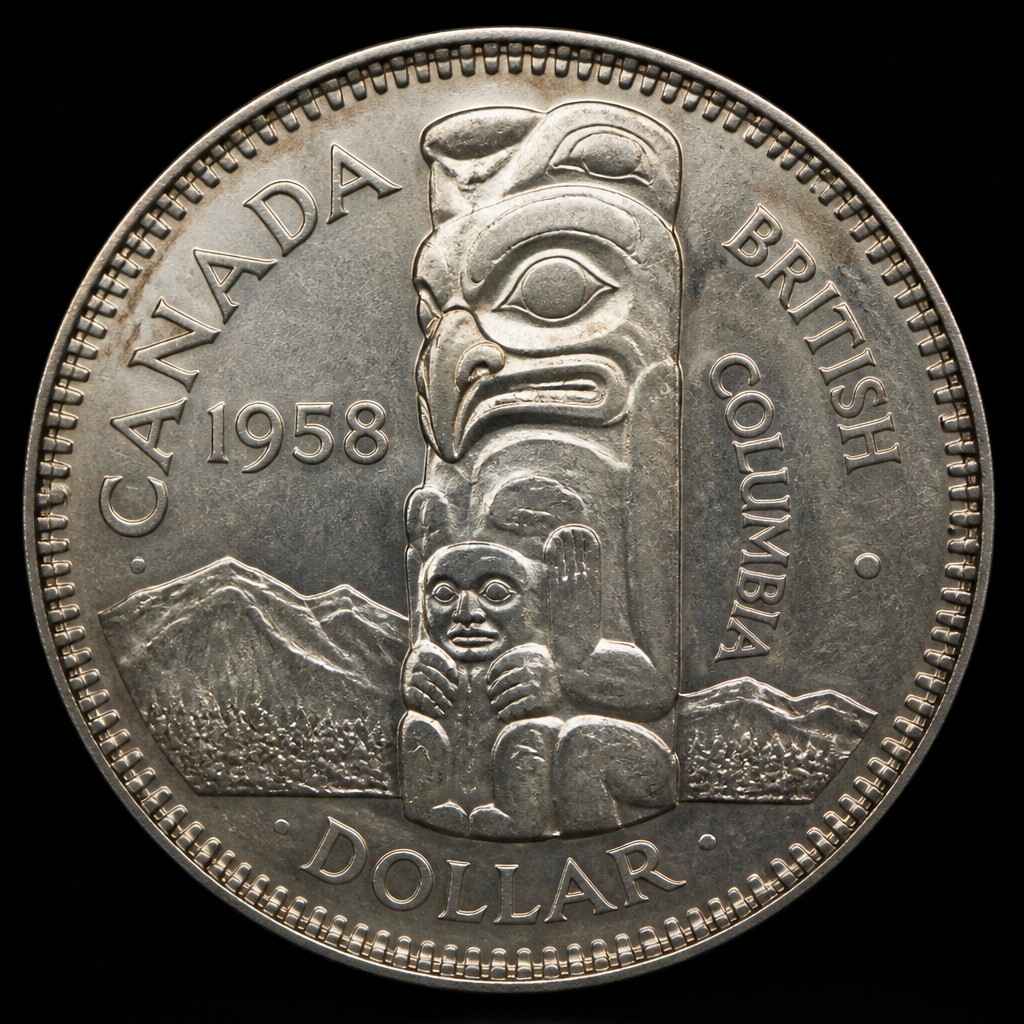
1958 British Columbia Totem Pole Dollar
1958
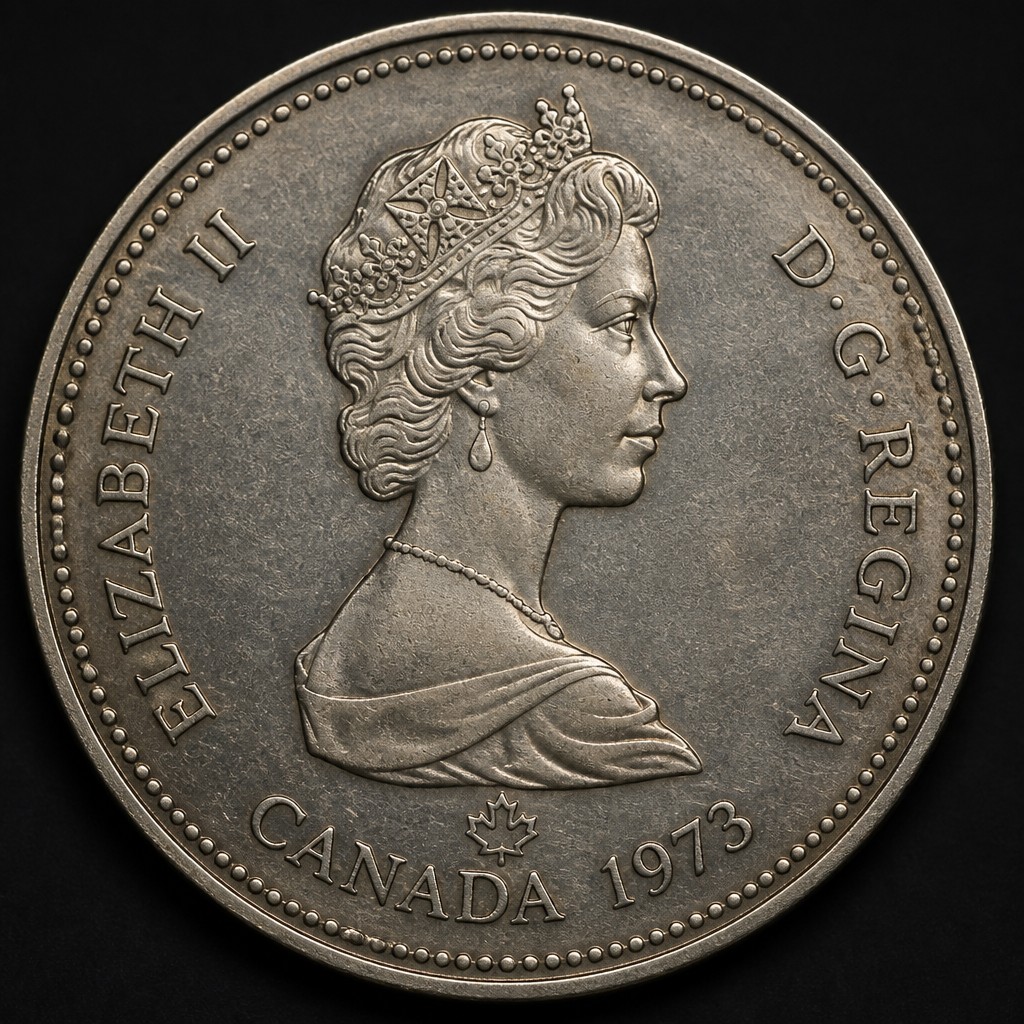
1973 RCMP Centennial Dollar
1973
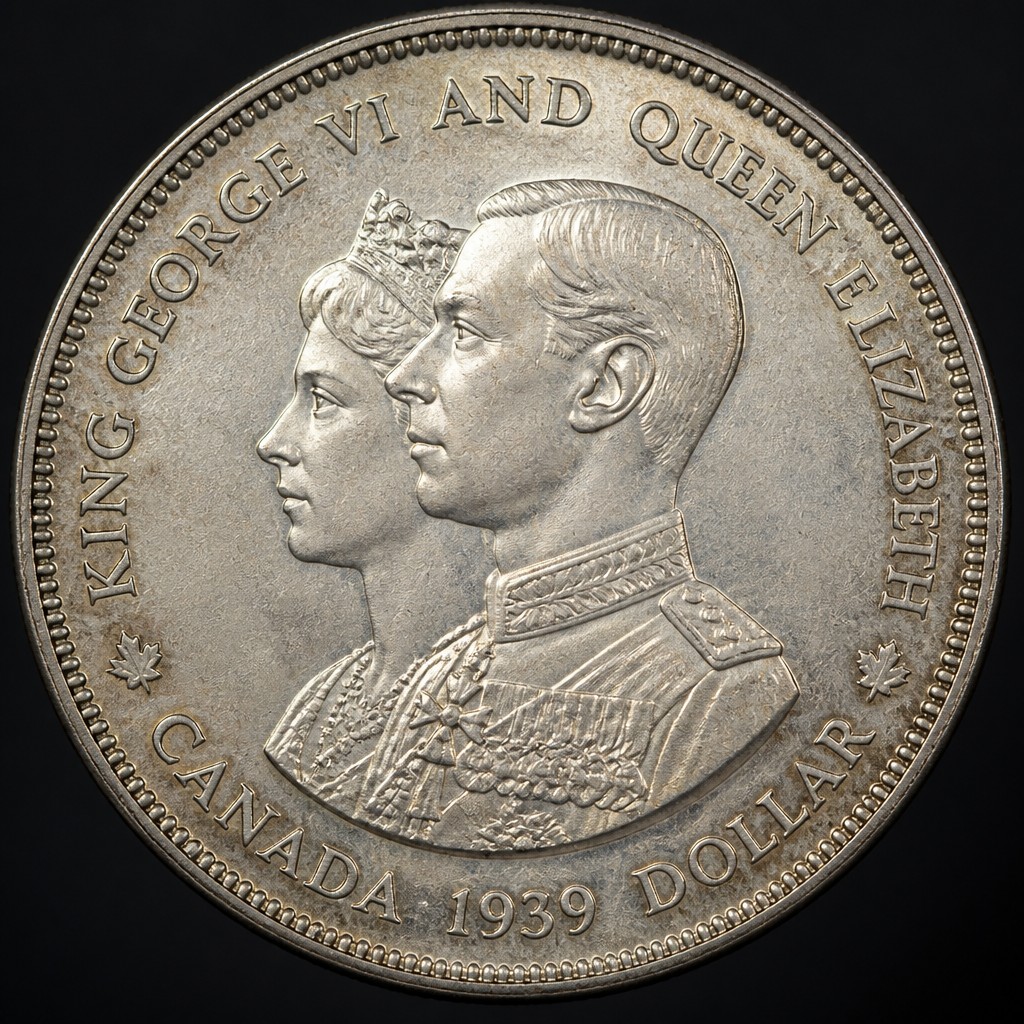
1939 Royal Visit Silver Dollar (Parliament)
1939
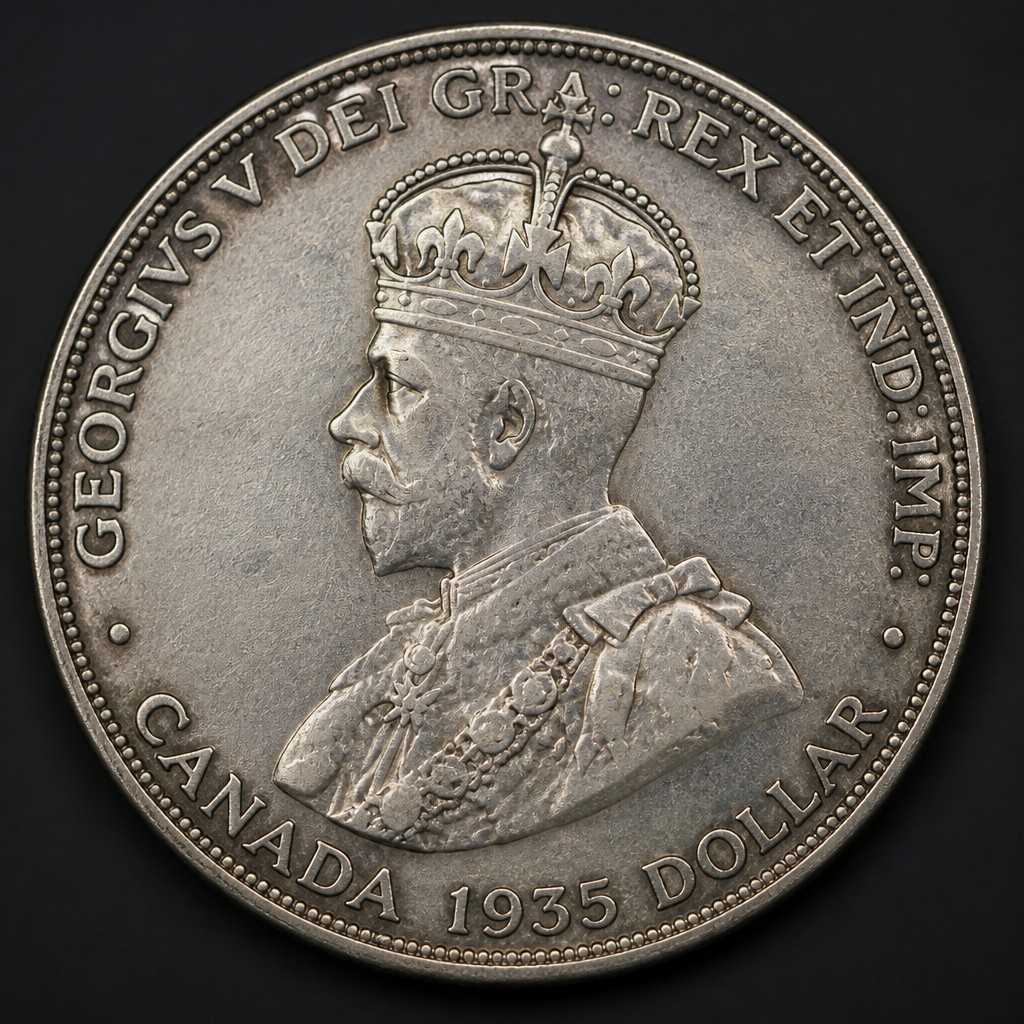
1935 George V Silver Jubilee Dollar (Voyageur)
1935
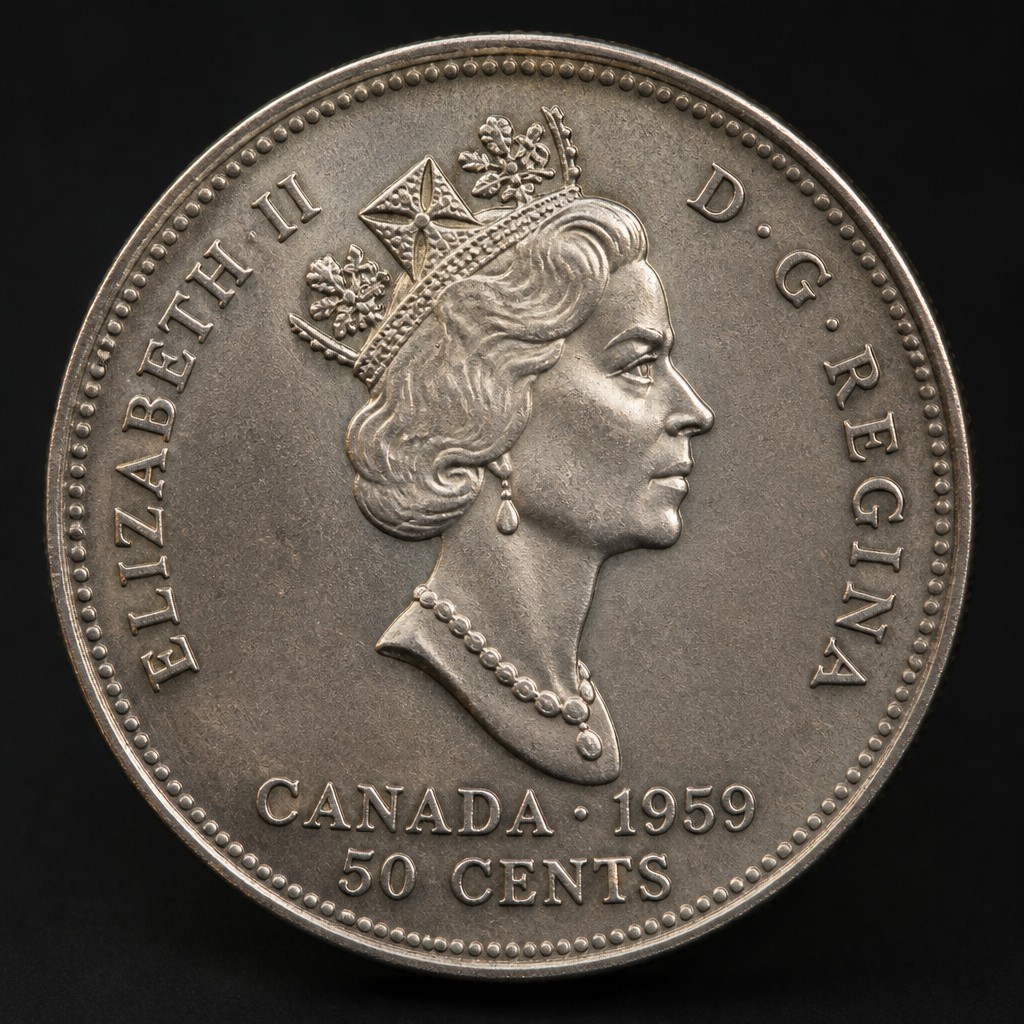
Coat of Arms Fifty Cents (Elizabeth II)
1959–present
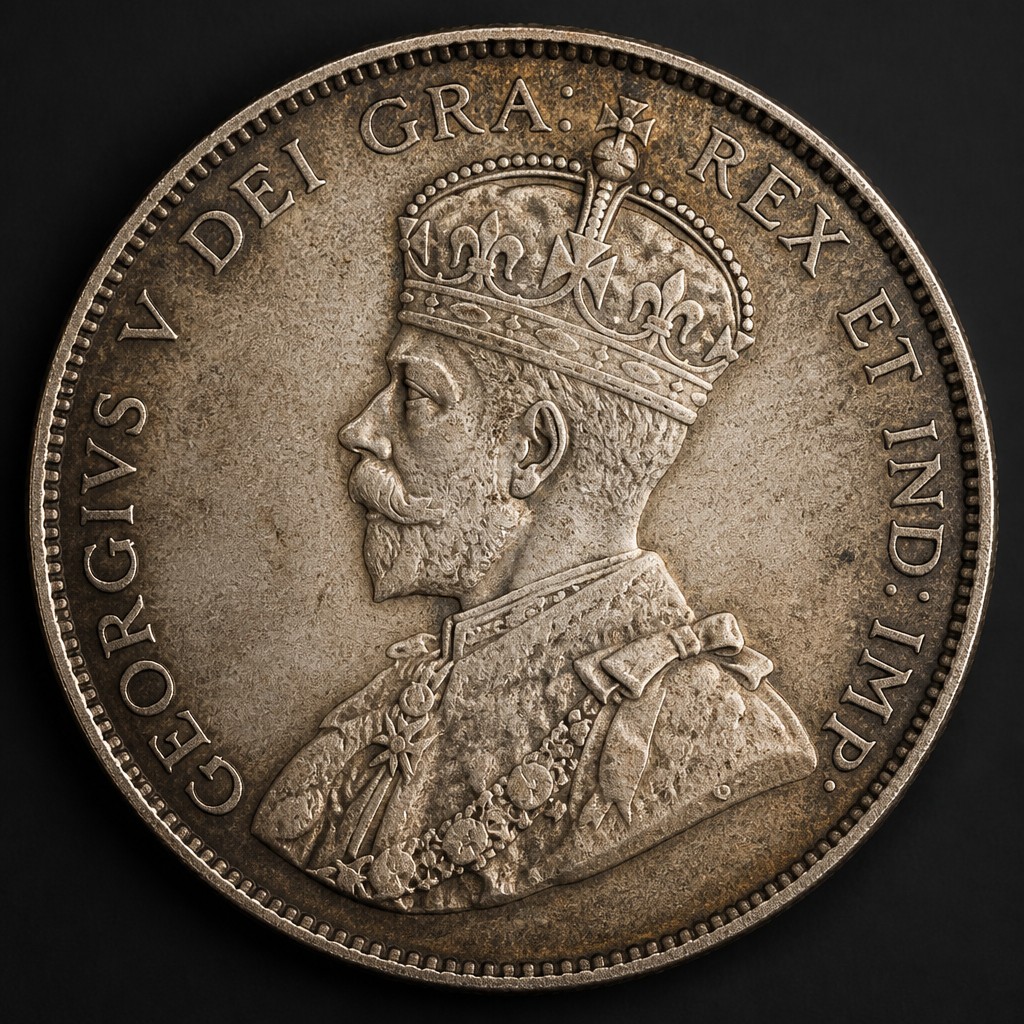
1921 Fifty Cents (King of Canadian Coins)
1921
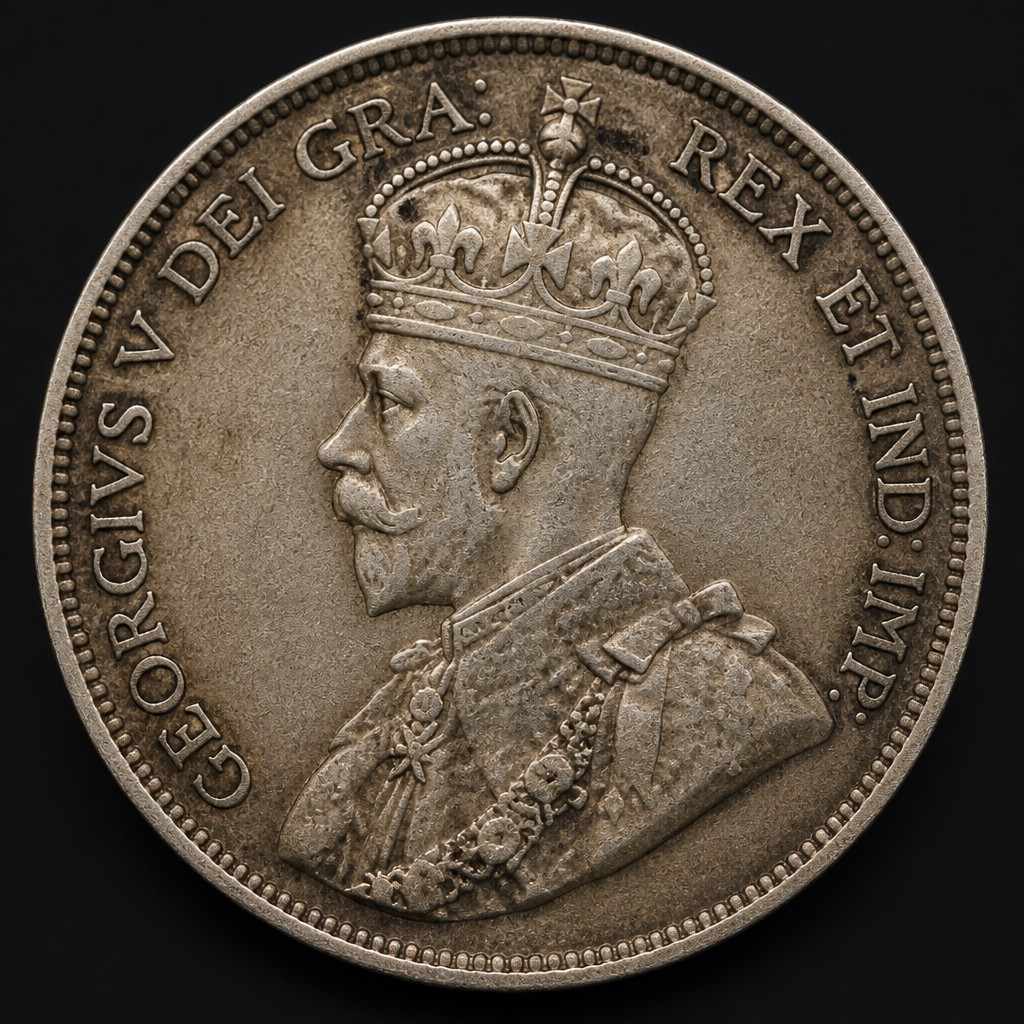
George V Fifty Cents
1911–1936
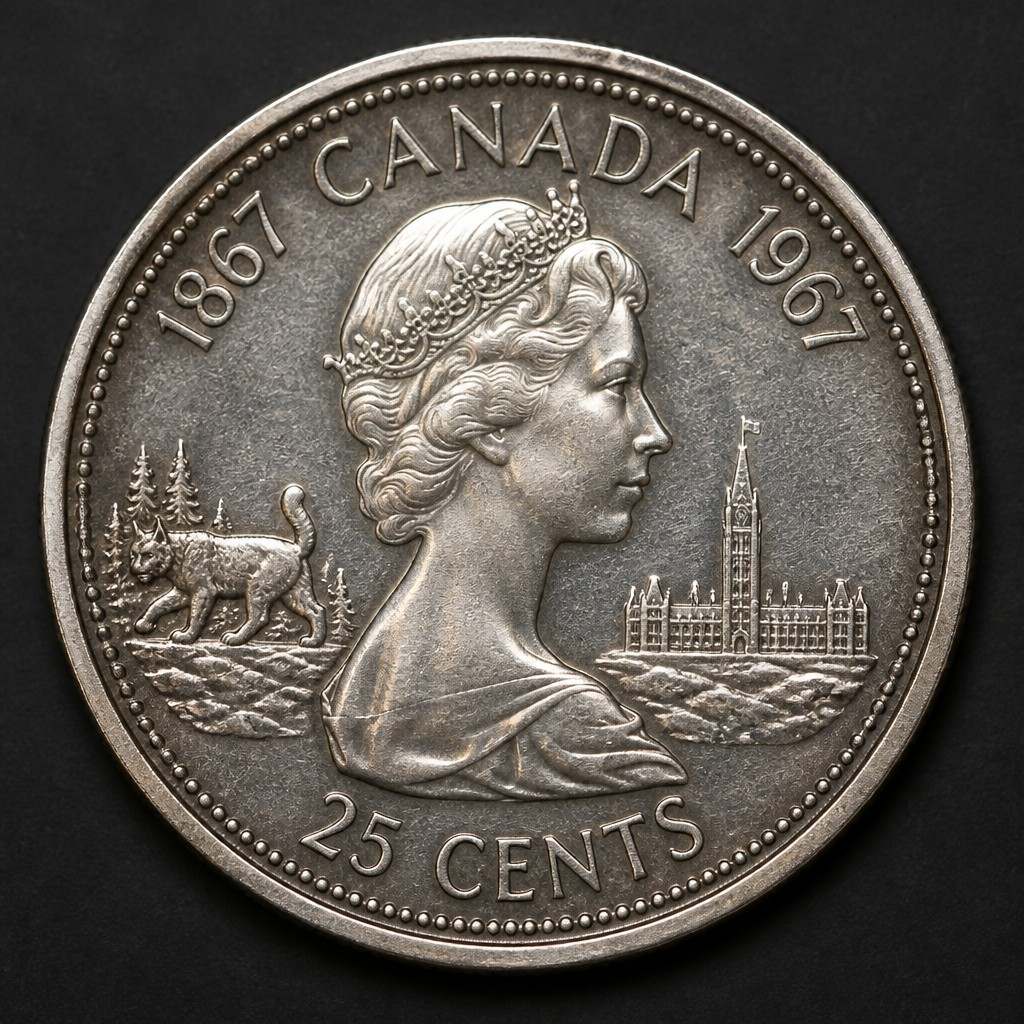
1967 Bobcat Centennial Quarter
1967
Caribou Twenty-Five Cents (quarter)
1937–present