
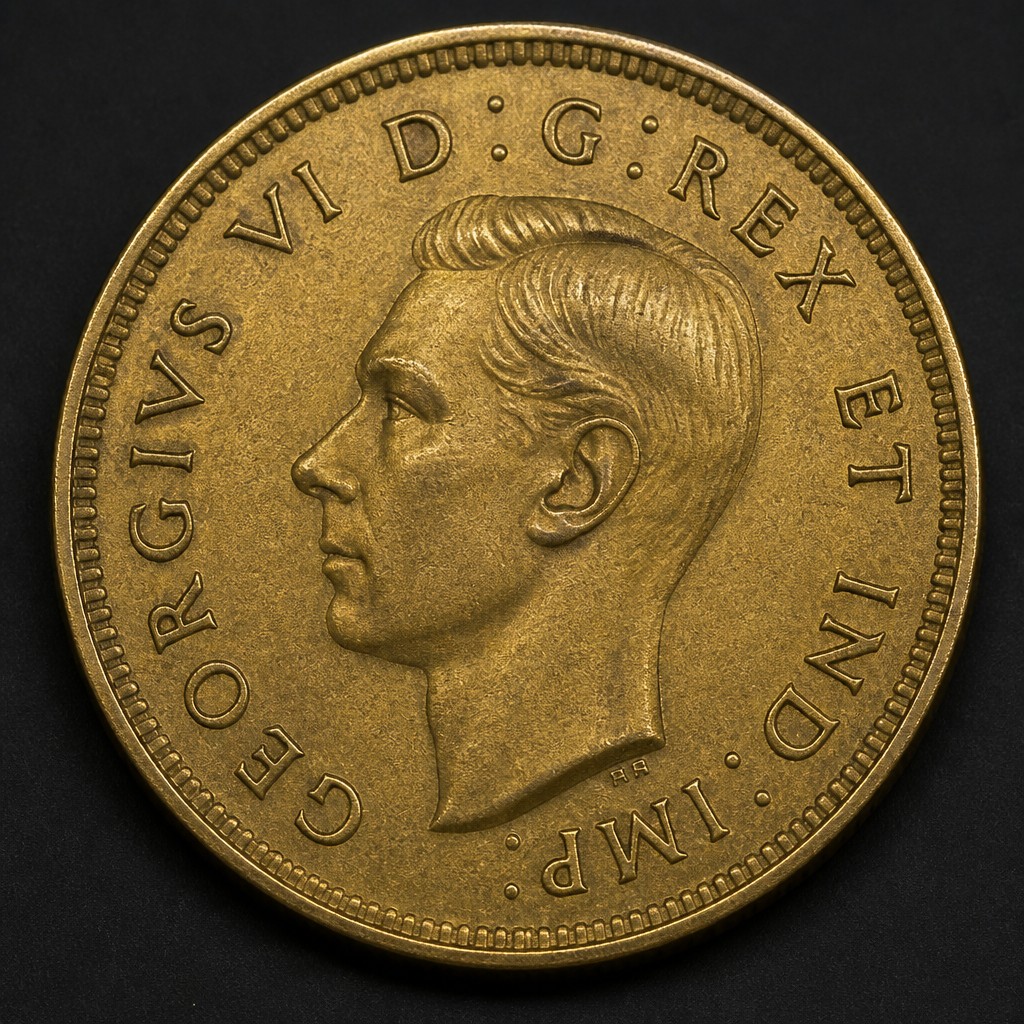
1943 'V' Victory Nickel (tombac)
A wartime Canadian five-cent coin struck in golden tombac with a bold V for Victory and a Morse code message around its edge, issued when nickel metal was diverted to the war effort.
- Country
- Canada
- Denomination
- Five Cents
- Metal
- Tombac (brass alloy: copper and zinc)
Got a coin like this?
Identify any coin from a photo, free.
Overview
The Victory Nickel is one of the most distinctive coins Canada has ever produced, combining a patriotic wartime message with an unusual composition and shape. Struck during the Second World War when nickel metal itself was urgently needed for armaments and armor plating, it replaced the coin's namesake metal with a golden-colored copper-zinc alloy called tombac.
Collectors are drawn to the coin's striking design, its 12-sided shape (shared with the earlier 1942 tombac five-cent), and the hidden Morse code message worked into its rim, all of which make it an instantly recognizable piece of wartime Canadian history.
History & Background
As Canada mobilized for the Second World War, nickel became a strategically critical metal needed for military production, prompting the Royal Canadian Mint to remove it from the five-cent coin. Beginning in 1942, the mint struck five-cent pieces in tombac, a brass-like copper-zinc alloy, and gave the coin a 12-sided shape to help the public and vending machines distinguish it by feel and sight from the one-cent piece.
For 1943, the mint's chief engraver, Thomas Shingles, designed a new reverse specifically to mark the ongoing war effort: a large V for Victory dominates the design, with a torch and flame behind it, echoing the well-known wartime "V for Victory" campaign popularized by Winston Churchill and Allied propaganda.
Around the rim of the coin, a series of raised dots and dashes spell out the Morse code message "WE WIN WHEN WE WORK WILLINGLY," a patriotic slogan encouraging wartime production on the home front. Tombac was used again briefly into 1944 before rising copper and zinc demands led the mint to switch to chrome-plated steel for the remainder of the war.
How to Identify
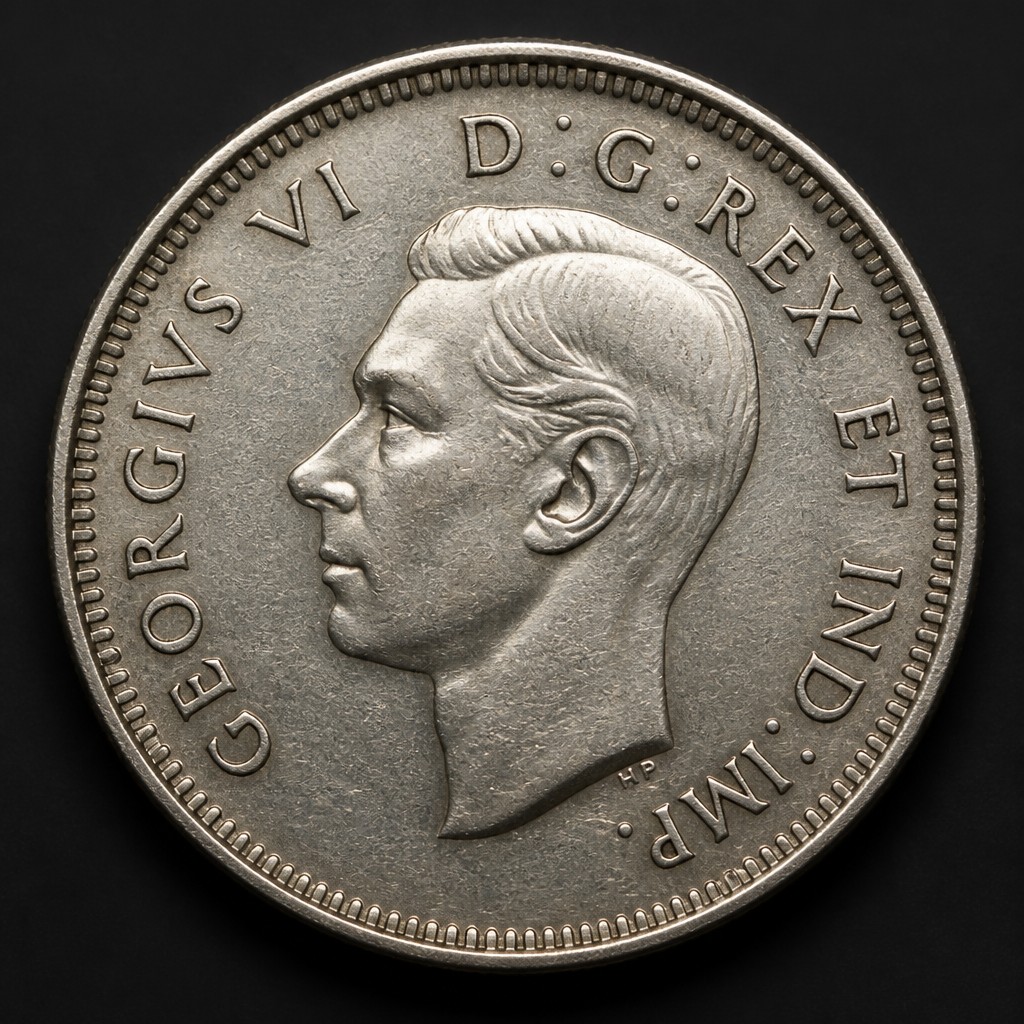
The obverse carries the crowned portrait of King George VI with the legend GEORGIVS VI DEI GRATIA REX ET IMPERATOR. The reverse is dominated by a large V, with a torch and flame rising behind it, the word CANADA and the date 1943 (or 1944) arranged around the design, and a small maple leaf motif.
The coin is 12-sided rather than round, distinguishing it at a glance from ordinary Canadian five-cent coins, and its tombac composition gives it a warm, golden-brass color quite different from the silvery nickel or gray steel coins used in other years. Around the rim, a sequence of raised Morse code dots and dashes can be read (and even tapped out) to reveal the wartime slogan.
Collectors distinguish the 1943 and 1944 tombac V-nickels from the plain, non-Morse-code 1942 tombac five-cent (which lacks the V design) and from the later chrome-plated steel five-cent coins of 1944-45 and the early 1950s, which share the 12-sided shape but differ in color and, in some years, design.
Value & Collectibility
The Victory Nickel is a popular and generally affordable coin in circulated grades, prized more for its historical story and unusual design than for outright rarity. Well-struck, uncirculated examples with strong original luster and a bold, complete strike of the Morse code rim command a noticeable premium over average circulated pieces.
As a widely recognized and collected wartime coin, it remains a favorite entry point for collectors interested in World War II-era Canadian and Allied numismatics, without requiring the budget of a true key-date rarity.
Frequently asked questions
What does the Morse code around the rim say?
The dots and dashes spell out the wartime slogan "WE WIN WHEN WE WORK WILLINGLY."
Why is the coin 12-sided instead of round?
The 12-sided shape helped people and vending machines distinguish the wartime nickel from the similarly sized one-cent coin by feel as well as sight.
What is tombac?
Tombac is a brass-like alloy of mostly copper with some zinc, used as a substitute when nickel metal was needed for the war effort.
Who designed the V reverse?
Royal Canadian Mint chief engraver Thomas Shingles designed the Victory reverse.
Is the Victory Nickel rare?
It is not particularly rare and is affordable in most grades, valued primarily for its historical significance and design.
Other coins you may enjoy
1953 Coronation Voyageur Dollar
1953
1911 Canadian Silver Dollar (Pattern)
1911
George V Twenty-Five Cents (silver)
1911–1936
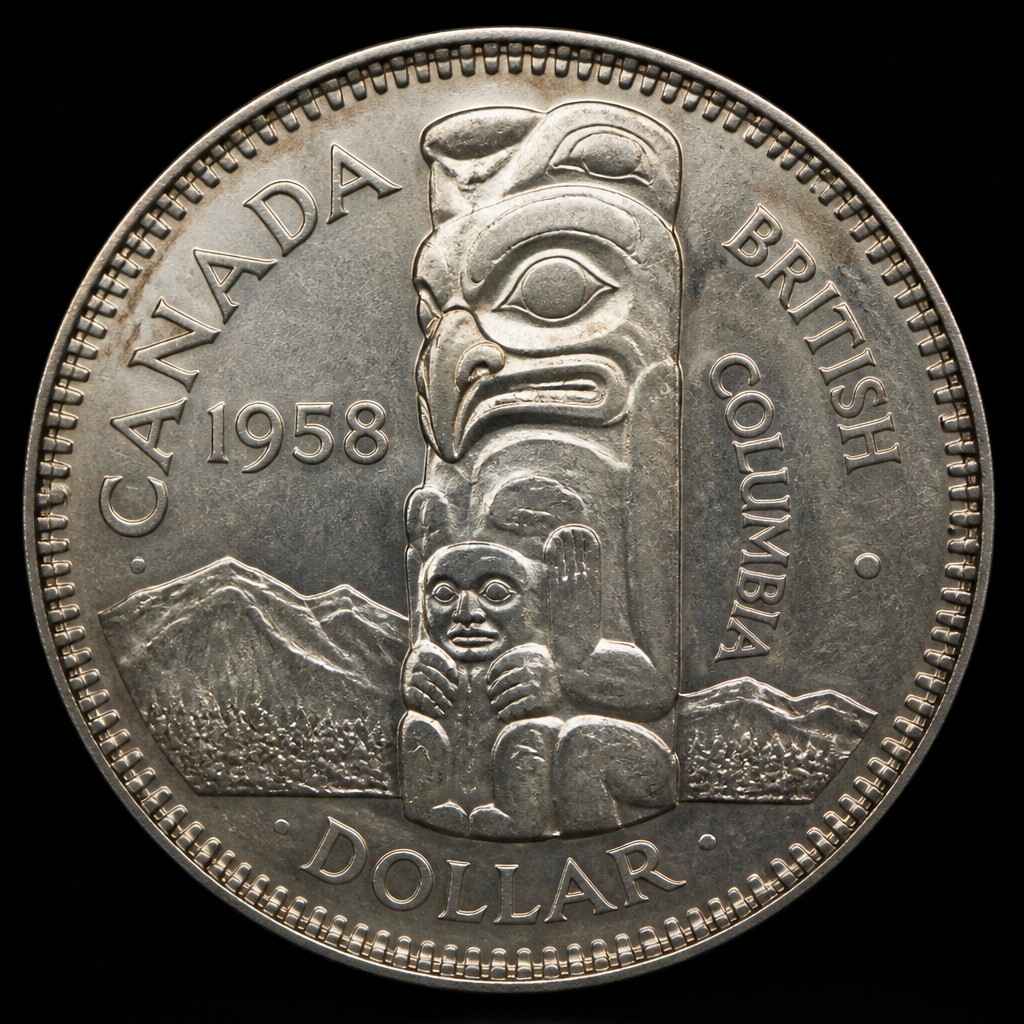
1958 British Columbia Totem Pole Dollar
1958
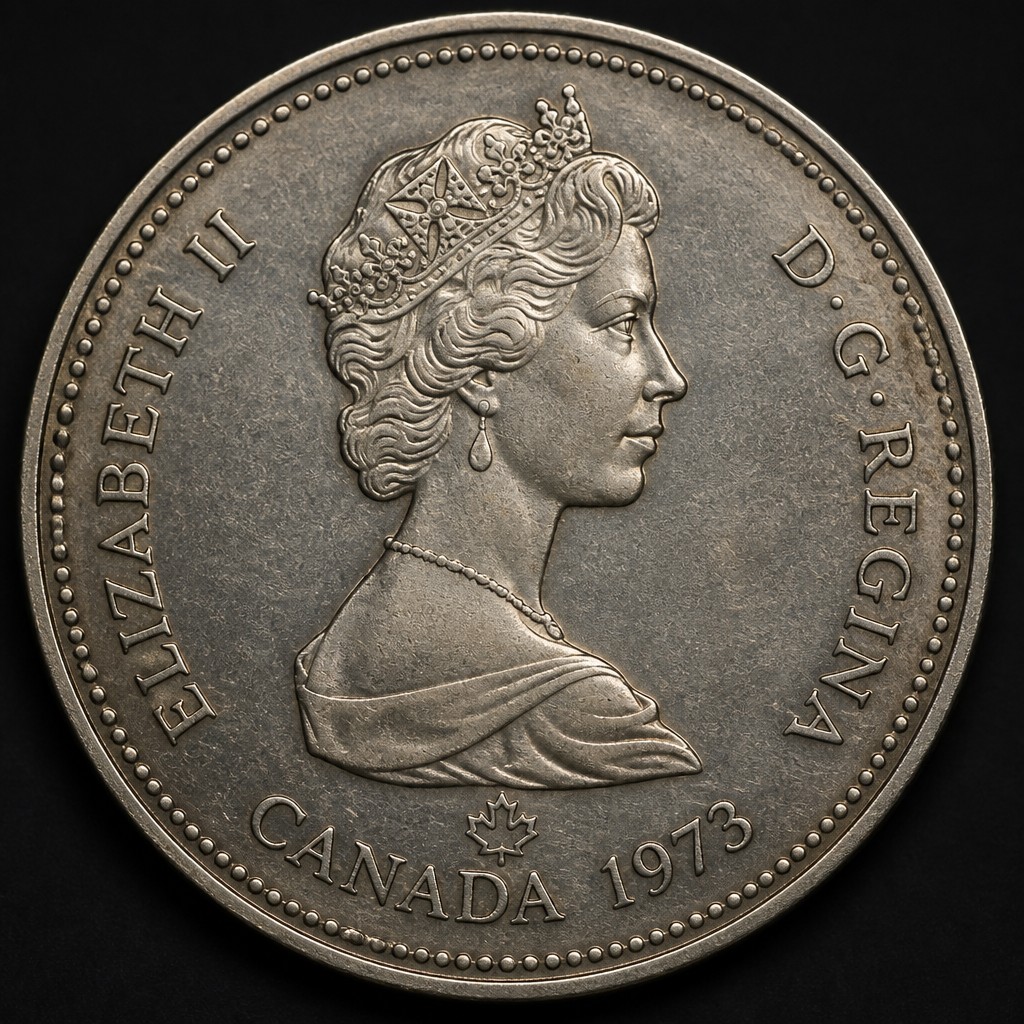
1973 RCMP Centennial Dollar
1973
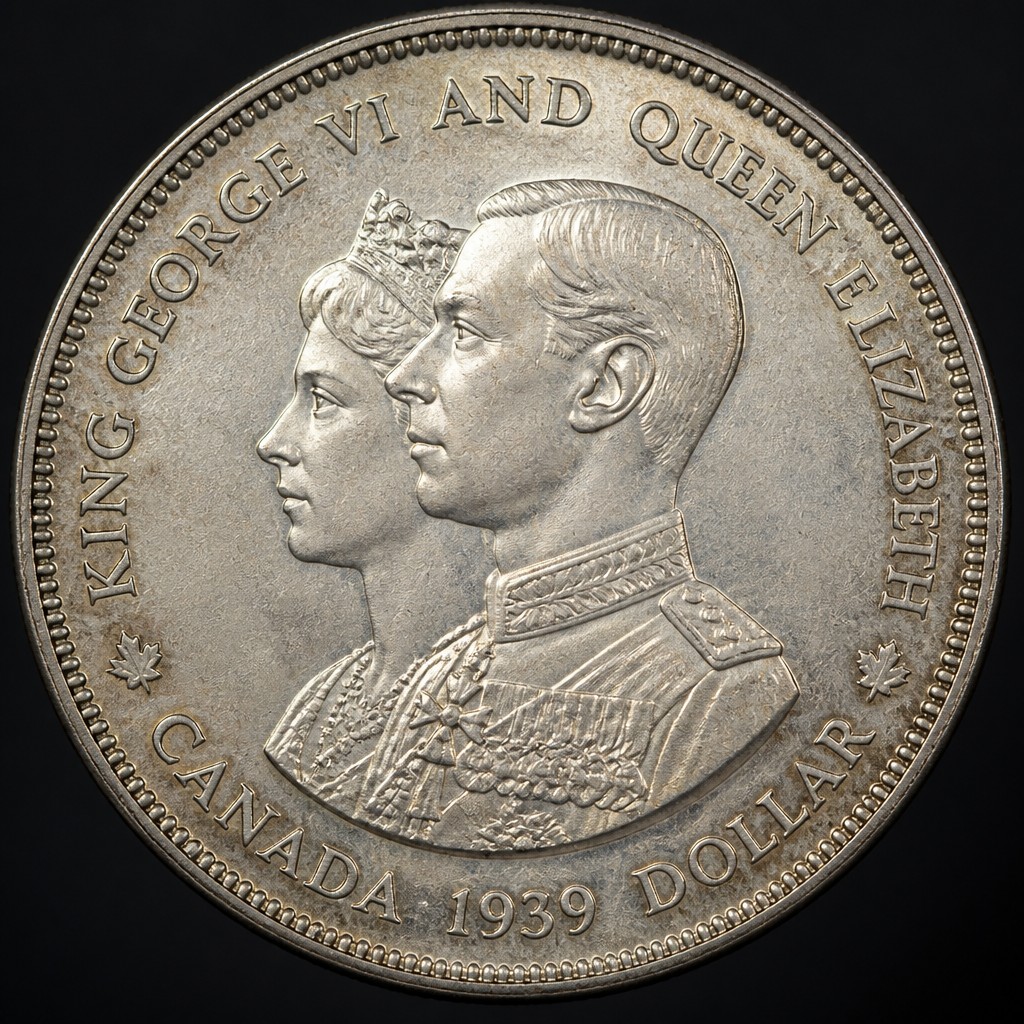
1939 Royal Visit Silver Dollar (Parliament)
1939
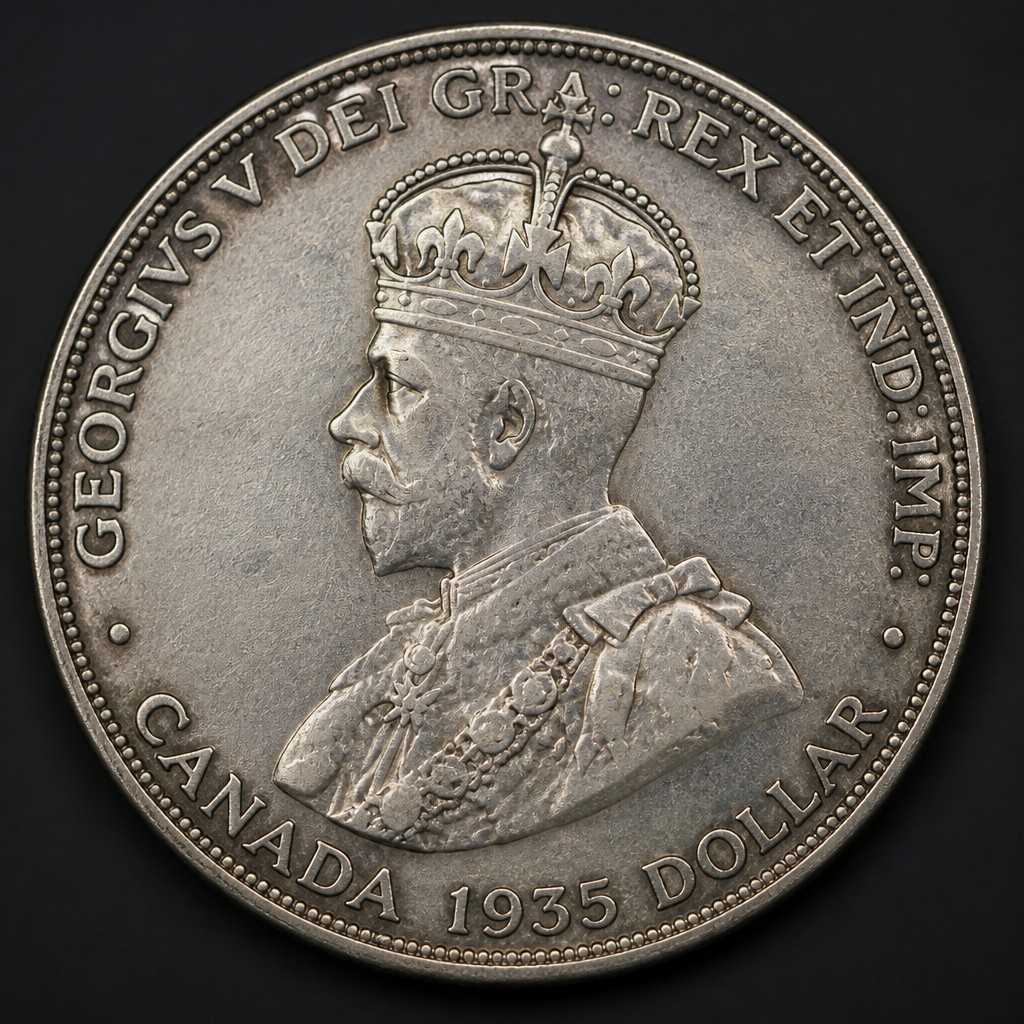
1935 George V Silver Jubilee Dollar (Voyageur)
1935
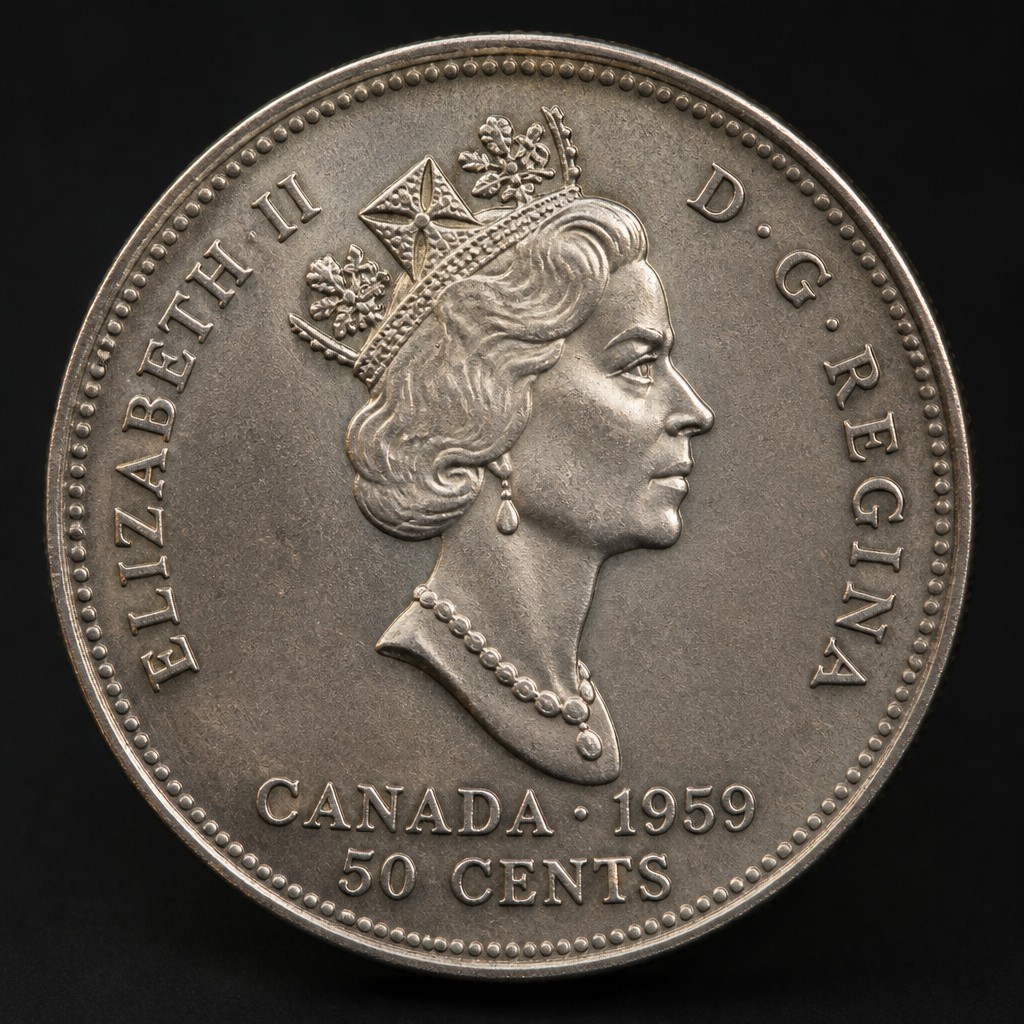
Coat of Arms Fifty Cents (Elizabeth II)
1959–present
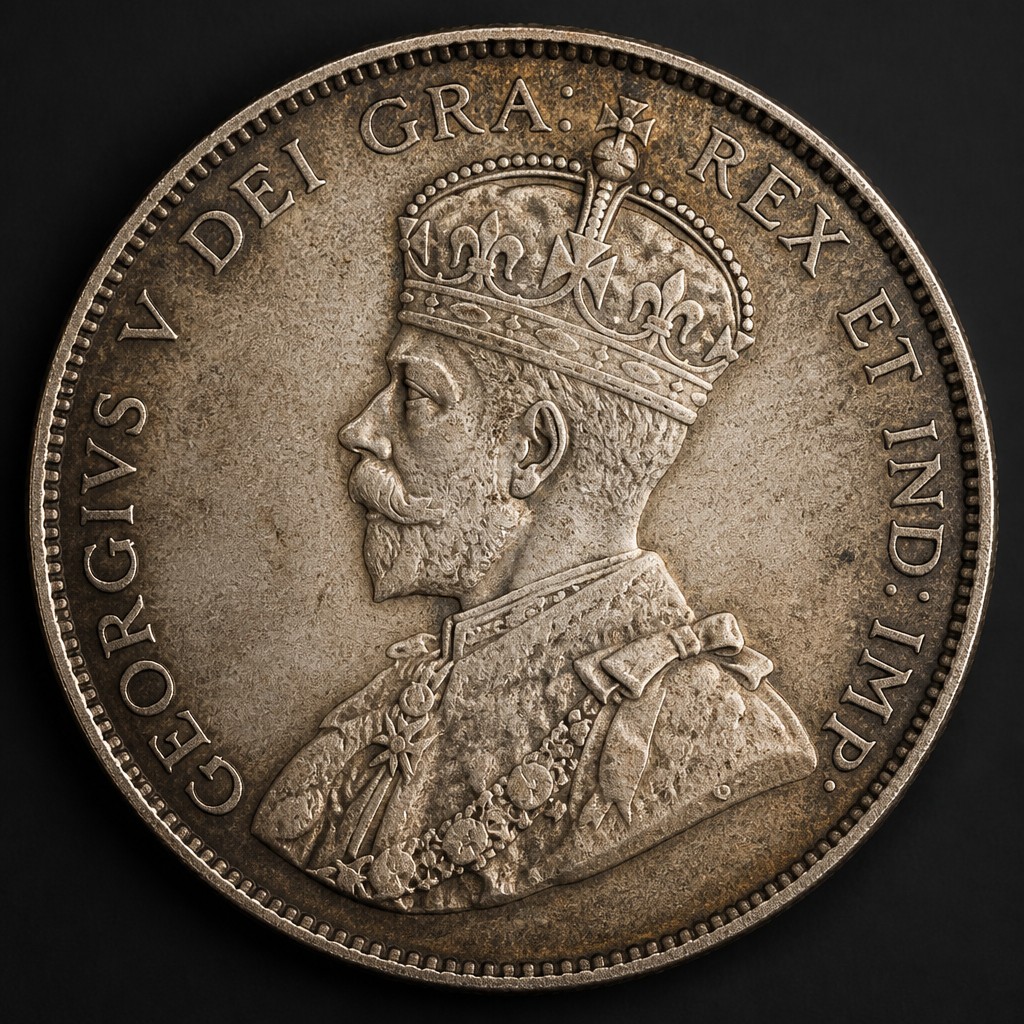
1921 Fifty Cents (King of Canadian Coins)
1921
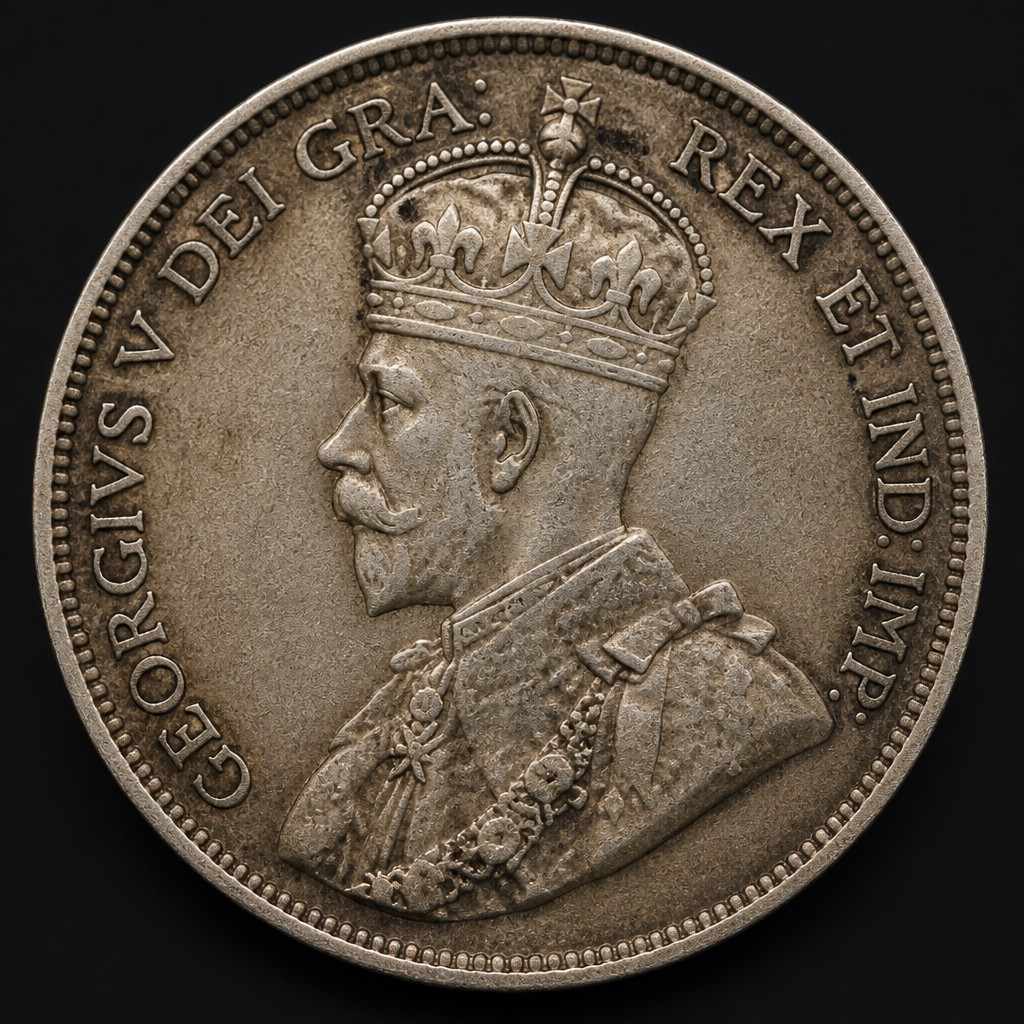
George V Fifty Cents
1911–1936
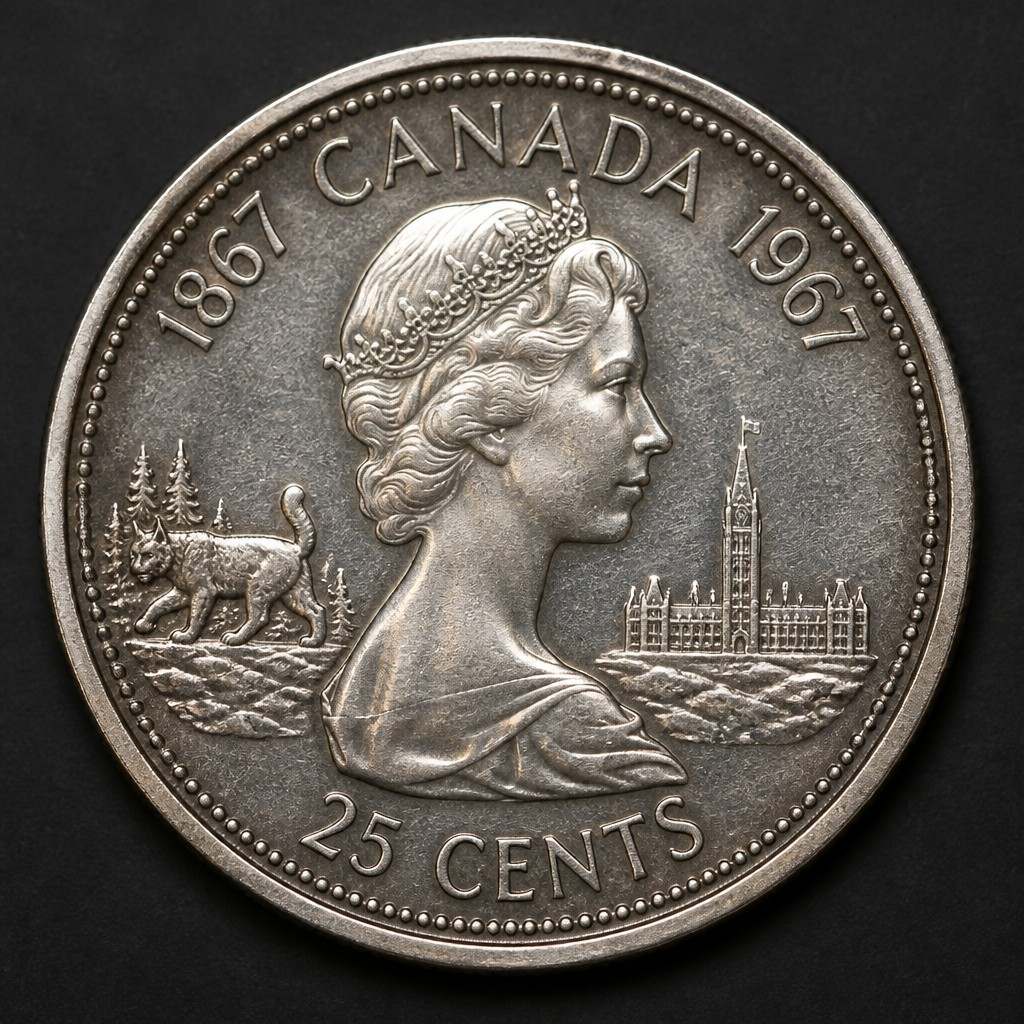
1967 Bobcat Centennial Quarter
1967
Caribou Twenty-Five Cents (quarter)
1937–present