
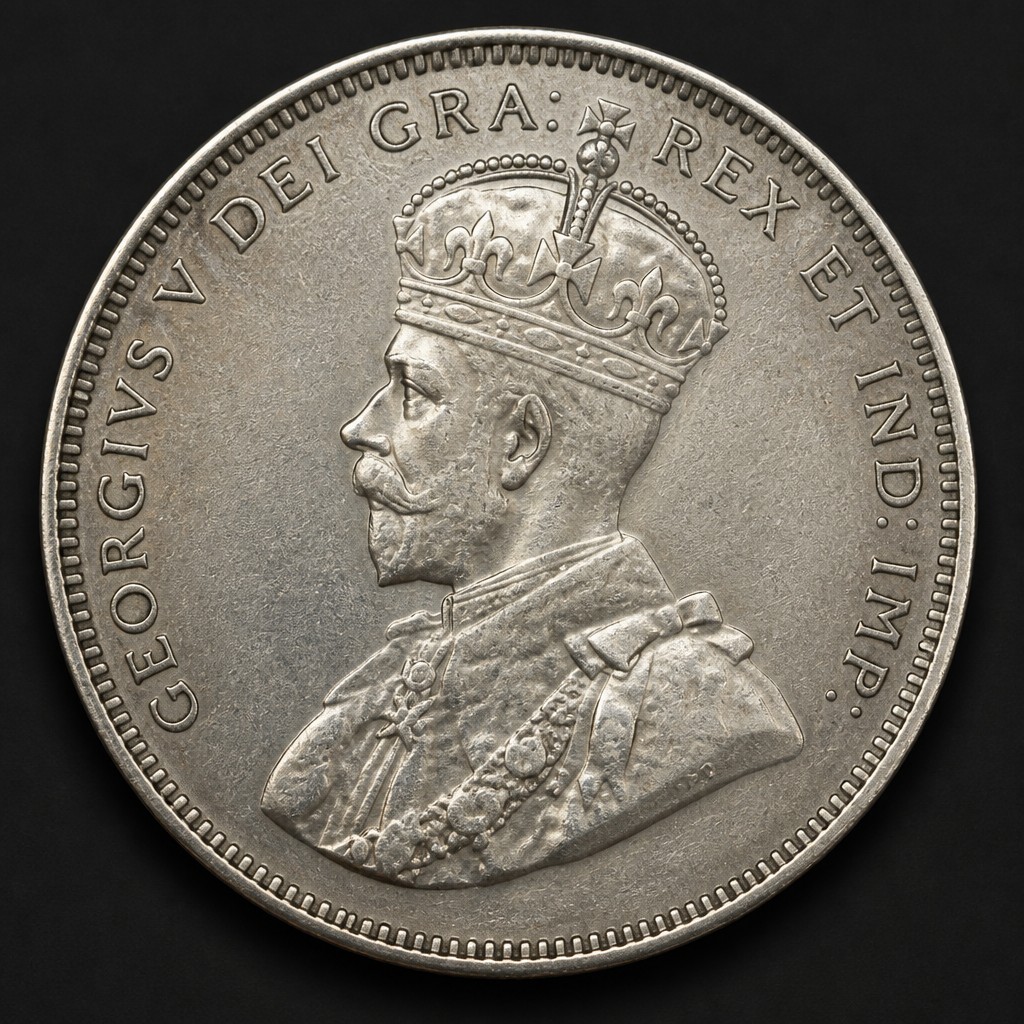
1936 Voyageur Silver Dollar
The first regular-issue (non-commemorative) Canadian silver dollar, continuing the Voyageur canoe design introduced the previous year for George V's Silver Jubilee.
- Country
- Canada
- Denomination
- One Dollar
- Metal
- 80% Silver
Got a coin like this?
Identify any coin from a photo, free.
Overview
Following the success of the special 1935 Silver Jubilee dollar, Canada adopted the Voyageur design as its standard silver dollar reverse beginning in 1936, making this the first year the denomination was issued as ordinary circulating coinage rather than a one-time commemorative. The design, showing a voyageur and Indigenous guide paddling a laden canoe, would remain in use for the Canadian silver dollar for decades to come.
For collectors, the 1936 dollar represents the true starting point of the regular Voyageur dollar series that runs through the mid-1980s, distinct from the special 1935 commemorative that preceded it.
History & Background
After the enthusiastic public reception of the 1935 Silver Jubilee dollar, the Royal Canadian Mint decided to continue issuing a silver dollar as part of its regular coinage lineup rather than treating the denomination as a one-off commemorative. The 1936 issue therefore carried the same Voyageur reverse design forward as the new standard for the denomination.
The 1936 dollar was struck during the final year of King George V's reign; he died in January 1936, meaning that later that year the obverse dies would eventually need updating for his successors, adding a layer of historical interest to coins from this particular year.
How to Identify
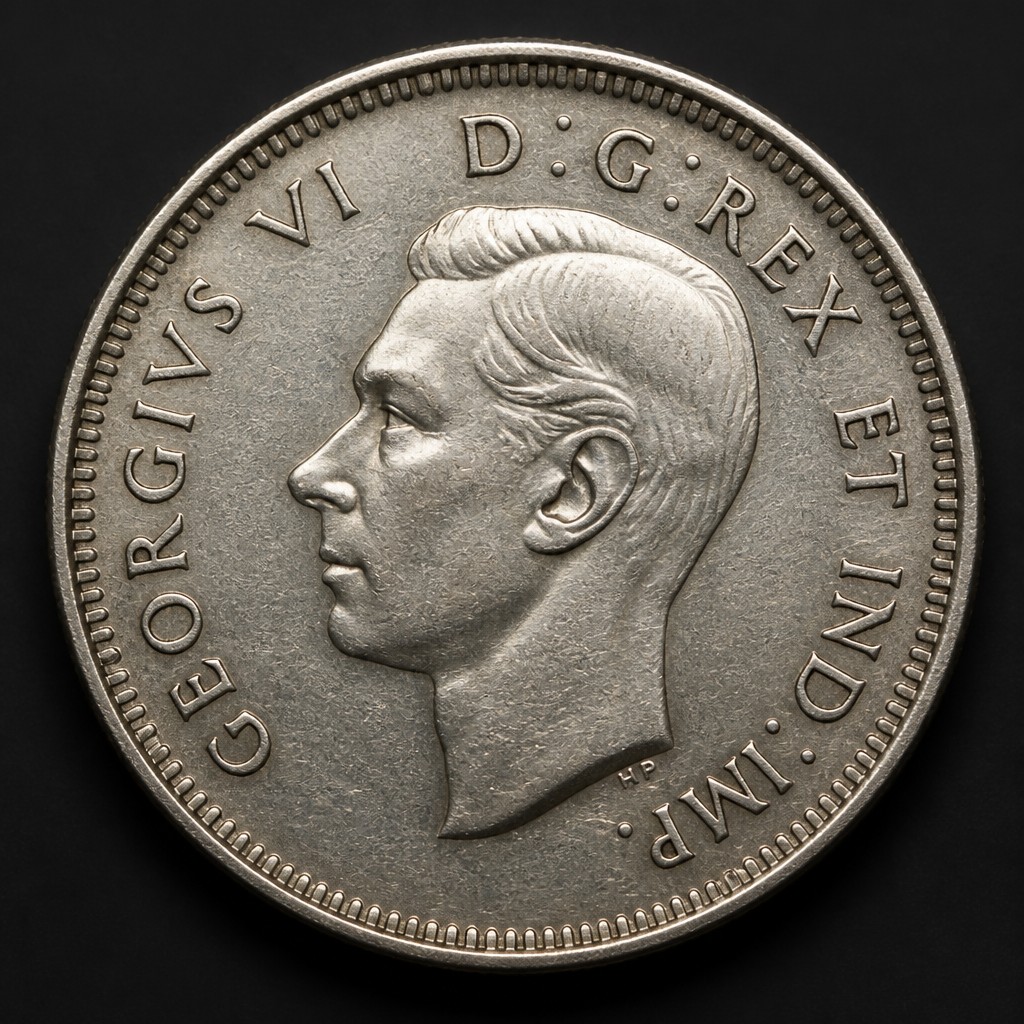
The obverse features King George V's portrait with the standard royal legends and the date 1936. The reverse shows the familiar Voyageur scene: two men paddling a canoe with a bundled cargo, a small island, and stylized northern lights in the background, bordered by "CANADA" and "ONE DOLLAR."
The coin shares the same .800 fine silver composition, diameter, and reeded edge as the 1935 issue, and the design is essentially identical between the two years, so accurate date reading is the primary way to distinguish them.
As with other dates in the series, no mint mark appears on the coin, since it was struck solely at the Royal Canadian Mint in Ottawa.
Value & Collectibility
The 1936 dollar had a relatively limited mintage compared to some later Voyageur dollar years, giving it a modest premium over generic silver dollar values even in circulated grades. Sharp, well-preserved examples are particularly appealing to collectors assembling a complete date run of Voyageur dollars.
While not as universally famous as the first-year 1935 commemorative, the 1936 dollar is recognized by specialists as a moderately scarce early date within the broader series.
Frequently asked questions
How is the 1936 dollar different from the 1935 dollar?
The 1935 issue was a special one-year commemorative for George V's Silver Jubilee; the 1936 dollar was the first regular annual issue using the same Voyageur design.
What is the silver content of the 1936 dollar?
It is .800 fine silver, matching the Canadian standard of the period.
Is the 1936 dollar rare?
It is not extremely rare, but it had a lower mintage than many later Voyageur dollar dates, giving it a modest premium.
Does the coin have a mint mark?
No, it was struck only at the Royal Canadian Mint in Ottawa and carries no mint mark.
Other coins you may enjoy
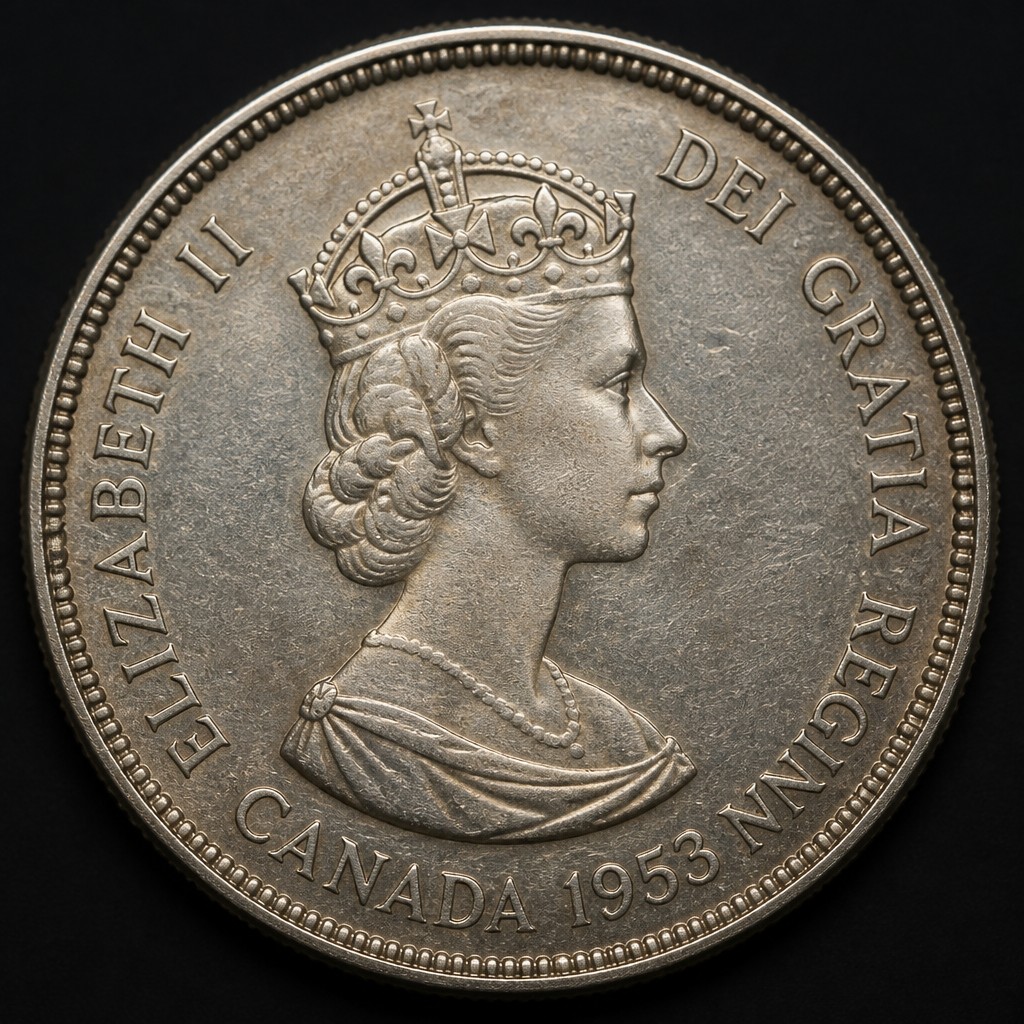
1953 Coronation Voyageur Dollar
1953
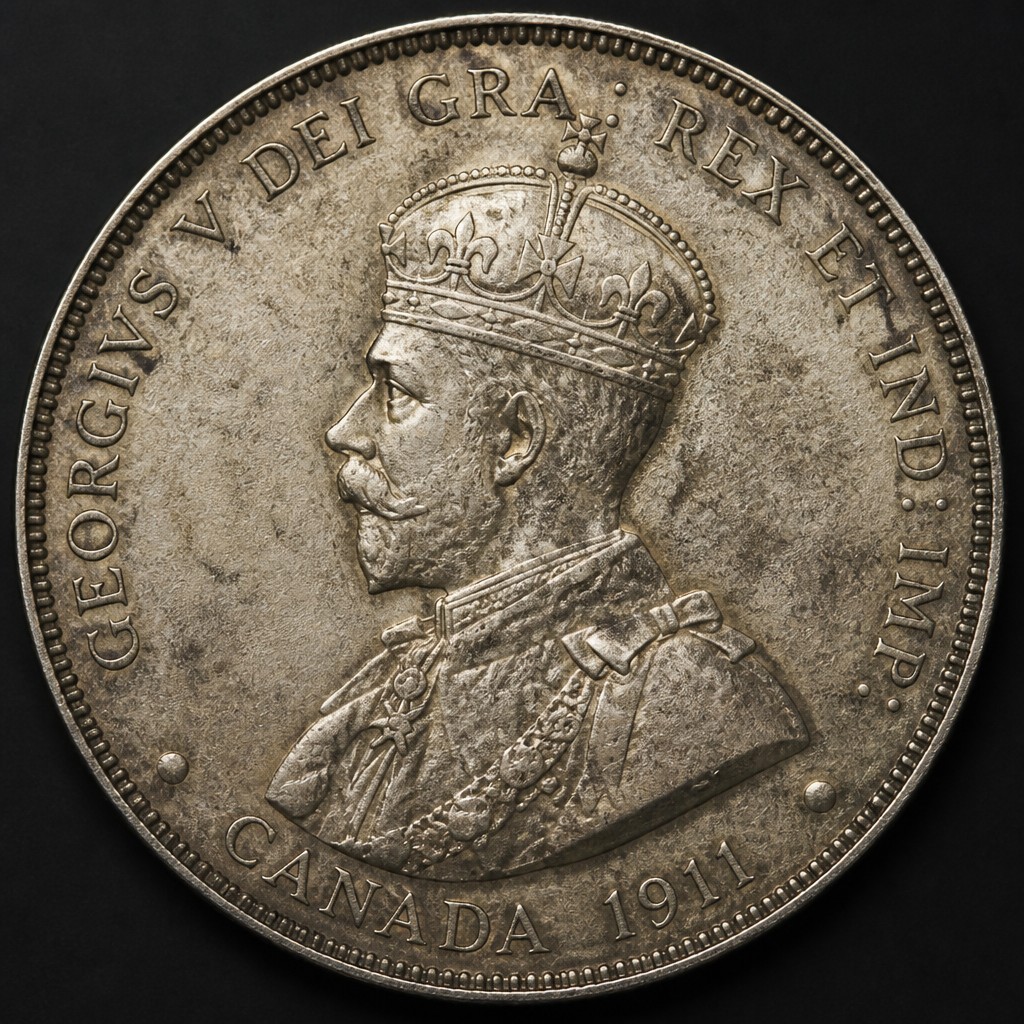
1911 Canadian Silver Dollar (Pattern)
1911
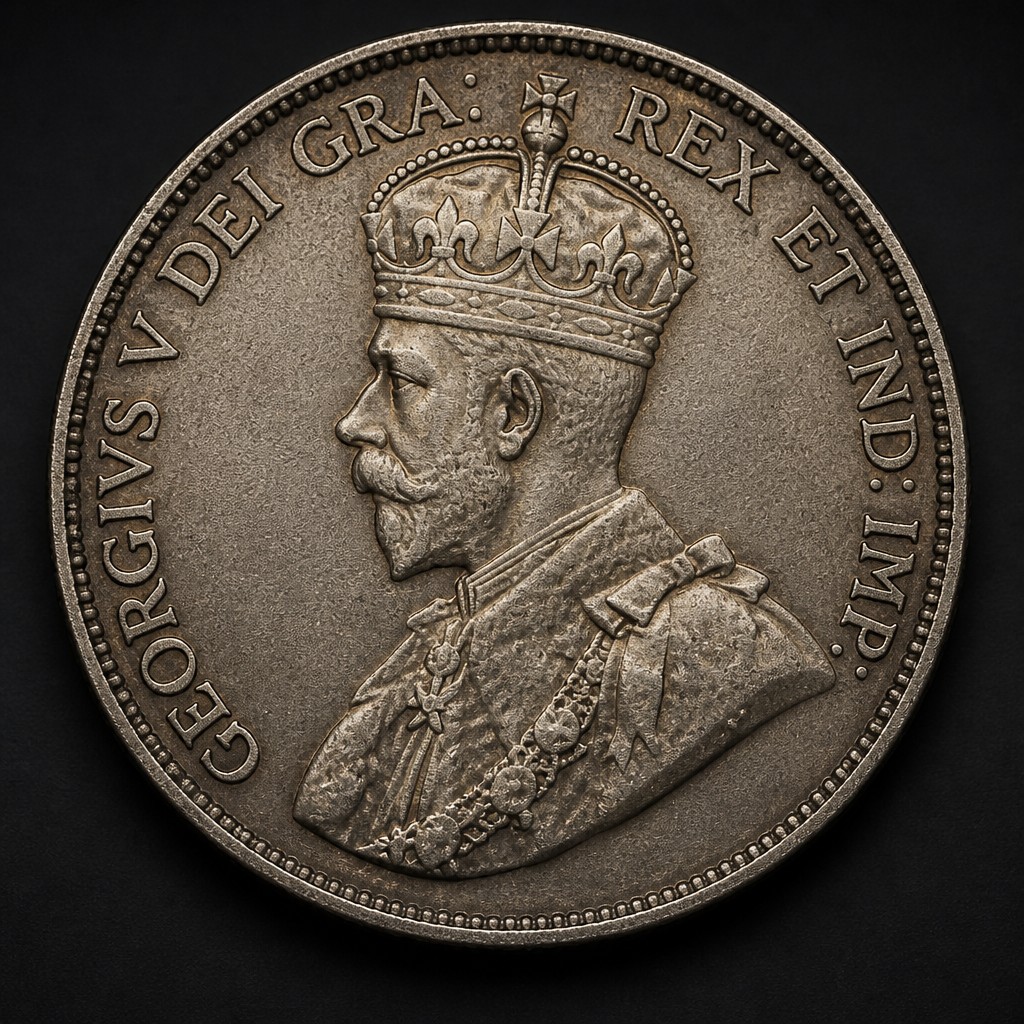
George V Twenty-Five Cents (silver)
1911–1936
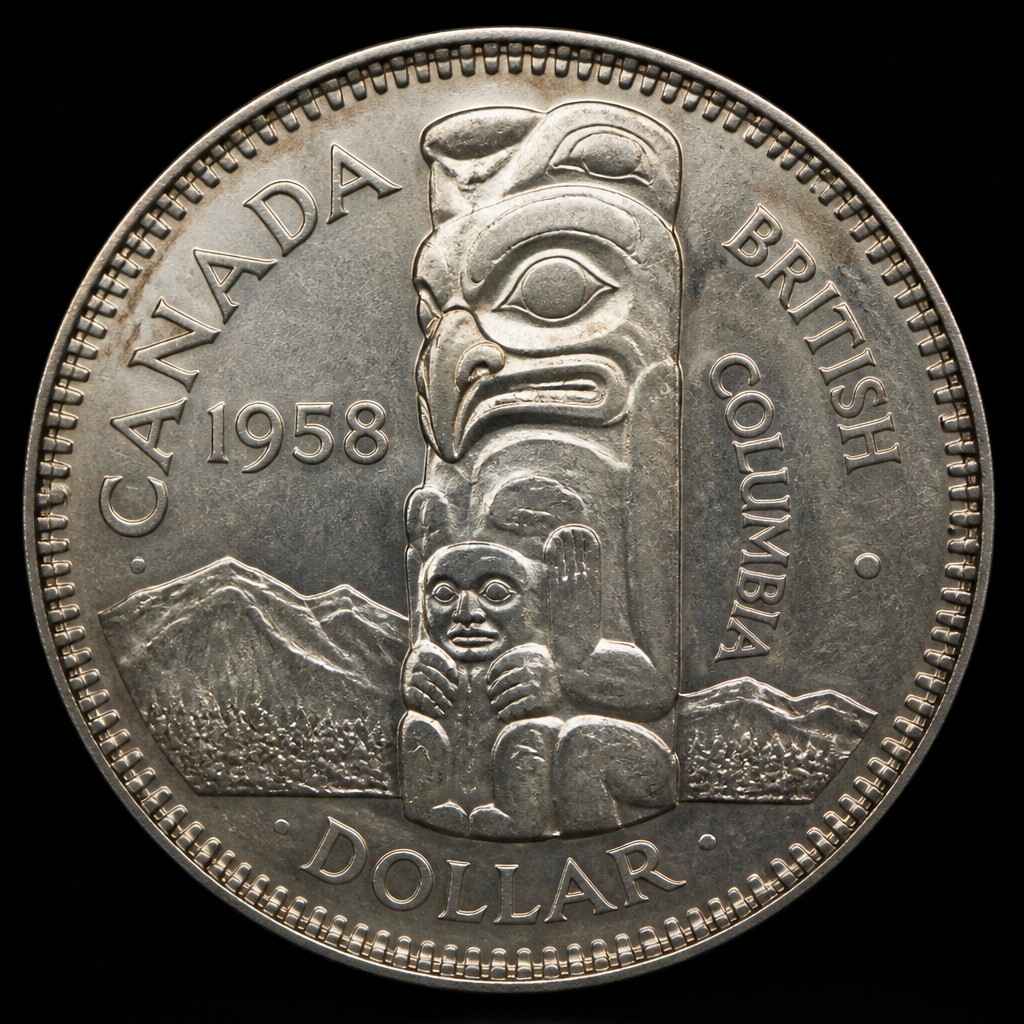
1958 British Columbia Totem Pole Dollar
1958
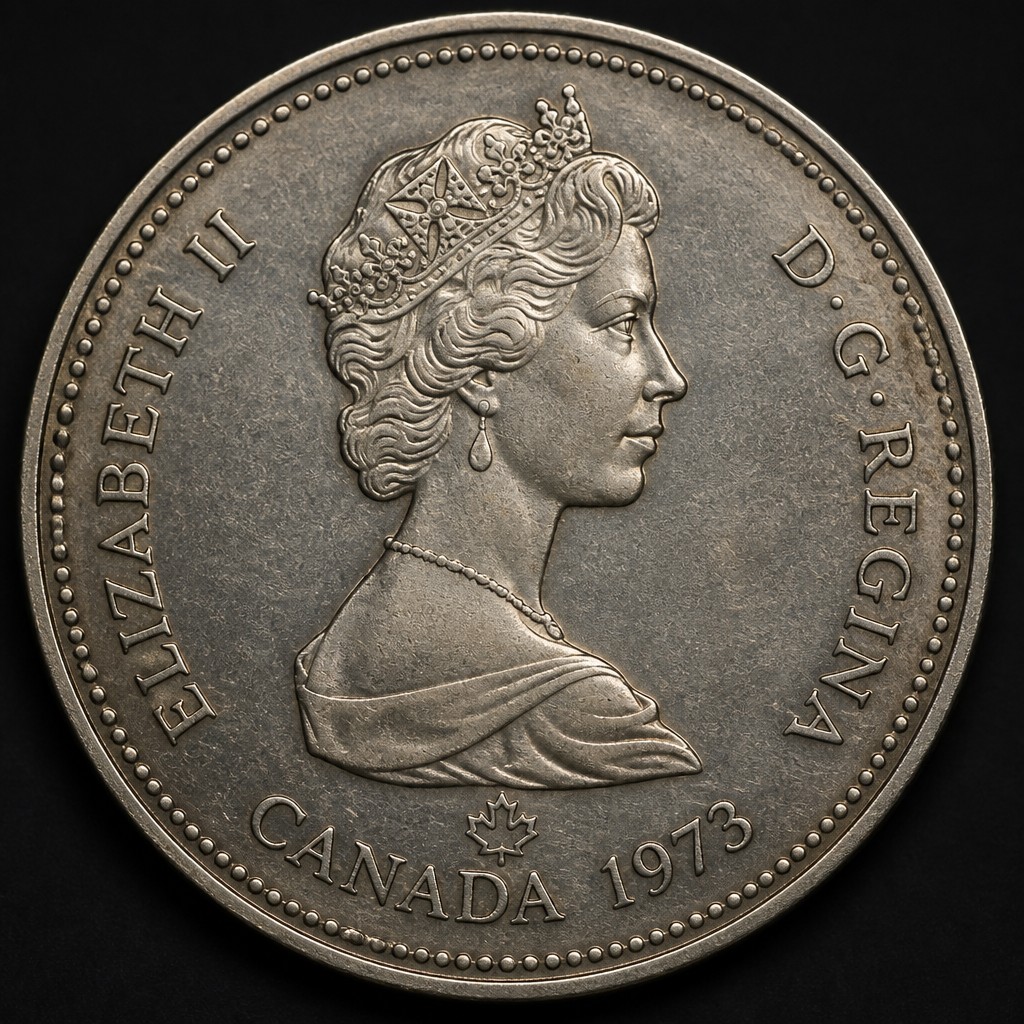
1973 RCMP Centennial Dollar
1973
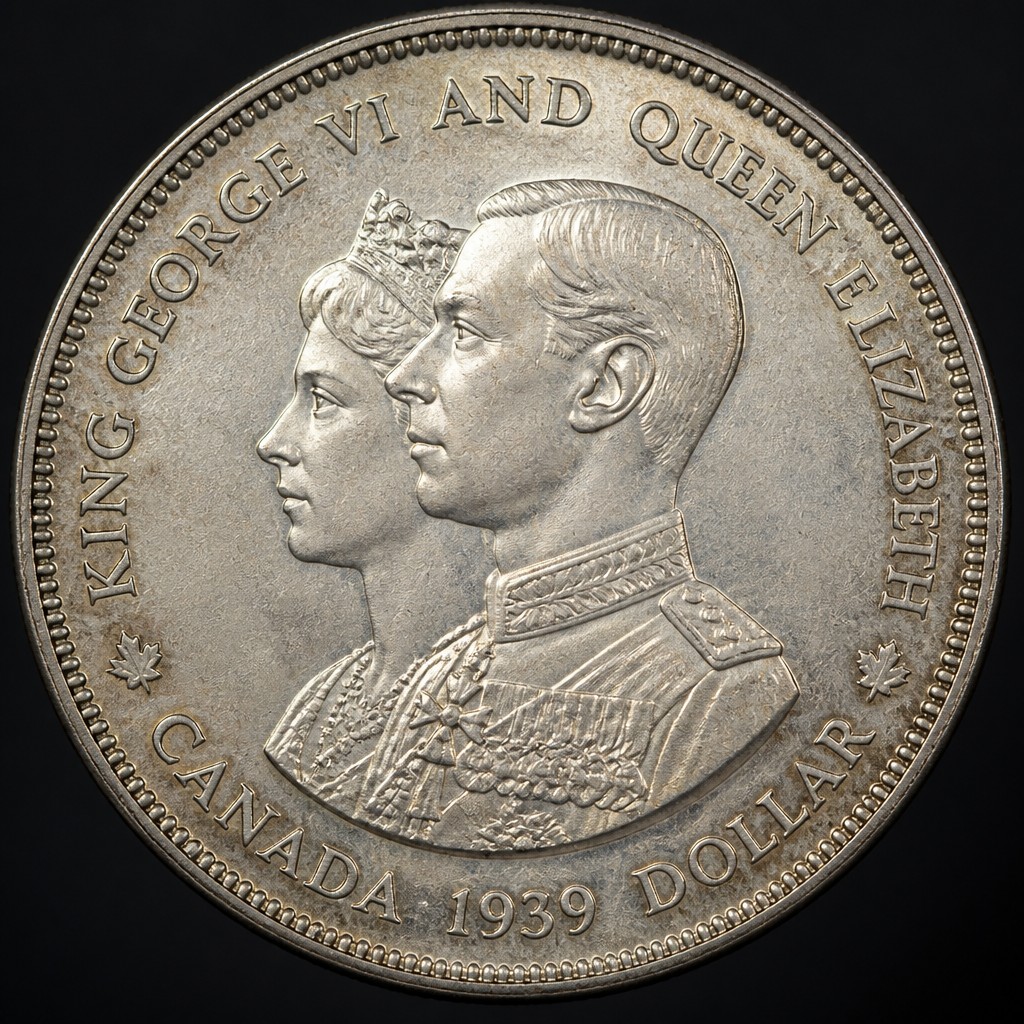
1939 Royal Visit Silver Dollar (Parliament)
1939
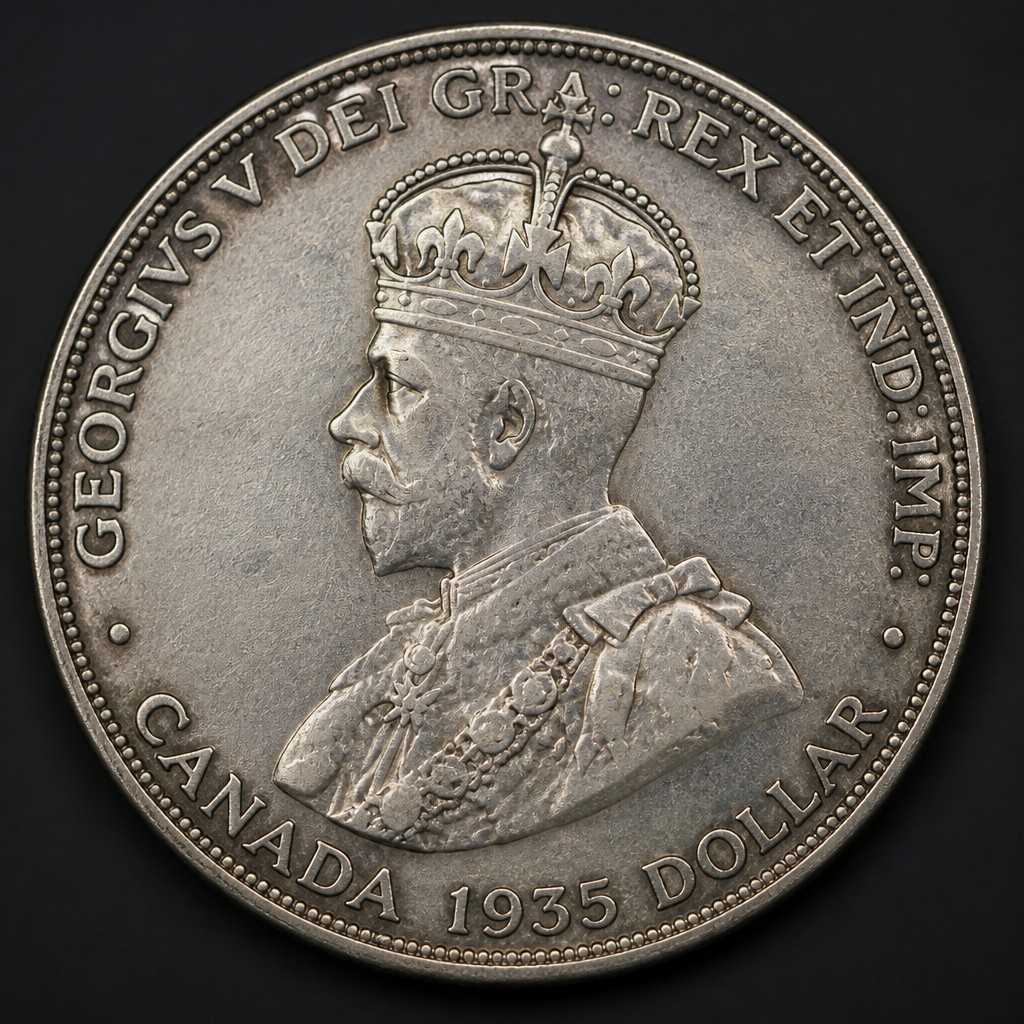
1935 George V Silver Jubilee Dollar (Voyageur)
1935
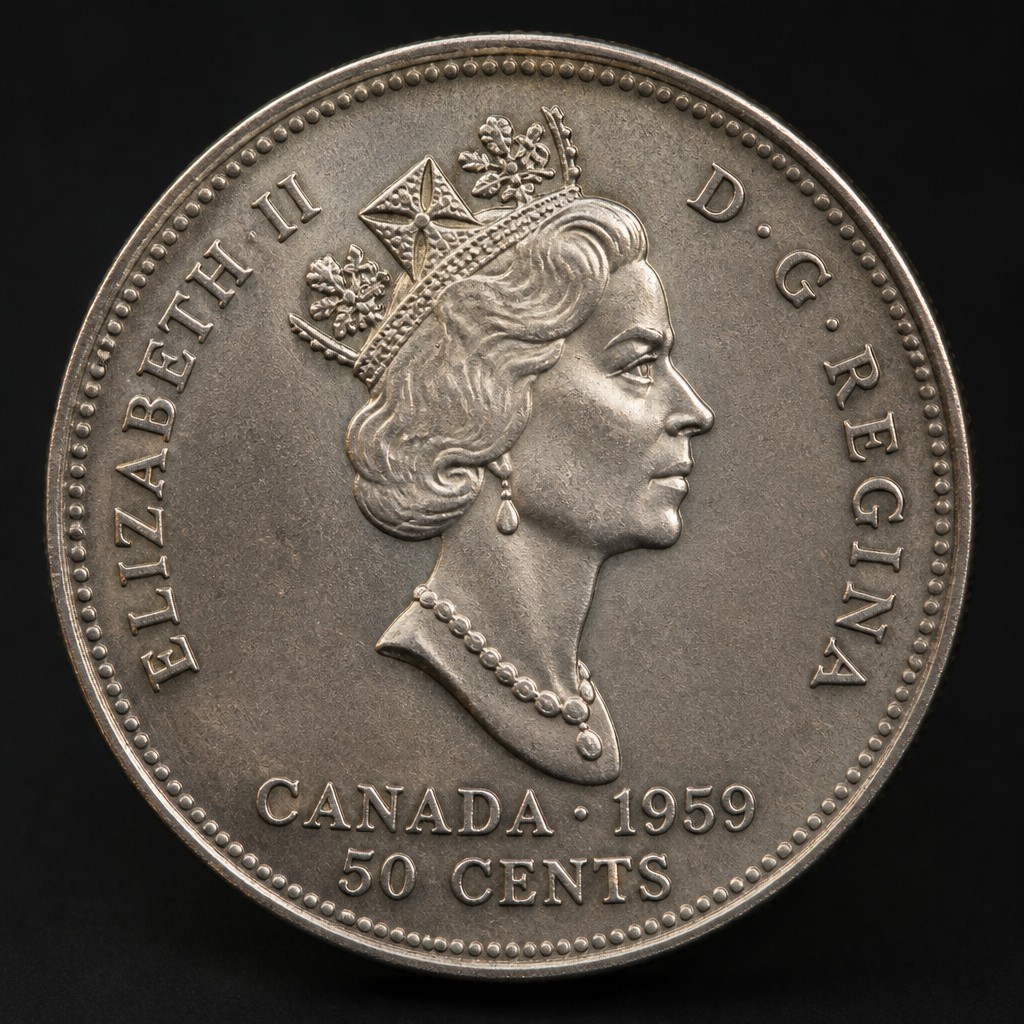
Coat of Arms Fifty Cents (Elizabeth II)
1959–present
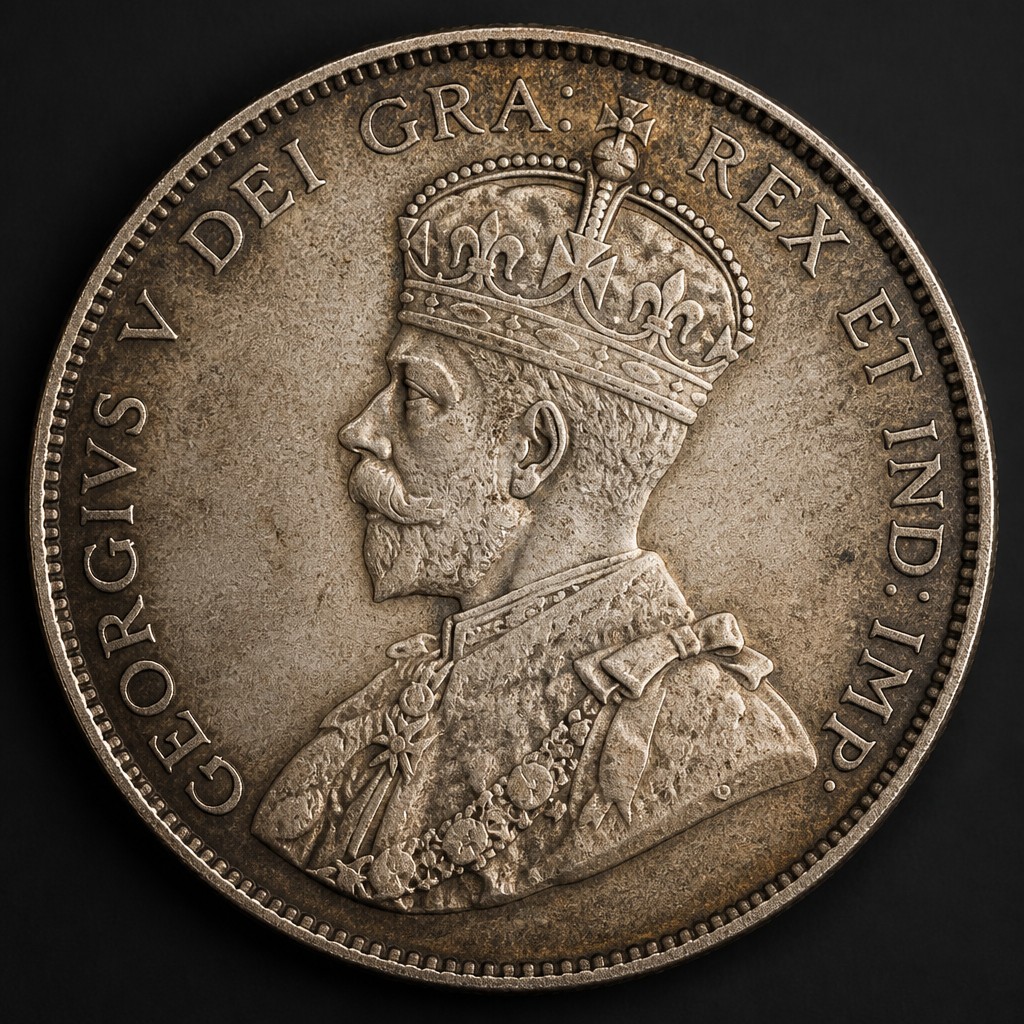
1921 Fifty Cents (King of Canadian Coins)
1921
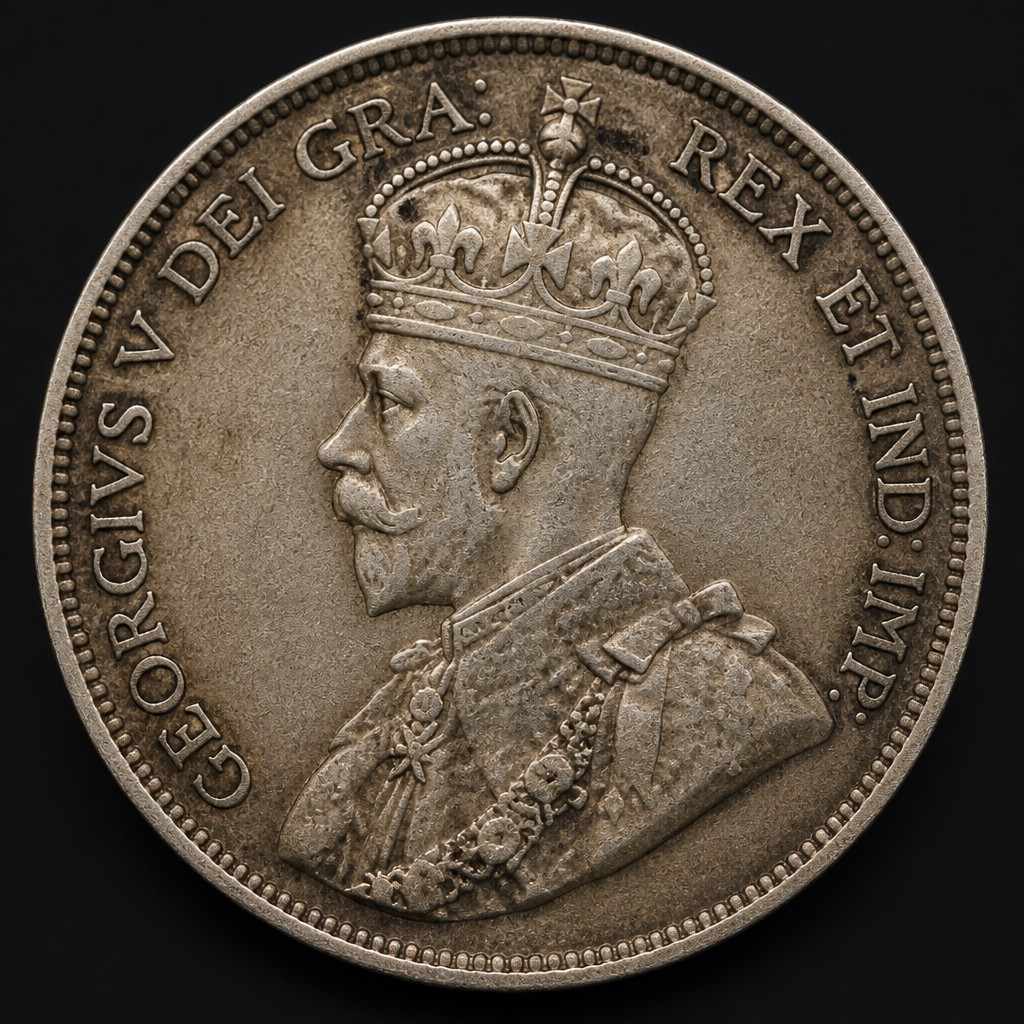
George V Fifty Cents
1911–1936
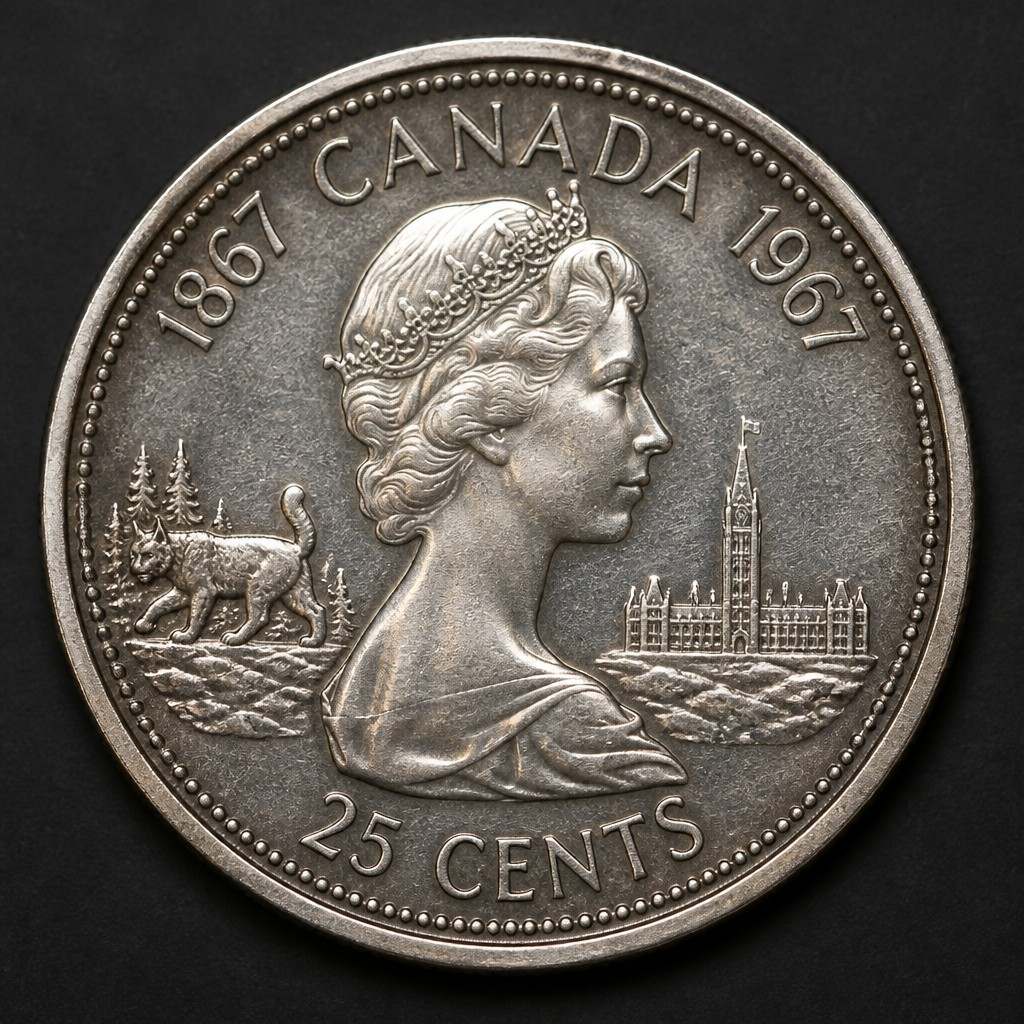
1967 Bobcat Centennial Quarter
1967
Caribou Twenty-Five Cents (quarter)
1937–present