Coin Identifier

Coin Encyclopedia

Search and identify coins from around the world — with country, denomination, metal, mint, history, and how to tell them apart.
1 Euro Coin

1 Euro Coin

The standard circulating one-euro coin used across the Eurozone since 2002, bimetallic with a gold-colored center and silver-colored ring, and a national obverse that varies by issuing country.

European
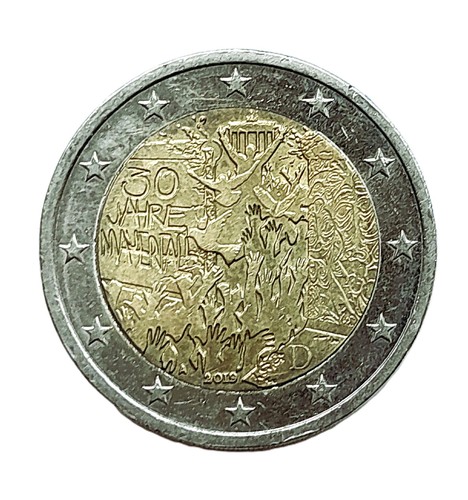
2 Euro Coin

2 Euro Coin

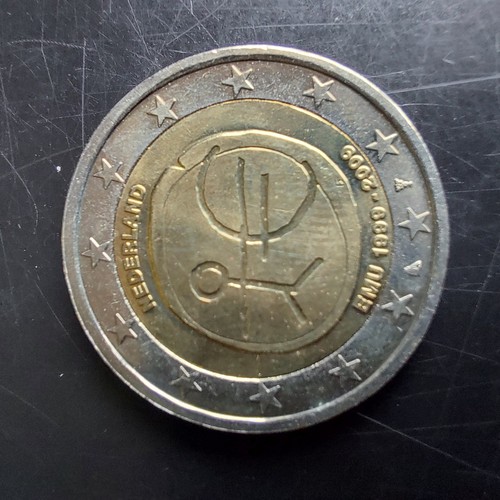
The highest-denomination circulating euro coin, with a silver-colored center inside a gold-colored ring, widely used by member states to issue popular commemorative designs collected across Europe.

European
50 Euro Cent Coin

50 Euro Cent Coin

A gold-colored circulating euro coin worth half a euro, struck in a copper-based Nordic gold alloy and easily recognized by its distinctive scalloped-edge shape and national obverse design.

European
Euro €2 Commemorative Coins

Euro €2 Commemorative Coins

Since 2004, Eurozone countries have issued special-design €2 coins commemorating anniversaries and events while keeping the coin's normal size, weight, and legal-tender status.

Commemorative
Netherlands Rijksdaalder

Netherlands Rijksdaalder

A historic large silver crown-sized coin of the Low Countries, the rijksdaalder became a trusted trade coin across Europe for centuries and lent its name to the modern Dutch 2½-guilder piece.

European
Napoleon 20 Franc Gold Coin

Napoleon 20 Franc Gold Coin

A historic French gold coin first struck under Napoleon Bonaparte in 1803, later issued under successive French governments and long used as a benchmark gold coin across Europe.

European
Argentine Argentino Gold (5 Pesos)

Argentine Argentino Gold (5 Pesos)

Argentina's principal 19th-century gold coin, worth 5 pesos oro and called an "Argentino," struck to Latin Monetary Union weight standards for use in international trade.

Latin American
Islamic Silver Dirham (Abbasid)

Islamic Silver Dirham (Abbasid)

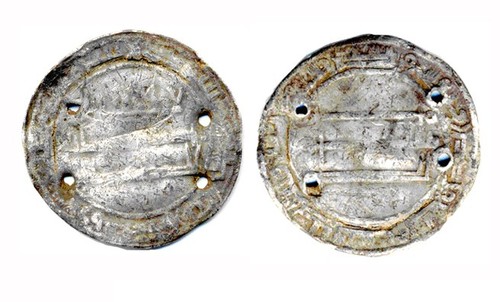
The standard silver coin of the Abbasid Caliphate, continuing the text-only Kufic script tradition and widely used across a vast medieval trade network stretching from Europe to Central Asia.

Ancient
British India Gold Mohur (East India Company)

British India Gold Mohur (East India Company)

High-value gold coin issued by the East India Company and later the British Crown in India, used for major transactions and prized today for its gold content and classic portraiture.

Asian
India Gold Pagoda (Madras Presidency)

India Gold Pagoda (Madras Presidency)

Small gold coin traditionally used across South India, later adopted and standardized by the East India Company's Madras Presidency before being phased out for rupee-based currency.

Asian
French 5 Francs Hercules

French 5 Francs Hercules

A large silver crown depicting an allegorical Hercules flanked by Liberty and Equality, struck at pivotal republican moments in French history as a statement of civic ideals.

European
Unite

Unite

A gold twenty-shilling coin introduced by James I in 1604 to celebrate the union of the English and Scottish crowns, its name literally symbolizing the joining of the two kingdoms.

British
Belgian Franc

Belgian Franc

Belgium's national currency from independence in 1830 through the Latin Monetary Union era and into the Euro age, minted in both French and Dutch legends.

European
Chervonets (Soviet Gold)

Chervonets (Soviet Gold)

A Soviet gold coin depicting a peasant sower, originally struck in 1923 to stabilize the new Soviet currency and later restruck for decades as a bullion and trade coin.

European
US State Quarters Series

US State Quarters Series

A landmark US Mint program issuing a new quarter reverse design for each of the 50 states in the order they joined the Union, sparking widespread collecting interest nationwide.

United States
1980 Moscow Olympics Silver Rouble

1980 Moscow Olympics Silver Rouble

The Soviet Union struck an extensive multi-denomination coin program from 1977 to 1980 celebrating the Moscow Summer Olympics, including widely collected silver 1 rouble coins.

Commemorative
Spanish Peseta

Spanish Peseta

The peseta was Spain's national currency for over 130 years, evolving from silver coinage under a provisional 19th-century government to copper-nickel coins used until the euro replaced it in 2002.

European
Finnish Markka

Finnish Markka

Finland's national currency from the era of Russian imperial rule until the adoption of the euro, issued in a range of coin denominations reflecting the country's changing political history.

European
Carolingian Silver Denier (Charlemagne)

Carolingian Silver Denier (Charlemagne)

Standardized silver penny introduced under Charlemagne's monetary reform, forming the template for medieval European currency for centuries afterward.

European
Nguyen Dynasty Gold Bar (Vietnam)

Nguyen Dynasty Gold Bar (Vietnam)

Imperial Vietnamese gold ingot from the Nguyen Dynasty, used for treasury reserves, tribute, and high-value transactions rather than everyday commerce.

Asian
Lincoln Shield Cent

Lincoln Shield Cent

The current Lincoln cent reverse, introduced in 2010, depicts a Union shield replacing the earlier Lincoln Memorial design as the fourth reverse in the cent's history.

United States
Spanish 20 Pesetas Gold (Alfonso XII)

Spanish 20 Pesetas Gold (Alfonso XII)

Spain's standard gold coin of the Latin Monetary Union era, struck under King Alfonso XII following the restoration of the Spanish monarchy in the 1870s.

European
Norwegian Krone

Norwegian Krone

The krone became Norway's national currency in 1875 upon joining the Scandinavian Monetary Union, and it has remained Norway's currency ever since, featuring the reigning monarch's portrait through the decades.

European
Swedish Krona

Swedish Krona

The krona has been Sweden's national currency since 1873, originally struck in silver as part of the Scandinavian Monetary Union and today issued in base metals bearing the reigning monarch's portrait.

European