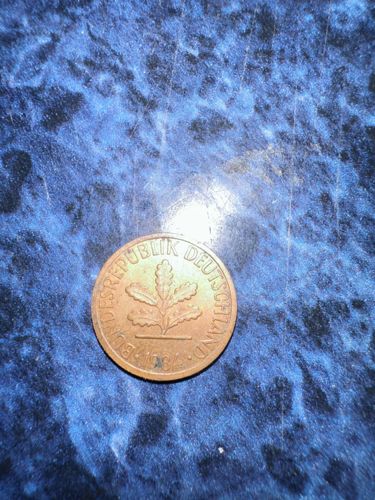
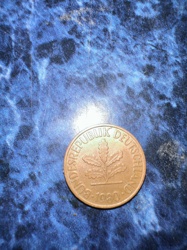
Pfennig
West Germany (Bundesrepublik Deutschland) · 196X (partially obscured, likely 1960s judging by wear)
The obverse of the coin features an oak sprig with a few leaves and an acorn, symbolizing strength and endurance, surrounded by the inscription "BUNDESREPUBLIK DEUTSCHLAND" (Federal Republic of Germany). The year of issue is below the oak sprig. The reverse typically shows the numeral '1' for the denomination.
- Country
- West Germany (Bundesrepublik Deutschland)
- Year
- 196X (partially obscured, likely 1960s judging by wear)
- Denomination
- 1 Pfennig
- Metal
- Copper-Clad Steel (Steel core with copper plating)
This report is AI-generated and can be wrong. Always verify grade, authenticity, and value with a qualified dealer or certified grading service before buying, selling, or insuring.
Identify your own coins.
Get a report just like this from any photo, free.
Overview
Historical significance
Estimated value
Care & preservation
More like this
Other west germany (bundesrepublik deutschland) coins
5 Pfennig
West Germany · 1949-2001 (specific year not visible)
Deutsche Mark (Pfennig)
West Germany (Bundesrepublik Deutschland) · 1980
Pfennig
West Germany (Bundesrepublik Deutschland) · 1980
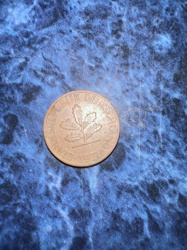
1 Pfennig
West Germany (Bundesrepublik Deutschland) · 1978
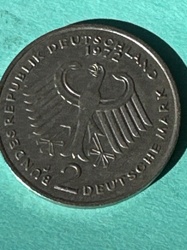
2 Deutsche Mark
Federal Republic of Germany (West Germany) · 1972
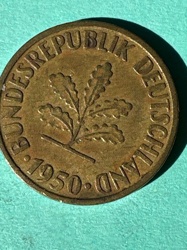
5 Pfennig (Federal Republic of Germany)
Germany (West Germany) · 1950