Coin Encyclopedia
Search and identify coins from around the world — with country, denomination, metal, mint, history, and how to tell them apart.
Spanish 100 Reales Gold (Isabel II)
A mid-19th-century Spanish gold coin struck under Queen Isabel II, part of Spain's pre-peseta reales-based monetary system.
European
Chile Peso (Condor)
Chilean coinage featuring the Andean condor perched or in flight, first seen on 19th-century gold pesos and later on the everyday circulating peso coin.
Latin American
Spanish 4 Reales
A mid-value denomination of Spain's traditional real-based coinage, struck for centuries in both Spain and its American colonies.
European
Bremen Thaler
A silver thaler of the free Hanseatic city of Bremen, typically featuring the city's key emblem, issued for centuries as an independent trading city's own coinage.
European
Roman Denarius
The workhorse silver coin of ancient Rome for over four centuries, used across the Republic and Empire and one of the most widely collected categories of ancient coinage today.
Ancient
German Saxony Ducat
A high-purity gold trade coin struck for centuries by the rulers of Saxony, one of the most important German states before national unification.
European
Swiss Franc (Helvetia Seated)
Switzerland's classic 19th-century silver coinage depicting a seated figure of Helvetia, the female personification of the Swiss nation.
European
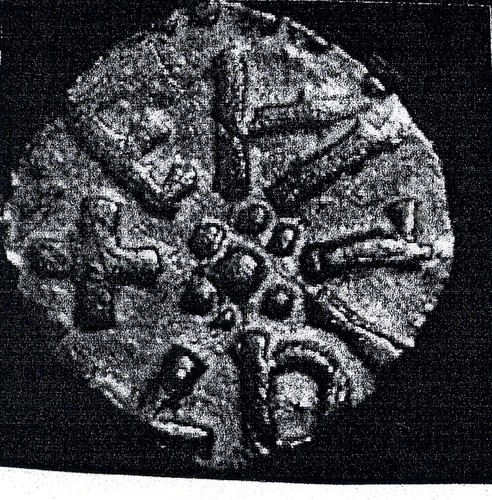
Anglo-Saxon Silver Penny
The standard silver coin of Anglo-Saxon England from the 8th century to the Norman Conquest, naming the issuing king and the moneyer who struck it.
British
Byzantine Gold Histamenon Nomisma
A distinctive concave (cup-shaped) Byzantine gold coin introduced in the 10th century as the full-weight companion to the flat tetarteron nomisma.
Ancient
Uruguay Peso Silver 'Artigas'
A silver Uruguayan peso honoring national founding hero Jose Gervasio Artigas, struck in the early twentieth century as part of Uruguay's circulating coinage.
Latin American
Argentine Argentino Gold (5 Pesos)
Argentina's principal 19th-century gold coin, worth 5 pesos oro and called an "Argentino," struck to Latin Monetary Union weight standards for use in international trade.
Latin American
Halfpenny
A small British bronze coin worth half a penny, best known in its twentieth-century form featuring Sir Francis Drake's ship the Golden Hind on the reverse.
British
Chinese Ban Liang Cash
China's first standardized round coin with a square center hole, introduced under Qin Shi Huang to unify currency across the newly consolidated Chinese empire.
Ancient
Spanish 5 Pesetas Silver (Duro)
Spain's classic large silver crown coin, popularly nicknamed the 'duro,' issued under several monarchs and a provisional republic in the late 19th century.
European
German Hamburg Ducat
A small, exceptionally high-purity gold trade coin struck for centuries by the free city of Hamburg, prized for its consistent fineness and long production history.
European
Liberty Head Quarter Eagle ($2.50)
A small 19th-century gold coin featuring Christian Gobrecht's Coronet Head design, minted across many branch facilities during America's gold rush era.
United States
Russian Ruble (Imperial)
The principal silver coin of the Russian Empire, struck for over two centuries and bearing the portraits of successive tsars and the imperial double-headed eagle.
European
French Franc Germinal
Not a single coin but the bimetallic monetary standard fixed by Napoleon's 1803 law, defining the franc's silver and gold content for over a century.
European
Netherlands East Indies VOC Duit
Copper coin struck by the Dutch East India Company (VOC) for circulation in its Asian trading territories, a common relic of 18th-century colonial commerce.
Asian
Siamese Rama V Silver Baht
Western-style silver baht introduced under King Chulalongkorn (Rama V) of Siam, replacing centuries-old bullet money with modern flat coinage.
Asian
Augustus Denarius
The main silver coin of Rome's first emperor, Augustus, whose long reign established the imperial monetary system that would last for centuries.
Ancient
Half Groat
A small hammered silver coin worth half the value of the groat, or two pence, struck across three centuries of English coinage from the reign of Edward III through the Stuart era.
British
German States Thaler
A large silver coin struck by the many independent states of the German-speaking world for over three centuries, and the direct linguistic ancestor of the word 'dollar.'
European
Reichsthaler
The standard large silver coin of the Holy Roman Empire and its constituent German states from the 16th century onward, whose name is the direct linguistic ancestor of the word 'dollar.'
European