Coin Encyclopedia
Search and identify coins from around the world — with country, denomination, metal, mint, history, and how to tell them apart.
Netherlands East Indies VOC Duit
Copper coin struck by the Dutch East India Company (VOC) for circulation in its Asian trading territories, a common relic of 18th-century colonial commerce.
Asian
British Trade Dollar
A silver trade dollar struck by Britain to compete with the Mexican and Spanish dollars circulating across Hong Kong, China, and Southeast Asia.
Asian
Japanese Trade Dollar
A short-lived Meiji-era silver coin struck to the same weight and fineness as the Mexican and U.S. Trade Dollars so Japan could compete in East Asian commerce.
Asian
French Indochina Piastre de Commerce
A large silver trade dollar issued by colonial French Indochina, weighted to match the Mexican and Spanish trade dollars already circulating throughout Southeast Asian and Chinese commerce.
Asian
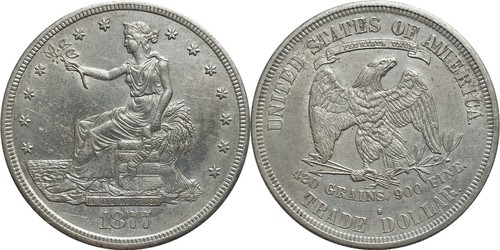
Trade Dollar
A heavier U.S. silver dollar struck specifically for trade with China and East Asia, later demonetized domestically and known for its distinctive weight-and-fineness inscription.
United States
United States Trade Dollar
A heavier silver dollar issued specifically for trade with China and East Asia, the Trade Dollar circulated internationally before being demonetized and later collected as a design classic.
United States
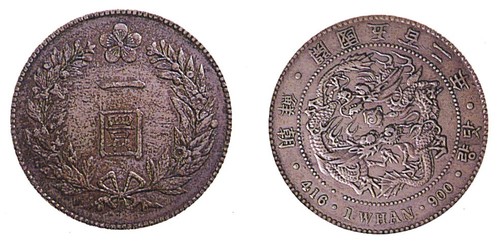
Japanese 1 Yen Silver Coin
Japan's principal large silver coin of the Meiji era, featuring a coiled dragon, that became a major East Asian trade coin and a symbol of Japan's rapid currency modernization.
Asian
Vietnamese Tu Duc Thong Bao (cash coin)
A cast bronze or zinc cash coin issued under Emperor Tự Đức of Vietnam's Nguyễn Dynasty, round with a square center hole in the traditional East Asian style.
Asian
Kai Yuan Tong Bao Cash
A landmark Tang dynasty cash coin whose four-character reign-title inscription became the standard template for Chinese, and much of East Asian, coinage for the next 1,300 years.
Ancient
Japanese 1 Yen Silver 'Dragon' Trade Dollar
A Meiji-era Japanese silver yen featuring a coiled dragon, struck to standardize Japan's currency and, in a special trade dollar variant, to compete with Mexican and other silver dollars across East Asia.
Asian
Hong Kong Dollar (1866–1868 Silver Dollar)
A short-lived silver dollar struck at Britain's ill-fated Hong Kong Mint, bearing Queen Victoria's portrait and intended to compete with Mexican and Chinese silver in Asian trade.
Asian
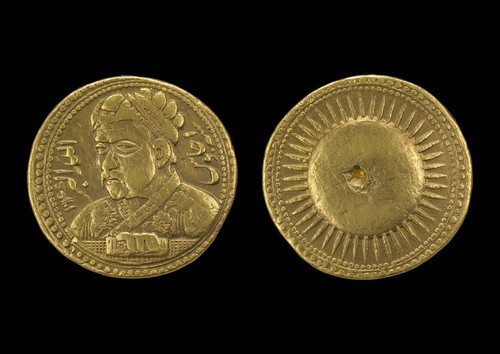
Bactrian Silver Tetradrachm
Large silver coin of the Greco-Bactrian kings of Central Asia, celebrated for producing some of the finest realistic royal portraiture in all of ancient coinage.
Ancient
Pergamon Cistophoric Tetradrachm
A reduced-weight Hellenistic silver coin introduced by the Attalid kings of Pergamon, named for the sacred cista mystica chest depicted on the obverse and later adopted throughout Roman Asia.
Ancient
1878-CC Trade Dollar
A scarce Carson City-struck Trade Dollar from the series made for Asian commerce, prized for its low surviving population and famous CC mintmark.
United States
Indian Punch-Marked Karshapana
Among the earliest coins of South Asia, irregular silver bars struck repeatedly with multiple unrelated symbol punches rather than a single unified design.
Ancient
Lampsakos Electrum Stater
An electrum stater from Lampsakos on the Hellespont, another important early precious-metal trade coinage of Asia Minor, often featuring a winged horse or janiform head.
Ancient
Mexican 8 Reales Cap and Rays
The classic silver dollar of independent Mexico, showing a radiant Phrygian liberty cap over mountains, widely trusted and traded across the Americas and Asia for most of the 19th century.
Latin American
Islamic Silver Dirham (Abbasid)
The standard silver coin of the Abbasid Caliphate, continuing the text-only Kufic script tradition and widely used across a vast medieval trade network stretching from Europe to Central Asia.
Ancient