Coin Identifier

Coin Encyclopedia

Search and identify coins from around the world — with country, denomination, metal, mint, history, and how to tell them apart.
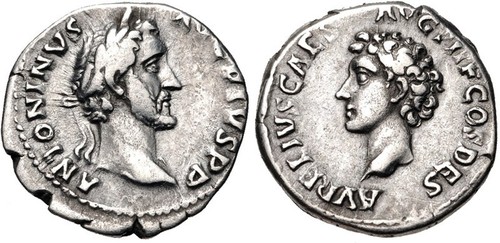
1853 Seated Liberty Quarter (Arrows and Rays)

1853 Seated Liberty Quarter (Arrows and Rays)

A popular one-year Seated Liberty type marked by arrows at the date and rays around the eagle, signaling a reduction in the coin's silver weight mandated by the Coinage Act of 1853.

United States
Philip the Arab Antoninianus

Philip the Arab Antoninianus

Radiate coin of Philip the Arab, notable for celebrating Rome's 1,000th anniversary in 248 AD with a memorable series of animal-themed 'Saecular Games' reverse types.

Ancient
Flying Eagle Cent

Flying Eagle Cent

The first small-size U.S. cent, introduced in 1856 to replace the large copper cent, featuring a flying eagle obverse designed by James B. Longacre.

United States
Gothic Crown

Gothic Crown

An ornate Victorian silver crown featuring a young Queen Victoria in Gothic-script lettering, widely admired as one of the most artistically accomplished coins in British history.

British
Threepence

Threepence

A small British coin worth three pence, issued first as a tiny silver piece and later as the distinctive 12-sided brass 'threepenny bit' beloved for its unusual shape.

British
George V Fifty Cents

George V Fifty Cents

Canada's fifty-cent silver coin issued under King George V, spanning a reduction in silver fineness in 1920 and including the famously rare 1921 date.

Canadian
Panama-Pacific $50 Gold (Round)

Panama-Pacific $50 Gold (Round)

A massive round commemorative gold piece struck for the 1915 Panama-Pacific International Exposition, one of the rarest and most valuable U.S. commemorative coins ever issued.

Commemorative
Canadian Toonie

Canadian Toonie

Canada's bimetallic two dollar coin, introduced in 1996 with a polar bear reverse, whose nickname blends "two" with "loonie."

Canadian
Classic Head Half Cent

Classic Head Half Cent

A half cent design used from 1809 to 1836, featuring a Liberty head with a headband inscribed LIBERTY, succeeding the Draped Bust type.

United States
Kellogg & Co. Gold Piece

Kellogg & Co. Gold Piece

Private gold coinage struck by the San Francisco firm Kellogg & Co. during the California Gold Rush, including the famous octagonal fifty-dollar 'slug' of 1855, filling a shortage of circulating coin.

United States
Vermont Copper

Vermont Copper

Copper coinage struck under authority of the independent Vermont Republic in the 1780s, featuring an early landscape design and later a Britannia-style type.

United States
Capped Bust Quarter Eagle

Capped Bust Quarter Eagle

An umbrella term for the earliest U.S. $2.50 gold coins (1796-1834), whose Liberty-in-a-cap portrait evolved through several sub-types, including the famous single-year 1808 issue.

United States
Maria Theresa Thaler

Maria Theresa Thaler

An Austrian silver trade coin dated 1780 that has been restruck continuously for over two centuries, remaining a trusted currency across parts of Africa and the Middle East long after its original issue.

European
Coat of Arms Fifty Cents (Elizabeth II)

Coat of Arms Fifty Cents (Elizabeth II)

Canada's modern fifty-cent piece, showing the Canadian coat of arms on the reverse since 1959 under successive obverse portraits of Queen Elizabeth II and, later, King Charles III.

Canadian
Isabella Quarter

Isabella Quarter

The only U.S. commemorative quarter dollar, struck for the 1893 World's Columbian Exposition and featuring Queen Isabella I of Spain, sponsor of Columbus's voyage.

Commemorative
Draped Bust Eagle

Draped Bust Eagle

The formal catalog name for the first U.S. ten-dollar gold coin once it adopted a bold heraldic eagle reverse in 1797, the same coin popularly nicknamed the 'Turban Head' eagle.

United States
Capped Bust Half Eagle

Capped Bust Half Eagle

John Reich's 1807 redesign turned Liberty to face left and added drapery to her bust, replacing the earlier Capped Bust to Right half eagle for a five-year run before the Capped Head type arrived.

United States
Spade Guinea

Spade Guinea

A George III gold guinea nicknamed for its spade-shaped shield reverse, one of the last widely circulated guinea types before the denomination was phased out in the early 1800s.

British
Swedish Riksdaler

Swedish Riksdaler

Sweden's traditional silver dollar denomination, used for roughly two centuries before being replaced by the krona in the 1870s currency reform.

European
Classic Head Half Eagle ($5)

Classic Head Half Eagle ($5)

A short-lived early American gold five-dollar coin created after the Coinage Act of 1834 reduced gold coin weight to keep coins in circulation rather than being melted.

United States
Capped Bust Right Half Eagle

Capped Bust Right Half Eagle

America's first five-dollar gold coin, struck 1795-1807 with Liberty facing right under a soft cap, first paired with a small perched eagle reverse and later a bold heraldic eagle.

United States
Barber Dime

Barber Dime

A late-19th and early-20th century silver dime designed by Charles E. Barber, featuring a classical Liberty head, part of a matching set with the Barber quarter and half dollar.

United States
Cuba Peso 'Star' Silver (ABC Peso)

Cuba Peso 'Star' Silver (ABC Peso)

A silver dollar-sized Cuban peso featuring a prominent five-pointed star, popularly nicknamed the 'ABC Peso' and widely used interchangeably with the US silver dollar in the 1930s.

Latin American
Danish Speciedaler

Danish Speciedaler

Denmark's large silver 'species dollar,' the principal high-value coin of the Danish monetary system before the krone replaced it in 1873–75.

European