Coin Encyclopedia
Search and identify coins from around the world — with country, denomination, metal, mint, history, and how to tell them apart.
Shield Nickel
The first copper-nickel five-cent coin, the Shield Nickel features a national shield on the obverse and was issued from 1866 to 1883, including rare rays and proof-only dates.
United States
George V Five Cents (silver)
The last era of Canadian silver five-cent coins, struck under King George V until nickel replaced silver in 1922, including the legendary rarity of the 1921 date.
Canadian
1999 Susan B. Anthony Dollar
A one-year revival of the Susan B. Anthony dollar, struck in 1999 to meet demand for dollar coins in vending and transit use before the Sacagawea dollar's launch the following year.
United States
Indian Head Quarter Eagle ($2.50)
A small gold coin featuring Bela Lyon Pratt's distinctive incuse Native American design, one of only two U.S. denominations ever struck with recessed devices.
United States
Joachimsthaler
Struck beginning in 1520 in the Bohemian silver-mining town of Joachimsthal, this large silver coin gave its name, shortened to 'thaler' and later 'dollar,' to countless currencies around the world.
European
Bavaria Thaler
The historic large silver coin of Bavaria, struck across centuries by its electors and kings, capturing the state's political and artistic history until Germany's currency unification in the 1870s.
European
Spanish 2 Reales Pillar
The Pillar 2 Reales was a fractional Spanish colonial silver coin featuring the famous Pillars of Hercules design, struck at mints across Spanish America and widely used in international trade.
Latin American
1975 No S Proof Roosevelt Dime
One of the rarest and most valuable modern US coin errors: a 1975 proof dime struck without its San Francisco 'S' mintmark, with only a handful of examples known.
Errors & Varieties
Indian Head Cent
A long-running 19th-century one-cent coin depicting Liberty in a Native American-style feathered headdress, popular with collectors for its accessible half-century run.
United States
Beaver Five Cents (Elizabeth II)
The long-running Canadian five-cent coin under Queen Elizabeth II, continuing the classic beaver-on-a-rock design first introduced in 1922 across changing metal compositions.
Canadian
Half Crown
A long-lived British coin worth one-eighth of a pound, struck from the Tudor era until decimalisation in 1970, valued today mainly for its portraits and design variety.
British
Matte Proof Lincoln Cent
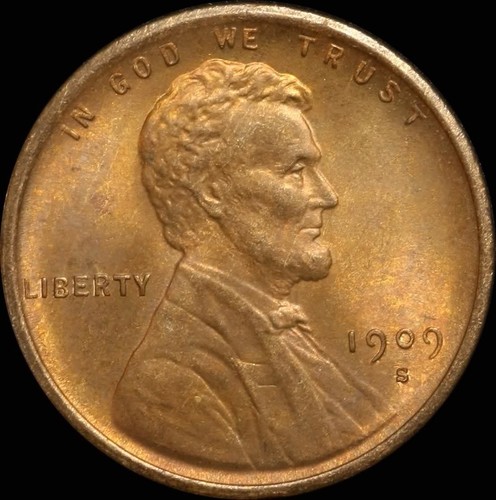
A special proof finish used on Lincoln cents from 1909 to 1916, featuring a fine, sandy, non-reflective surface instead of the mirror-like brilliance of earlier proof coins.
United States
New Zealand Penny (KGVI)
New Zealand bronze penny struck under King George VI, notable for its reverse featuring the native tuatara reptile, part of the country's distinctive 1933-launched coin series.
Africa & Oceania
Australian Threepence (pre-decimal)
Small pre-decimal Australian silver coin worth three pence, popularly recognized for its bundled wheat-ear reverse design used across most of the 20th century.
Africa & Oceania
French 100 Francs Silver
France's pre-euro 100 Franc denomination included both a long-running silver Panthéon coin for collectors and numerous limited commemorative silver issues honoring people, events, and anniversaries.
European
Canadian Colored Maple Leaf
A colorized variant of Canada's iconic Maple Leaf bullion coin, applying vivid printed designs over the standard maple leaf or themed reverse to create eye-catching collector editions.
Canadian
Ecuador Sucre Silver
Ecuador's historic silver one-sucre coin, named after independence hero Antonio Jose de Sucre, circulated for decades before Ecuador's currency was eventually replaced by the US dollar.
Latin American
Rama IV Siamese Baht (first machine-struck)
Landmark Siamese silver coin introduced under King Mongkut (Rama IV), marking the country's shift from traditional bullet-shaped money to modern, flat, machine-struck coinage.
Asian
Reichsthaler
The standard large silver coin of the Holy Roman Empire and its constituent German states from the 16th century onward, whose name is the direct linguistic ancestor of the word 'dollar.'
European
Julius Caesar Elephant Denarius
One of the most widely recognized ancient Roman coins, struck under Julius Caesar's authority and depicting an elephant trampling a serpent, likely a symbolic image tied to Caesar's political struggles.
Ancient
Dutch Silver Ducat
A historic Dutch trade silver coin first struck in 1659, depicting a standing knight, that has been minted continuously for centuries and remains a popular silver bullion and collector piece today.
European
George V Twenty-Five Cents (silver)
Canada's silver twenty-five-cent coin struck under King George V, a series notable for its famous 1921 key date and a rare 1936 emergency dot variety.
Canadian
Aegina Sea Turtle Stater
One of the earliest widely circulated Greek silver coins, struck by the island city-state of Aegina, featuring a sea turtle and later a land tortoise, and nicknamed simply 'turtles' by ancient traders.
Ancient
Austrian Levantine Thaler (Maria Theresa Thaler)
A famous silver trade coin bearing the portrait of Empress Maria Theresa, perpetually dated 1780 and restruck for centuries as a trusted trade currency across the Middle East, Arabia, and East Africa.
European