
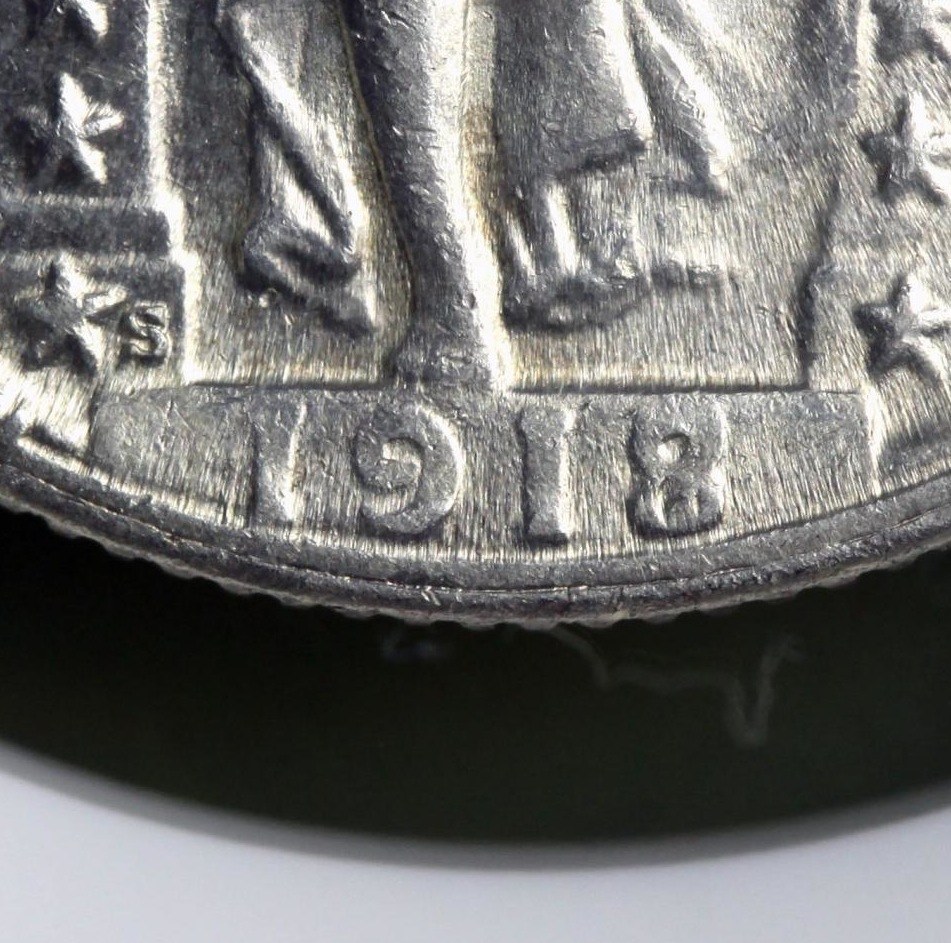
Standing Liberty Quarter
U.S. 90% silver quarter struck 1916–1930, showing a standing Liberty with shield on the obverse and an eagle in flight on the reverse.
- Country
- United States
- Denomination
- 25 Cents
- Metal
- Silver
Got a coin like this?
Identify any coin from a photo, free.
Overview
The Standing Liberty Quarter is a United States twenty-five-cent coin produced by the U.S. Mint from 1916 through 1930. The obverse depicts the goddess Liberty standing in a gateway, holding a shield in her left arm for defense and an olive branch in her right hand, with the date on the pedestal below her feet. The reverse shows an eagle in flight with its wings spread. The coin is struck in a 90% silver, 10% copper alloy, measures about 24.3 mm in diameter, weighs roughly 6.25 grams, and has a reeded edge.
The example shown here is dated 1916, the first year of the series and its most famous issue. It belongs to the earliest "Type 1" design, in which Liberty's right breast is bare and the eagle sits comparatively low on the reverse. The 1916 quarter was struck only at Philadelphia and in very small numbers, making it the key date of the entire series.
History & Background
The Standing Liberty Quarter was designed by sculptor Hermann A. MacNeil and introduced in 1916 to replace the Barber Quarter as part of a broad early-20th-century effort to beautify American coinage. MacNeil's design was intended to reflect the era, with Liberty stepping forward through a gateway holding both a shield of preparedness and an olive branch of peace.
The design was modified early in its run. The original 1916 and early 1917 coins (Type 1) show Liberty with a bare right breast and place three stars below the eagle. Later in 1917 the design was revised to Type 2, adding a coat of chain mail over Liberty's torso and repositioning the eagle higher with a different star arrangement. In 1925 the date was recessed into the pedestal because the raised date on earlier coins, including the 1916, wore away quickly in circulation. The series ended in 1930 and was replaced by the Washington Quarter in 1932.
Because only a very small number of 1916 quarters were struck, all at Philadelphia, the first-year coin became one of the most sought-after issues in 20th-century U.S. coinage.
How to Identify
The obverse shows Liberty standing full-length and facing forward within a gateway or archway, holding a shield across her left arm and an olive branch in her right hand. "LIBERTY" arcs across the top and "IN GOD WE TRUST" flanks the figure, with the date on the raised pedestal beneath her feet — here reading 1916. On this earliest Type 1 style, Liberty's right breast is exposed and the drapery is uncovered.
The reverse depicts an eagle flying to the right with wings fully spread, surrounded by "UNITED STATES OF AMERICA" and "E PLURIBUS UNUM," with "QUARTER DOLLAR" along the bottom. On Type 1 coins the eagle sits lower with three stars beneath it; Type 2 coins from later 1917 onward raise the eagle and rearrange the stars.
The coin is 90% silver, about 24.3 mm across and near 6.25 grams, with a reeded edge and a bright silver-gray tone. When a mint mark is present on later dates, it appears on the obverse to the left of the date, near the base of the shield. The 1916 issue carries no mint mark because it was struck only at Philadelphia.
Value & Collectibility
Most Standing Liberty Quarters are valued first for their silver content and then for date, mint mark, condition, and strike. Common later dates in worn grades trade for modest premiums over their bullion value, while sharply struck coins with a "Full Head" on Liberty command higher collector interest.
The 1916 shown here is the exception: as the first-year key date with a very low mintage, it is a major rarity that carries strong value even in heavily worn condition and rises sharply with grade. Because of this, the 1916 is among the most frequently counterfeited and altered U.S. quarters — genuine 1917 coins are sometimes re-engraved to imitate a 1916 date. Any coin presented as a 1916, or as a scarce high-grade example, should be authenticated by a reputable third-party grading service before purchase. Prices vary widely with condition and the market, so a certified example is the most reliable guide.
Frequently asked questions
What is a Standing Liberty Quarter made of?
It is struck in 90% silver and 10% copper, weighs about 6.25 grams, measures roughly 24.3 mm in diameter, and has a reeded edge.
Why is the 1916 Standing Liberty Quarter so special?
It is the first year of the series and was struck only at Philadelphia in very small numbers, making it the key date. Genuine examples are valuable even when heavily worn.
What is the difference between Type 1 and Type 2?
Type 1 coins (1916 and early 1917) show Liberty with a bare right breast and the eagle set low with three stars beneath it. Type 2 coins (later 1917–1930) add chain mail over Liberty and reposition the eagle higher. The 1916 shown here is a Type 1.
Where is the date and mint mark on this coin?
The date is on the raised pedestal below Liberty's feet, and the mint mark, when present, is on the obverse to the left of the date near the shield. The 1916 has no mint mark because it was made only at Philadelphia.
Why is the date often worn off these quarters?
On coins before 1925 the date sits on a raised, exposed part of the design and wears quickly. The Mint recessed the date in 1925 to fix this; earlier coins like the 1916 frequently show weak or partial dates.
Standing Liberty Quarter guides
In-depth guides for identifying, valuing, and collecting Standing Liberty Quarter.
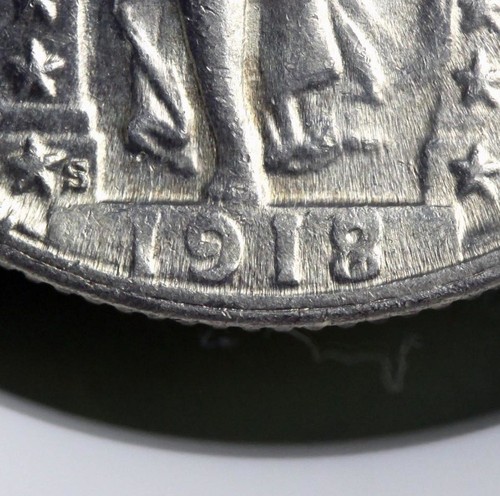
Other coins you may enjoy
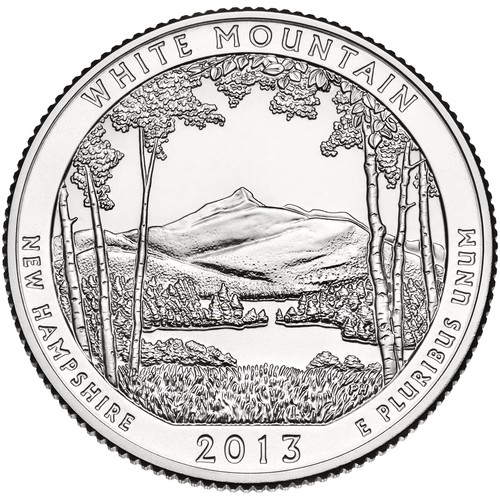
White Mountain Quarter
2013
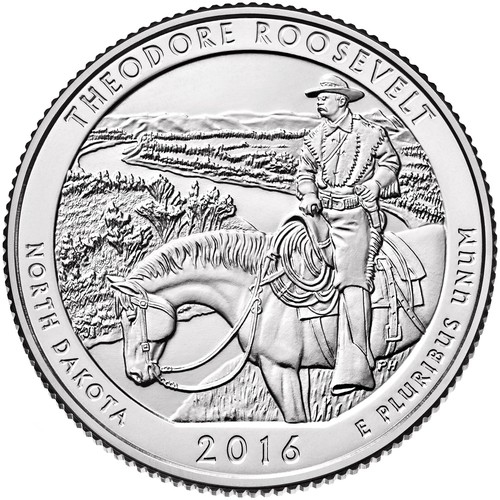
Theodore Roosevelt Quarter
2016
Washington Quarter
1932–present
Pennsylvania State Quarter
1999
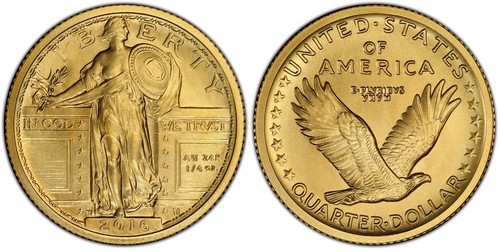
Standing Liberty Quarter Centennial Gold
2016
Hawaii State Quarter
2008
Cumberland Gap Quarter
2016
Seated Liberty Quarter
1838–1891
Shawnee Quarter
2016
Bicentennial Quarter
1975–1976 (dated 1776-1976)
Minnesota State Quarter
2005
Draped Bust Quarter
1796, 1804–1807