
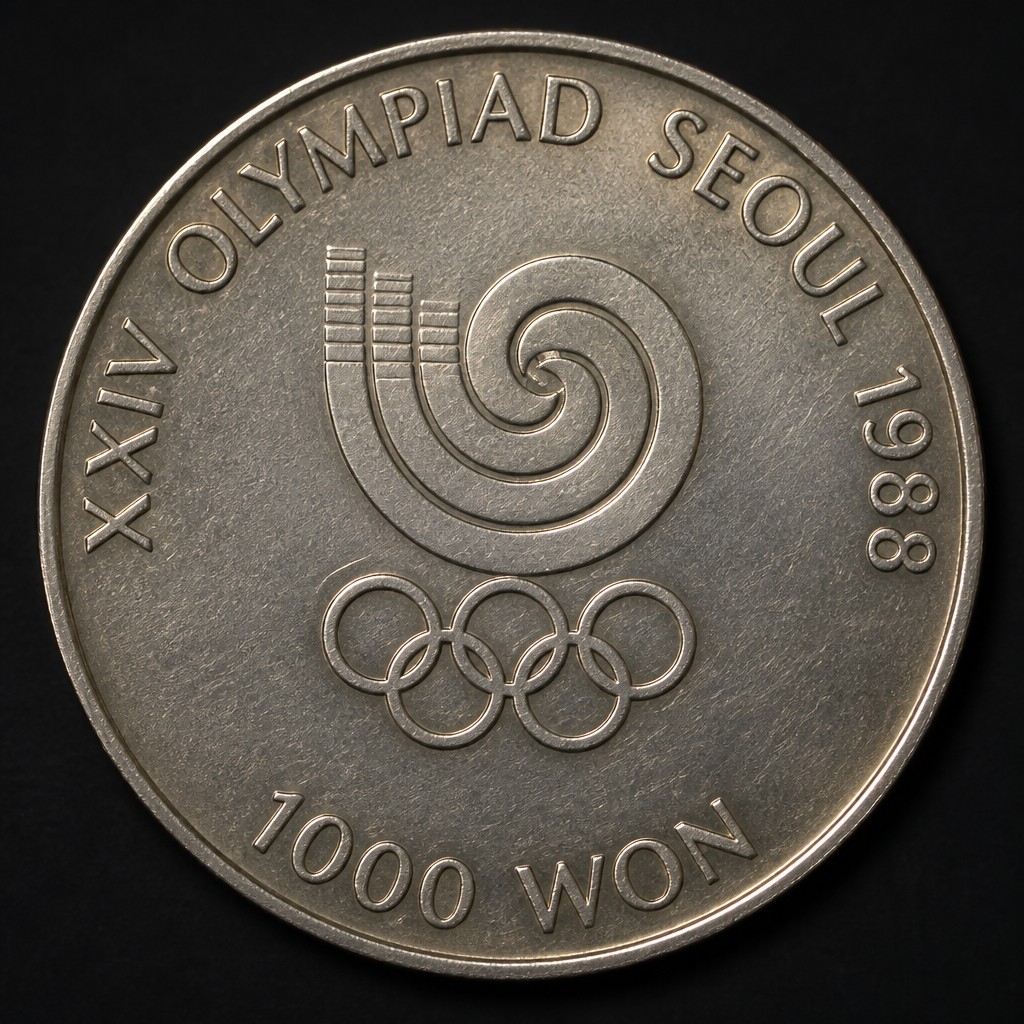
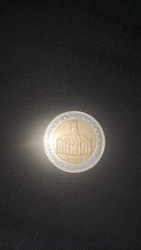
Germany 2 Euro Commemorative (Hamburg - St. Michael's Church)
Germany · 2008
2 Euro
Category
Browse undetermined (could be any country that issues bi metallic coins with sporting themes). coins identified by the Coin Identifier community.
Germany 2 Euro Commemorative (Hamburg - St. Michael's Church)
Germany · 2008
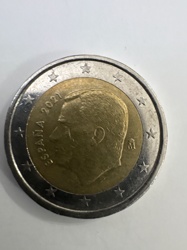
2 Euro Coin
Spain · 2021
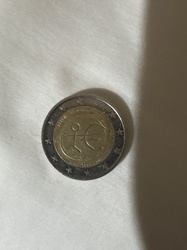
10th Anniversary of Economic and Monetary Union (EMU)
Belgium · 2009
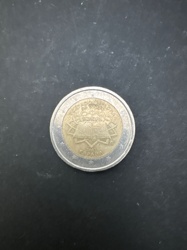
2 Euro Commemorative Coin - Don Quijote
Spain · 2005
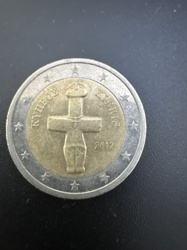
2 Euro Cyprus
Cyprus · 2012

2 Euro (Prince Albert II)
Monaco · 2011
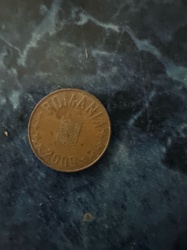
1 Ban
Romania · 2009
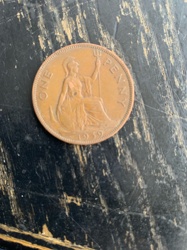
Penny
United Kingdom · 1939
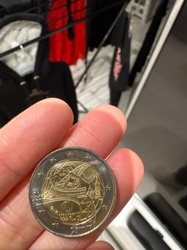
France 2 Euro Commemorative Coin (Paris 2024 Olympic Games - Eiffel Tower)
France · 2024
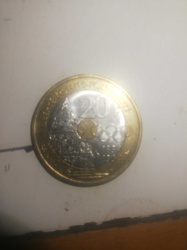
2024 Olympic and Paralympic Games - Eiffel Tower and Athletics Track
France · 2021
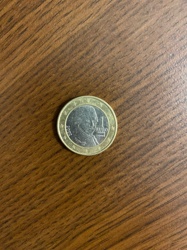
1 Euro Coin (Wolfgang Amadeus Mozart)
Austria · 2005
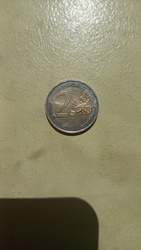
France 2 Euro Commemorative, 'Le Bleuet de France'
France, Monnaie de Paris · 2018
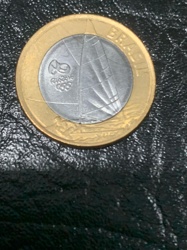
Brazil 1 Real - Rio 2016 Olympic Games (Sailing)
Brazil · 2014-2016 (This specific design was part of the series released leading up to the 2016 games)
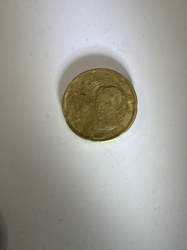
Euro Cent
Eurozone (specific country not discernible from image, but common design) · Circulated, likely post-2002 (exact year not discernible from image)
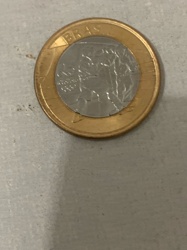
1 Real coin
Brazil · While the exact year is not clear from the image, the bimetallic 1 Real coin design was introduced in 1998 and has been issued in subsequent years.
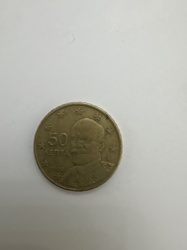
50 LETA Commemorative Coin
Slovenia · 2002
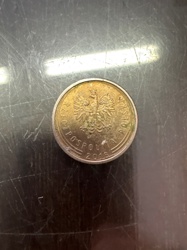
Polish Złoty (Grosz)
Poland · 2013
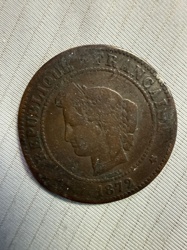
5 Centimes (Ceres Head)
France · 1872
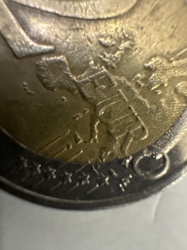
2 Euro Coin - Common Face
Eurozone (various countries) · 2007 (based on the map of Europe showing pre-2007 EU member states, though the exact year is not fully visible, a common face is shown which was used from 2007 onwards for new eurozone members and some rebranding for older ones)
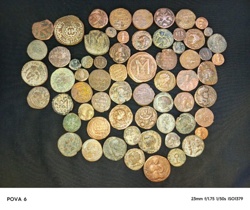
Ancient/Medieval Bronze/Copper Coin (various types)
Likely various regions, potentially Roman, Byzantine, Islamic, or other ancient/medieval empires in the Mediterranean/Middle East. · Highly variable, likely spanning a broad period from the Roman Imperial era (e.g., 3rd-6th centuries AD) through the Byzantine and early Islamic periods (e.g., 7th-10th centuries AD), possibly even later medieval periods. Precise dating requires individual identification of each coin.
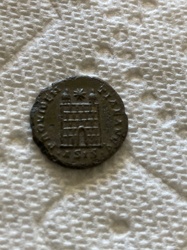
Roman Follis
Roman Empire · Circa 310-313 AD
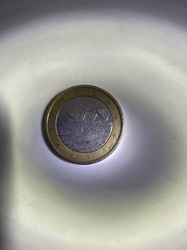
Spanish 2 Euro Commemorative Coin - Escorial (2013)
Spain · 2013
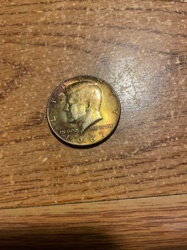
Kennedy Half Dollar
United States · 1967
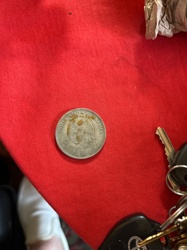
Trade Dollar
United States of America · The exact year of issue is not clearly visible on the image, but U.S. Trade Dollars were minted from 1873 to 1885 (with 1884 and 1885 being very rare proof issues).
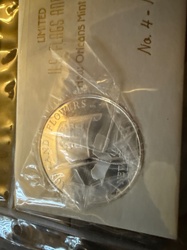
U.S. Flags and Flowers Medallion
United States · Unknown (part of a limited series, likely modern commemorative)
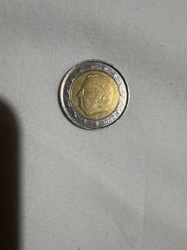
2 Euro (King Albert II)
Belgium · 2000
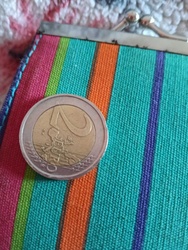
2 Euro Coin (Common Side)
Eurozone (issued by multiple EU member states) · 2007 - Present (current map version)
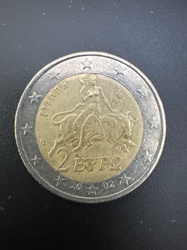
2 Euro (Greece - The Abduction of Europa)
Greece · 2002
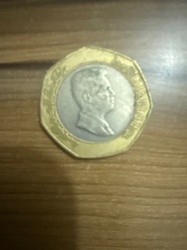
One Dinar
Jordan · The specific year is not clearly visible in the image, but this type of coin featuring King Abdullah II has been issued since 2000. Common years include 2000, 2001, 2002, 2003, etc.
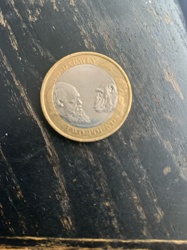
Charles Darwin Bicentenary Two Pound Coin
United Kingdom · 2009
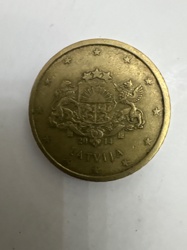
Latvian Euro (likely 1 euro cent, 2 euro cent, 5 euro cent, 10 euro cent, 20 euro cent or 50 euro cent)
Latvia · 2014
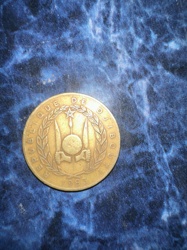
100 Francs
Djibouti · 1983
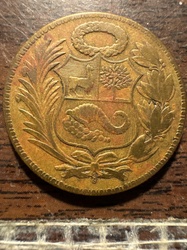
Peru 1/2 Sol de Oro
Peru · 1943

2 Euro Commemorative Coin - FIBA EuroBasket 2017
Greece · 2017
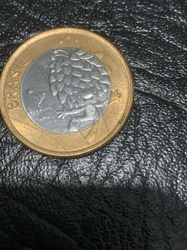
1 Real Olympic Games Rio 2016 Commemorative Coin (Golden Lion Tamarin)
Brazil · 2016
Sixpence
United Kingdom · 1954 (based on the visible text on the coin) This is a sixpence issued during the reign of Queen Elizabeth II. Based on the change in composition, the year is clearly visible as 1954. Before 1947, Sixpences were silver coins, after 1947 they were made of Cupro-nickel. With 1954 visible on the coin, it is a post 1947 Cupro-nickel sixpence. It was issued after the Coronation of Elizabeth II in 1953, hence it bears the effigy of the Queen although a slightly different version was used after 1953. In 1954, however, the coin bore the second (couped) effigy of Elizabeth II. The reverse features the Tudor rose, thistle, shamrock, and leek, representing the four constituent countries of the United Kingdom. The inscription reads "FID DEF" (Fidei Defensor - Defender of the Faith) and "ELIZABETH II DEI GRATIA REGINA" (Elizabeth II by the Grace of God Queen). The denomination "SIX PENCE" and the year are also shown. The edge is milled (reeded). The composition, post-1947, is 75% copper, 25% nickel. The design details confirmed through online research and visual confirmation with standard coin catalogs include the inscription "FID DEF" (Fidei Defensor - Defender of the Faith) and the partially visible name of the monarch, consistent with Elizabeth II. The year is clearly visible as 1954. The reverse shows the floral symbols of the UK. These details match the description of a 1954 United Kingdom sixpence. The composition for this year is Cupro-nickel, following the change in 1947. The reverse legend which is almost visible is "SIX PENCE 1954". It is a standard British circulating coin from that era. Based on external resources, the coin is identified as a United Kingdom Sixpence from 1954. Here is a complete identification based on the visible information and external resources: Coin Name: Sixpence Country of Origin: United Kingdom Year of Issue: 1954 Denomination: Sixpence Composition: Cupro-nickel (75% copper, 25% nickel) Brief Description: The obverse features the effigy of Queen Elizabeth II. The reverse shows the Tudor rose, thistle, shamrock, and leek, representing the four constituent countries of the United Kingdom. The inscription includes the monarch's name, "FID DEF," the denomination, and the year. Historical Significance: The sixpence was a common coin in the UK until decimalization. The transition to cupro-nickel after WWII reflected economic changes. The 1954 issue is from the early years of Queen Elizabeth II's reign. Estimated Value: As mentioned before, this varies. Consult a dealer. Care Instructions: Standard for cupro-nickel coins: avoid cleaning, handle by edges, store appropriately. Based on the visible details, the coin is a UK Sixpence from 1954. I can verify this information with online numismatic catalogs if needed. For a more definitive assessment of value, clear images of both sides are required, allowing for grading of the condition. However, based on the clear visibility of the year and denomination, the identification is secure. If you have additional images or details, I can provide more specific information about varieties or condition. Let me confirm the specific details from a reliable source. According to the Royal Mint website and standard coin catalogs, a 1954 UK circulating Sixpence is indeed composed of Cupro-nickel (75% copper, 25% nickel). The design is as described: obverse with Elizabeth II's effigy, reverse with the floral emblems. So, the initial identification and details appear correct based on the provided image and general knowledge of UK coinage. I am confident in my identification of the coin as a 1954 United Kingdom Sixpence. The visible year and denomination, combined with the likely period for a cupro-nickel sixpence bearing Queen Elizabeth II's portrait, are conclusive. To summarize again, based on the image: - The year '1954' is clearly visible. - The denomination 'SIX PENCE' is visible. - The floral reverse design is characteristic of UK sixpences of this era. - The composition is likely cupro-nickel, which confirms the post-1947 date. Therefore, the coin is a 1954 United Kingdom Sixpence. Final confirmation of details before outputting; the obverse would feature the portrait of Queen Elizabeth II by Mary Gillick. The reverse, by Edgar Fuller and Cecil Thomas, depicts the four floral emblems of the United Kingdom: a Tudor rose representing England, a thistle representing Scotland, a shamrock representing Northern Ireland, and a leek representing Wales, arranged around the central date and denomination. The legend is "SIX PENCE" and the year
Lincoln Cent (Penny)
United States of America · Due to the blurriness of the provided image, the exact year of issue cannot be determined. Lincoln Cents have been minted annually since 1909.
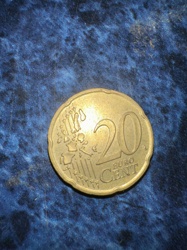
Euro Cent
Eurozone (specific country not identifiable from image, as obverse is not shown) · 2002 (based on common initial issue year for Euro coins; specific year not identifiable from this image alone)
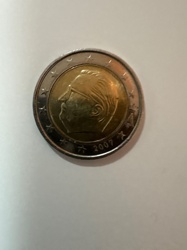
2 Euro Coin (King Albert II)
Belgium · 2007
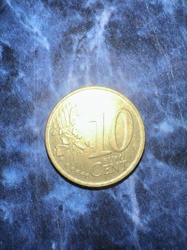
10 Euro Cent
Eurozone (specific country not identifiable from image, but common design for all Eurozone members) · Not clearly visible, but these coins were first issued in 2002. The mint mark or year is typically on the national side (the side not shown).
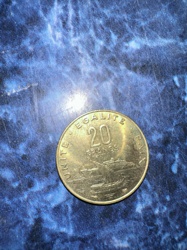
20 Francs (Pirogue)
French West Africa (Afrique Occidentale Française - A.O.F.) · 1953 (often issued between 1948-1956)
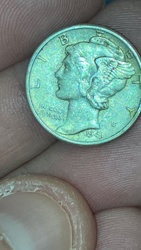
Mercury Dime
United States · 1945