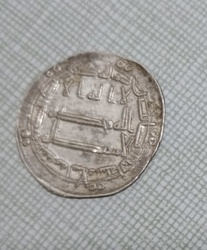
How to Identify the Umayyad Silver Dirham
An early Islamic silver coin struck after the 690s reform, carrying only Arabic Kufic inscriptions and no images, in keeping with Islamic aniconic tradition.
Read the full Umayyad Silver Dirham encyclopedia entry →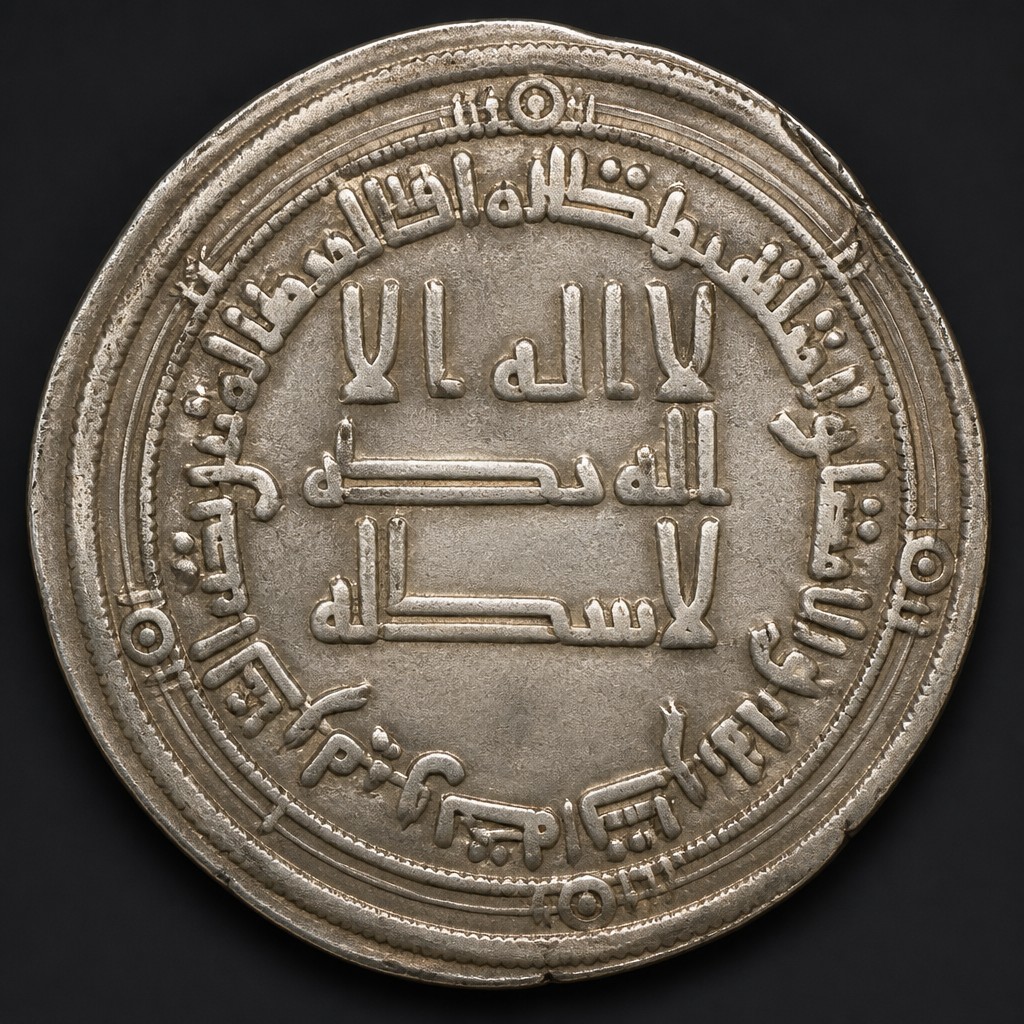
What It Is
The Umayyad Caliphate (661-750 AD) initially continued using Byzantine and Sasanian-style coin designs in conquered territories, but around 696-697 AD Caliph Abd al-Malik introduced a purely text-based, or "aniconic," silver dirham that removed all human and animal imagery in favor of religious inscriptions. This reformed dirham became the model for Islamic silver coinage for centuries afterward, and it was struck in vast quantities at dozens of mints across an empire that stretched from Spain to Central Asia, so surviving examples today are relatively plentiful compared with earlier pre-reform Islamic issues.
Obverse Design
The obverse centers on the Islamic declaration of faith, the shahada: "There is no god but God alone, He has no partner." This central text is surrounded by a marginal legend usually quoting the Quranic chapter al-Ikhlas (Quran 112), which affirms the oneness of God.
Reverse Design
The reverse carries a central inscription proclaiming Muhammad as the messenger of God, with an outer margin typically quoting Quran 9:33 about the truth of the faith prevailing over other religions. The mint name and date are usually written out in the reverse margin.
Size, Weight, Metal, and Edge
These are thin, flat silver coins, roughly 28-32mm in diameter and weighing about 2.7-2.9 grams. There is no cupping, raised rim, or edge decoration; the flans are simple and flat, struck rather than cast.
Mint Marks and Dates
Rather than using symbols or abbreviations, Umayyad dirhams spell out the mint city's name in full in the margin, such as Dimashq (Damascus), Wasit, or Kufa, along with the Hijri year written out in words rather than numerals, a distinctive feature of early Islamic coinage.
Telling It Apart from Similar Coins
Pre-reform Arab-Sasanian dirhams, struck before 696-697, still carry Sasanian-style imagery like a king's bust and fire altar with added Arabic phrases, making them easy to distinguish from the fully text-only reformed dirham. Later Abbasid dirhams (after 750) use a very similar epigraphic layout, so distinguishing an Umayyad from an Abbasid example generally requires reading the mint name and date and checking them against the historical mint list active under each dynasty.
Judging Condition at a Glance
Because the entire design is small, dense Kufic script, condition is judged mainly by how legible and sharp that script remains. A well-struck, well-centered coin will have crisp letterforms in both the central text and the marginal legend; wear or weak striking shows up as blurred or partially missing letters.
Authenticity Red Flags
Genuine dirhams display correctly formed, readable Arabic script, since the mint scribes who prepared the dies were literate professionals. Reproductions sometimes show garbled or nonsensical letter shapes that do not actually spell coherent Arabic phrases, along with an incorrect weight or a grainy, cast surface texture rather than the sharper look of a struck coin. It is also worth checking that the mint name and spelled-out date are historically plausible for the Umayyad period, since a mint or date that does not match the known Umayyad list is a sign the coin may be misattributed or altered.
Frequently asked questions
Why doesn't this coin show any pictures of a ruler?
After Caliph Abd al-Malik's coinage reform around 696-697 AD, Islamic coins deliberately avoided human and animal imagery, relying instead on Arabic religious inscriptions, which is why the reformed dirham is entirely text-based.
How is the coin dated if there are no numerals?
The Hijri (Islamic calendar) year is spelled out in words within the marginal inscription rather than shown as numerals, a standard feature of early Islamic coinage.
How can I tell an Umayyad dirham from an Abbasid dirham?
Both dynasties used a similar all-text design, so the clearest way to distinguish them is by reading the mint name and date in the margin and checking which dynasty controlled that mint in that year.
What does it mean if my coin has a picture of a king or fire altar on it?
That indicates a pre-reform Arab-Sasanian dirham struck before 696-697 AD, which combined a Sasanian-style king's bust and fire altar with added Arabic phrases, rather than the later fully aniconic reformed dirham.
What's a common sign of a modern fake?
Look closely at the Arabic script: genuine dirhams have grammatically coherent, correctly formed letters, while many reproductions show garbled or meaningless letter shapes along with an off weight or an overly smooth, cast-looking surface.
Umayyad Silver Dirham identified by the community
Recent Umayyad Silver Dirham coins identified with Coin Identifier.