
How to Identify the Indian Paisa
A collector's guide to attributing a copper paisa: fabric, size and weight, patina, reading worn legends, and telling it apart from other base-metal coins.
Read the full Indian Paisa encyclopedia entry →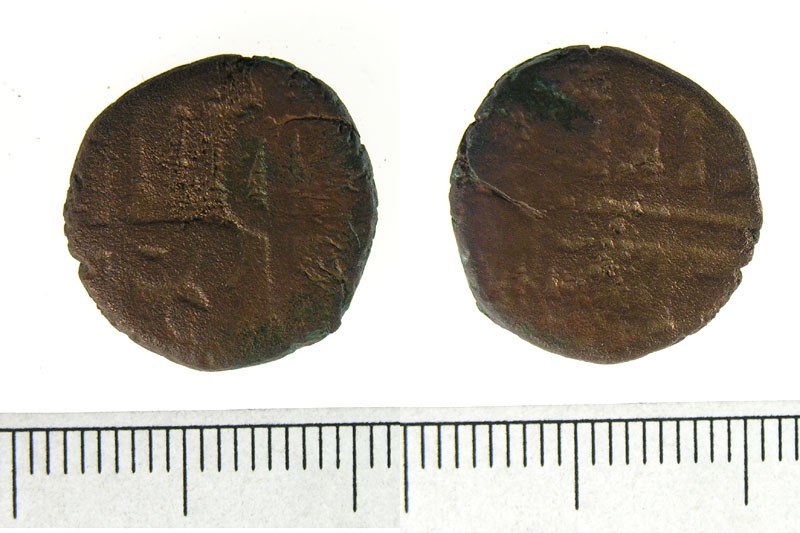
Begin with the metal and the feel of the coin. A genuine paisa of this period is copper, usually a fairly thick and slightly irregular flan showing a brown, reddish or dark patina. Copper is non-magnetic, so a quick magnet test is a useful first check: a coin that sticks to a magnet is not a genuine copper paisa. The example here is copper of typical paisa size, with both faces worn smooth.
Measure the diameter and weight before anything else. Paisas vary a great deal between issuers, but most sit roughly in the 15–25 mm range with a substantial copper weight, and this places the coin within the paisa family rather than among larger double-paisa coppers or smaller fractional pieces. Recording size and weight is especially important when, as here, the inscription cannot be read, because fabric becomes your main diagnostic.
Next, try to read whatever remains of the legends. Indian paisas of this era are aniconic — they carry Persian or regional-script inscriptions and ornamental devices, not portraits. If any part of the legend, a mint name, or a date survives, that is the key to identifying the issuing state and ruler. On a fully worn coin like this one, the text is gone, so honest description means noting that the legends are illegible and that the piece cannot be firmly attributed.
Beware of look-alikes and the limits of attribution. Many princely states and the East India Company presidencies struck broadly similar copper coins, so a worn anonymous paisa can resemble dozens of different issues. Do not guess an issuer from shape alone. Off-center strikes with part of the design missing are normal for hand-struck coins and are not by themselves a sign of a fake; genuine coins are struck rather than cast, so casting seams, air bubbles, or a soft, mushy surface with a mold line are warning signs of a replica.
When the legend is unreadable, focus on documenting the coin objectively — metal, diameter, weight, thickness and patina — and photograph both faces under raking light in case any faint traces of the design can be teased out. If even a few letters or a partial date can be recovered, a specialist in Indian states or presidency coinage may be able to narrow down the issuer; without that, the coin is best cataloged simply as a worn early 19th-century Indian copper paisa.
Frequently asked questions
How do I confirm my coin is a paisa and not another denomination?
Check the metal, size and weight. Paisas are copper and generally fall in roughly the 15–25 mm range with a solid weight. Larger coppers may be double-paisa pieces and smaller ones fractional coppers. A magnet test also confirms genuine non-magnetic copper.
Can I identify the issuer if the legend is worn off?
Usually not with certainty. Attribution depends on reading the mint name, ruler or date in the legend. When the inscription is illegible, as on a fully worn paisa, the coin can only be described generically as an early 19th-century Indian copper paisa.
Is an off-center strike a sign of a fake?
No. Paisas were struck by hand from dies larger than the blank, so off-center strikes with part of the design missing are normal. Signs of a fake are casting seams, bubbles, a soft cast surface, wrong weight, or magnetic metal.
What should I record about a worn paisa?
Note the metal, diameter, weight, thickness and patina, and photograph both sides under angled light. These physical details are the main way to classify the coin when its legends can no longer be read.