How to Identify the Yuan Shih-kai Dollar ("Fat Man Dollar")
An early Republic of China silver dollar bearing President Yuan Shih-kai's portrait, nicknamed the "Fat Man Dollar" for his fuller-faced likeness, identified by its uniform portrait and floral-wreath reverse.
Read the full Yuan Shih-kai Dollar ("Fat Man Dollar") encyclopedia entry →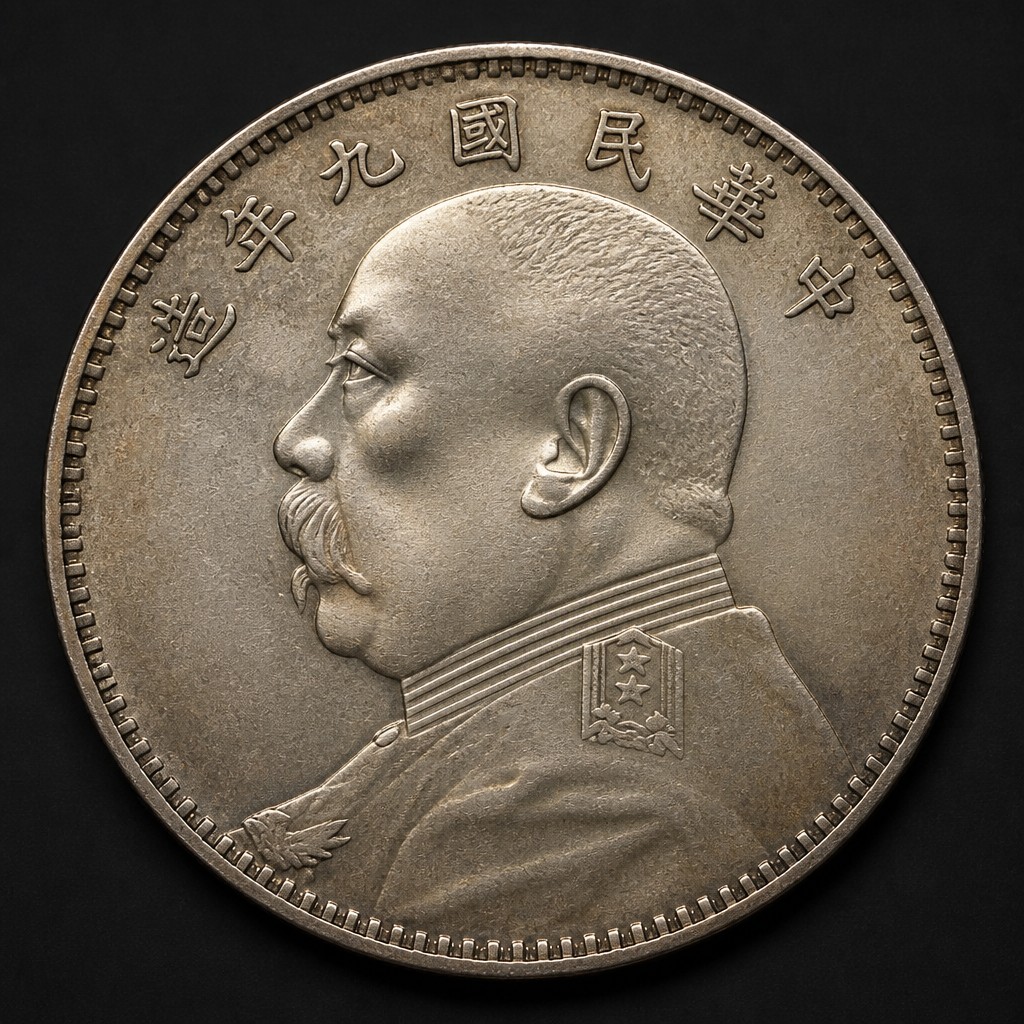
What It Is
The Yuan Shih-kai Dollar is a silver dollar coin issued by the early Republic of China, featuring the portrait of Yuan Shih-kai, the first President (and briefly self-proclaimed emperor) of the Republic. Struck in large quantities across several years in the 1910s and into the early 1920s, it became one of the most common and recognizable Chinese silver dollars in circulation, earning the popular nickname "Fat Man Dollar" due to Yuan's fuller facial features as rendered by the engraver.
Obverse Design and Inscriptions
The obverse shows a left-facing portrait bust of Yuan Shih-kai in military uniform, with Chinese characters identifying him by name and title arranged around the upper portion of the coin, along with the corresponding year of the Republic expressed in the Chinese republican calendar.
Reverse Design and Inscriptions
The reverse displays the denomination "ONE DOLLAR" (in Chinese characters meaning one yuan) within a wreath of floral sprays, typically rice or wheat stalks, a design that remained fairly consistent across the coin's multi-year production run, making the obverse portrait and date the primary way to distinguish between individual issues.
Size, Weight, Metal, and Edge
The coin is standard dollar-sized, approximately 39 mm in diameter, struck in roughly .890 fine silver and weighing about 26.6-27 grams, consistent with the broader family of Chinese silver dollar coinage from the same era. The edge is reeded.
Mint Marks and Where to Find Them
Yuan Shih-kai Dollars were struck at multiple Chinese mints during their production run, but unlike many Western coins, they generally do not carry a distinct branch mint letter visible to casual inspection; instead, subtle die variety differences (in portrait style, wreath detail, or character font) are used by specialists to attribute coins to specific mints and years.
Telling It Apart from Similar Coins
This coin is often confused with the later Republic of China "Junk Dollar" (featuring Sun Yat-sen and a sailing ship) or with other early Republic commemorative dollars. The clear giveaway is the military-uniformed portrait bust identified as Yuan Shih-kai, combined with the floral wreath reverse rather than a ship or landscape scene.
Judging Condition at a Glance
Look at the fine texture of Yuan's uniform collar and epaulettes and the individual grains or stalks in the floral wreath on the reverse. A well-preserved coin shows crisp, separated wreath details and sharp uniform texture, while a heavily worn example shows a smoothed, flattened wreath and a blurred portrait.
Authenticity Red Flags
Because this is one of the most widely counterfeited Chinese coins due to its popularity and relatively common status, look carefully at weight and diameter accuracy, the specific style of Yuan's face and uniform detail against known genuine varieties, and the sound and texture of the surface. Cast fakes typically show a grainy, dull surface and a seam line, while struck counterfeits may still show slightly soft or mismatched design details compared to genuine dies.
Frequently asked questions
Why is this coin nicknamed the 'Fat Man Dollar'?
The nickname refers to Yuan Shih-kai's fuller-faced portrait as rendered on the coin, a colloquial name used by collectors and dealers to distinguish it from other Chinese dollar types.
How is the Yuan Shih-kai Dollar different from the Junk Dollar?
The Yuan Shih-kai Dollar shows his military-uniformed portrait with a floral wreath reverse, while the Junk Dollar shows Sun Yat-sen's portrait with a sailing junk ship reverse.
What silver content should a genuine coin have?
Approximately .890 fine silver and 26.6-27 grams, consistent with standard early Republic of China dollar specifications.
Why are these coins frequently counterfeited?
Their popularity and wide historical circulation make them a common target; check weight, diameter, and fine portrait and wreath details against known genuine examples.
Yuan Shih-kai Dollar ("Fat Man Dollar") identified by the community
Recent Yuan Shih-kai Dollar ("Fat Man Dollar") coins identified with Coin Identifier.