
How to Identify the Yemeni Riyal (Ahmadi/Imadi Kingdom Coinage)
Silver riyals struck by the Mutawakkilite Kingdom of Yemen under Imams Yahya (Imadi) and Ahmad (Ahmadi), identifiable by all-Arabic calligraphic design without portraits.
Read the full Yemeni Riyal (Ahmadi/Imadi Kingdom Coinage) encyclopedia entry →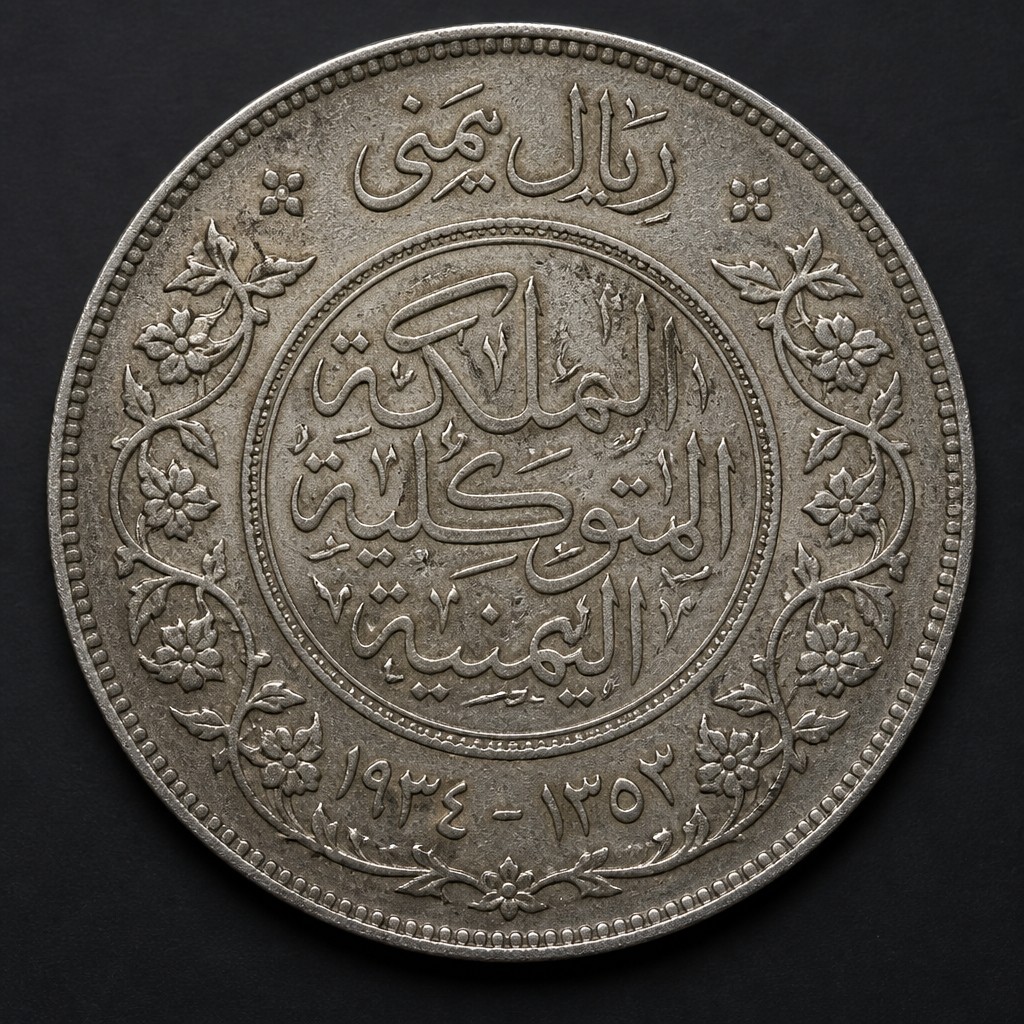
What It Is
The Ahmadi and Imadi riyals were the silver coinage of the Mutawakkilite Kingdom of Yemen, named informally after the ruling Imams: Imam Yahya (whose era coins are sometimes called Imadi, referencing his fuller religious title) and his son Imam Ahmad (Ahmadi). These coins circulated through much of the first half of the 20th century until the kingdom's fall in the early 1960s, and they were struck to a weight standard influenced by the long-circulating Maria Theresa thaler used across the region.
Obverse Design & Inscriptions
As with other traditional Islamic coinage, there is no portrait. The obverse carries dense Arabic calligraphy, typically religious phrases alongside the Imam's name and title, arranged in concentric or banded text around the field.
Reverse Design & Inscriptions
The reverse continues the calligraphic theme, usually including the mint location, the Hijri date, and sometimes the denomination spelled out in words rather than numerals. Because the text can be dense and stylized, reading it accurately usually requires comparing it letter by letter against a reference example.
Size, Weight, Metal & Edge
These riyals are silver, with weight and diameter close to the Maria Theresa thaler standard that dominated regional trade, roughly comparable to a large silver crown-sized coin. The edge finish and exact fineness vary somewhat by mint and period, so cross-check against known examples from the same approximate date range rather than assuming one fixed spec for the entire coinage era.
Mint Marks & Where to Find Them
Rather than a discrete symbol, the mint city is generally named directly within the Arabic text on the reverse. Locating and translating this portion of the inscription is the most reliable way to identify where a specific coin was struck.
Telling It Apart From Similar Coins
These Yemeni riyals can be confused with other regional silver coinage of similar size and weight, including Ottoman-era pieces and the Maria Theresa thaler itself. The clearest distinguishing feature is the calligraphic content: genuine Yemeni Imamate coins name the specific Imam and Yemeni mint in their text, while a Maria Theresa thaler carries a Latin legend and a portrait bust of Empress Maria Theresa, which the Yemeni coin never shows.
Judging Condition at a Glance
Because the design is entirely text-based, condition is judged by how crisply the Arabic strokes are preserved. A well-struck, lightly circulated coin shows clean, sharply defined script with clear spacing between characters, while a worn or weakly struck example shows softened, run-together letters that are harder to read.
Authenticity Red Flags
Given the long circulation life and regional trade importance of these coins, both period counterfeits and later reproductions exist. Warning signs include inconsistent silver color or a grayish, dull surface suggesting base metal, incorrect weight or diameter compared with genuine examples, poorly formed or asymmetric Arabic script that does not match the neat, professional calligraphy of an official strike, and edges that appear cast or filed rather than naturally struck.
Frequently asked questions
Why are these coins called both 'Ahmadi' and 'Imadi'?
The names come from the ruling Imams of the era: Imam Ahmad gives the 'Ahmadi' designation, while 'Imadi' references Imam Yahya's fuller religious title, so the exact name used often depends on which Imam's reign the coin belongs to.
Does the coin show a portrait of the Imam?
No, following Islamic coinage tradition these riyals use only Arabic calligraphy, religious phrases, and the Imam's name in text, without any human image.
How is the mint location shown on the coin?
The mint city is spelled out within the Arabic inscription on the reverse rather than shown as a separate small mint-mark symbol, so you need to read the text itself to identify it.
How is this different from a Maria Theresa thaler of similar size?
A Maria Theresa thaler carries a Latin legend and a portrait bust of the Empress, while the Yemeni Imamate riyal has no portrait at all and instead uses purely Arabic religious and dynastic text.