
How to Identify the Xuantong Yuanbao 20 Cents
A collector's checklist for the Xuantong 20 Cents: reading its dragon and dual-language legends, confirming small silver fabric, and avoiding fakes.
Read the full Xuantong Yuanbao 20 Cents encyclopedia entry →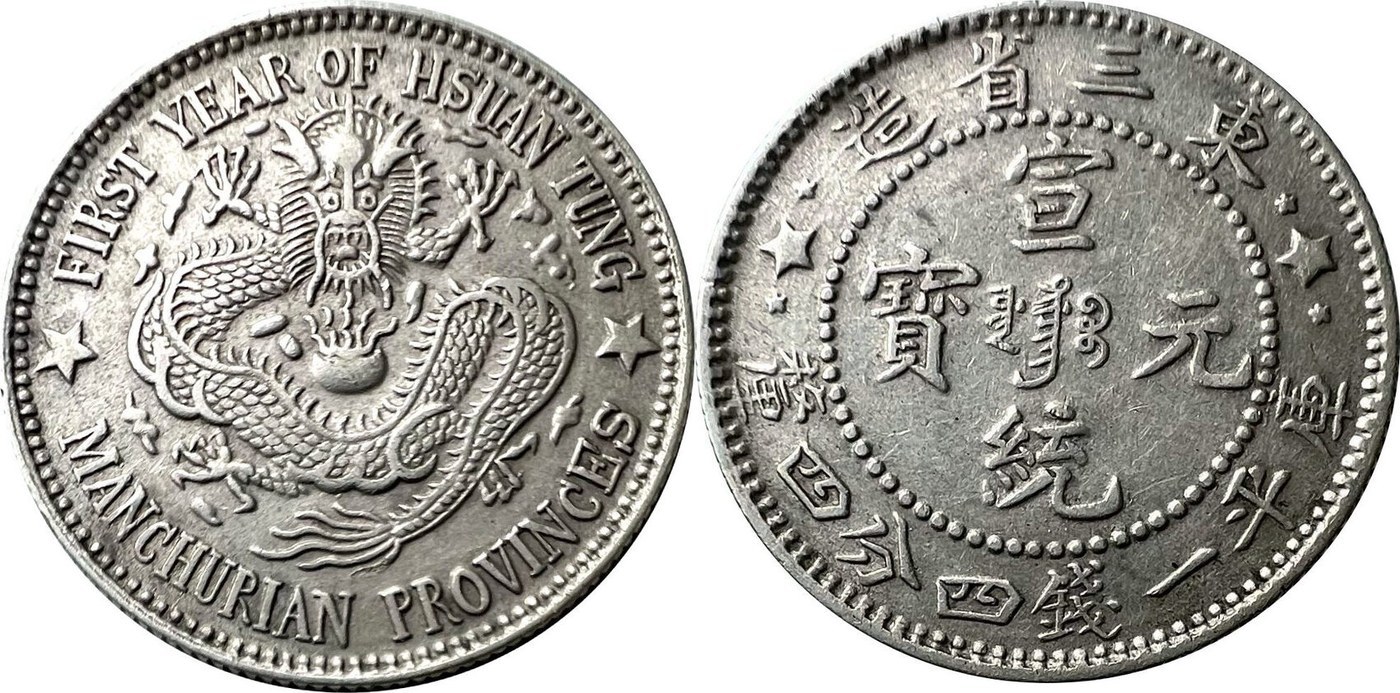
Begin with the two-sided layout. A Xuantong Yuanbao 20 Cents pairs a dragon on one face with the four Chinese characters Xuantong Yuanbao (宣統元寶) on the other. The dragon side carries an English legend naming the reign and value, including the phrase FIRST YEAR OF HSUAN TUNG, while the Chinese side is framed by decorative and beaded borders. Both legends should agree that the coin is a Xuantong-reign 20-cent piece.
Read the reign title carefully. The single most important detail is the name of the reign: Xuantong (Hsuan Tung) marks this coin, as opposed to Guangxu on the near-identical coins of the previous emperor. The dragon-and-English format was used across both reigns, so it is the reign characters and English wording—not the dragon alone—that fix the identification.
Judge size and metal. This is a small, struck silver coin only a couple of centimeters across, far smaller than the dollar or half-dollar of the same design. Expect crisp machine-struck relief and a patterned or reeded edge. Genuine silver tones grey and has a solid ring and heft for its size; a yellowish tint, light weight, or a seam around the rim points to a base-metal fake or a cast copy.
Separate it from look-alikes and denominations. Within the Xuantong series the same dragon design appears on 10-cent, half-dollar, and dollar coins, so use the English value to confirm the 20 Cents. Provincial strikings differ in small details of the dragon and lettering; note these features rather than assuming all examples are identical. Beware modern replicas, fantasy pieces, and altered dates that copy the popular dragon format.
Apply authentication caution. Late-Qing dragon coins are among the most heavily counterfeited Chinese coins. Weigh and measure the piece against known specifications for the issue, examine the surfaces for cast bubbles, tooling, or an added edge seam, and for any higher-value example seek expert opinion or third-party authentication before buying.
Frequently asked questions
How do I tell a Xuantong 20 Cents from a Guangxu one?
Read the reign characters and English legend. This coin names Xuantong (Hsuan Tung), the reign of Puyi, while the otherwise similar dragon coins of the prior reign read Guangxu. The dragon design alone will not distinguish them.
Which side is the obverse?
Collectors generally treat the dragon side, with its English legend and FIRST YEAR OF HSUAN TUNG dating, as the obverse, and the side bearing the Chinese characters Xuantong Yuanbao as the reverse. Both are needed to confirm the coin.
How can I check that it is really silver?
Genuine pieces are struck in silver, so they tone grey rather than yellow, feel appropriately heavy for their small size, and show sharp machine-struck detail. Weigh and measure the coin against known specifications; a light weight, brassy color, or a cast seam suggests a fake.
Are these coins often faked?
Yes. Late-Qing dragon coins, including the Xuantong minor silver, are widely reproduced, from tourist copies to deceptive counterfeits and fantasy pieces. Check weight, size, and surfaces, and get third-party authentication for any valuable example.