
How to Identify the Wu Zhu Cash
A collector's checklist for the Han-dynasty Wu Zhu: reading the two seal-script characters, the square hole, cast bronze surfaces, and authentication cautions.
Read the full Wu Zhu Cash encyclopedia entry →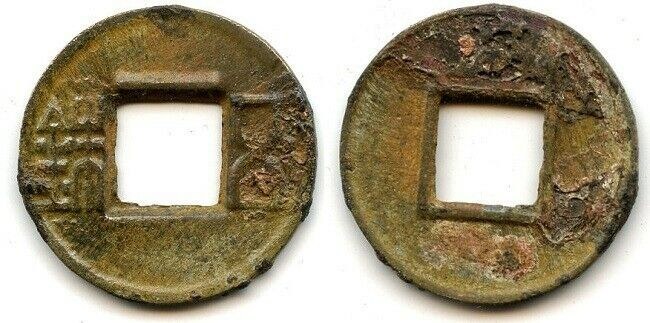
Begin with the inscription, because it defines the type. A genuine Wu Zhu shows exactly two characters flanking the square central hole, reading Wu (five) and Zhu (the weight unit) in seal script. If the coin carries a different number of characters, a reign title, or a four-character legend, it is a different Chinese cash type even though the round-coin-with-square-hole format looks the same. Confirm the two-character Wu Zhu legend first.
Examine the structure and fabric next. The Wu Zhu is a cast bronze coin, so relief is smooth and slightly rounded rather than sharply pressed, and the metal should show an earthy or greenish patina consistent with age and burial. The square hole should be cleanly formed and roughly centered, framed by raised rims. The reverse is normally plain or shows only rims, so an elaborate reverse design is a warning sign that you are looking at a different or later coin.
Check size and weight against references for the Wu Zhu series. These are small everyday cash pieces, and the denomination is tied to the nominal five-zhu weight rather than to any large numeral on the coin. Because casting varied by period and foundry, expect some variation in diameter, thickness, and finishing rather than machine-like uniformity.
Dating a Wu Zhu to a specific reign, such as that of Emperor Xuandi, is genuinely difficult from appearance alone, since the design was cast with little change for centuries. Attribution relies on the calligraphic style of the seal-script characters, the treatment of the inner and outer rims, and casting characteristics that specialists compare against dated reference examples. Treat any confident single-reign attribution with appropriate caution unless it is well supported.
Be alert to reproductions and altered pieces. Because Wu Zhu coins are so numerous and collectible, modern cast copies exist; watch for seam lines, an unnaturally uniform or artificially colored patina, bubbled or granular surfaces, and soft, blurry characters that lack the confident structure of a period cast. When authenticity or a specific attribution matters, consult a specialist in ancient Chinese coinage before purchase.
Frequently asked questions
What is the quickest way to confirm a coin is a Wu Zhu?
Read the two characters beside the square hole. They should be Wu (five) and Zhu (the weight unit) in seal script. A round bronze coin with a square hole and exactly that two-character legend is a Wu Zhu; other legends indicate a different cash type.
Can I date a Wu Zhu to Emperor Xuandi's reign just by looking?
Not reliably. The Wu Zhu was cast with little change for centuries, so coins from many reigns look alike. Attribution to a specific Han reign depends on fine differences in script style, rim finishing, and casting that specialists assess against reference examples.
How can I tell a genuine ancient Wu Zhu from a modern copy?
Look for smooth cast relief, honest earthy or green patina, and crisply structured characters. Warning signs include edge seam lines, granular or bubbled surfaces, artificial-looking color, and soft, mushy lettering. When in doubt, seek an expert opinion.
Should the reverse have any characters?
Usually not. A typical Wu Zhu has a plain reverse showing at most raised rims around the hole and edge. An ornate or heavily inscribed reverse suggests a different or later coin type rather than a standard Han Wu Zhu.