
How to Identify the Wood's Hibernia Halfpenny
A copper halfpenny struck for Ireland in the 1720s under William Wood's patent, recognized by its seated harp-playing female figure representing Hibernia on the reverse.
Read the full Wood's Hibernia Halfpenny encyclopedia entry →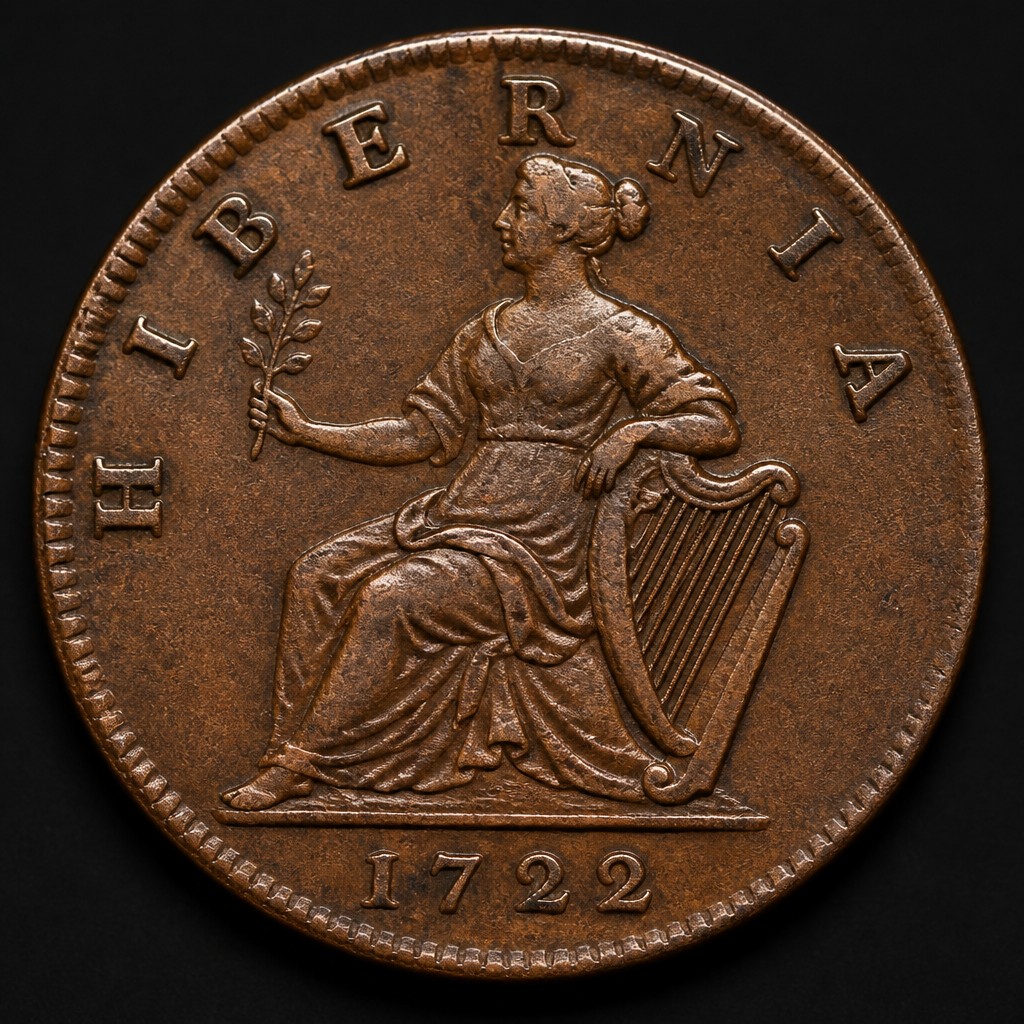
What It Is
Wood's Hibernia Halfpenny was struck between about 1722 and 1724 under a royal patent granted to William Wood for supplying copper coinage to Ireland. The issue became infamous in Irish history due to the "Wood's Halfpence" controversy, in which critics including Jonathan Swift argued the coins were overproduced and undervalued, damaging confidence in the currency. Despite the controversy, large quantities were struck and many survive today.
Obverse Design & Inscriptions
The obverse features a right-facing laureate bust of King George I, with the legend GEORGIVS · DEI · GRATIA · REX around the rim, matching the royal portrait used on Wood's related Rosa Americana coinage.
Reverse Design & Inscriptions
The reverse depicts Hibernia, the female personification of Ireland, seated and holding a harp, often with a small pile of shields or fittings beside her. The legend HIBERNIA appears above or around the figure, with the date below.
Size, Weight, and Metal
These halfpennies were struck in copper, with a diameter typical of British and Irish halfpennies of the era, roughly 28-29 mm, and a plain edge. Weight standards shifted during the patent's run as public criticism forced adjustments, so pieces from different years can vary slightly in weight even though the design stayed consistent.
Mint Marks
No mint mark appears on these coins since they were produced at private mints under Wood's patent rather than at the Royal Mint or Dublin's official mint. Dating (1722, 1723, or 1724) and minor die differences in the harp or seated figure are the main tools for identifying specific varieties.
Telling It Apart From Similar Coins
The seated Hibernia-with-harp reverse is unique to this Irish series and should not be confused with the crowned double rose of Wood's Rosa Americana halfpence, even though both share the same obverse portrait and general period. Genuine Hibernia halfpennies also differ from later 18th-century Irish halfpennies, which use updated portraits of later monarchs.
Judging Condition at a Glance
Examine the harp strings and Hibernia's drapery folds for strike detail; these fine elements wear down quickly with circulation. A well-preserved example retains crisp lines in the harp and legible full legends, while a heavily worn piece will show a smooth, almost featureless seated figure and faint lettering.
Authenticity Red Flags
Given their historical fame, contemporary counterfeits and later replicas of Wood's Hibernia Halfpenny do exist. Signs of trouble include unusually smooth or soft details suggesting a cast rather than struck piece, incorrect color (too yellow or too gray for copper), and lettering that doesn't match the angular, period-accurate style of 1720s dies. As with all colonial-era coppers, comparing suspect pieces against well-documented reference examples of the correct date is important before drawing conclusions.
Frequently asked questions
What does the reverse of a Wood's Hibernia Halfpenny show?
A seated female figure representing Ireland (Hibernia) holding a harp, with the word HIBERNIA and the date around her.
Why is this coin historically controversial?
The patent granted to William Wood was criticized in Ireland, most famously by Jonathan Swift, for producing coinage many felt was overvalued and imposed without proper consent.
Does the Hibernia Halfpenny have a mint mark?
No, it was struck at private mints under royal patent rather than an official government mint, so no mint mark appears.
How is it different from the Rosa Americana coinage?
Both share the same George I obverse bust, but Rosa Americana shows a crowned double rose on the reverse while the Hibernia Halfpenny shows a seated figure with a harp.
What years were Hibernia Halfpennies dated?
Most pieces are dated 1722, 1723, or 1724, corresponding to the active years of Wood's patent.