
How to Identify the War Nickel (Silver 1942-1945 Jefferson Nickel)
How to recognize the silver wartime alloy Jefferson Nickels of 1942-1945, identified by their large above-dome mint mark and different metal composition.
Read the full War Nickel (Silver 1942-1945 Jefferson Nickel) encyclopedia entry →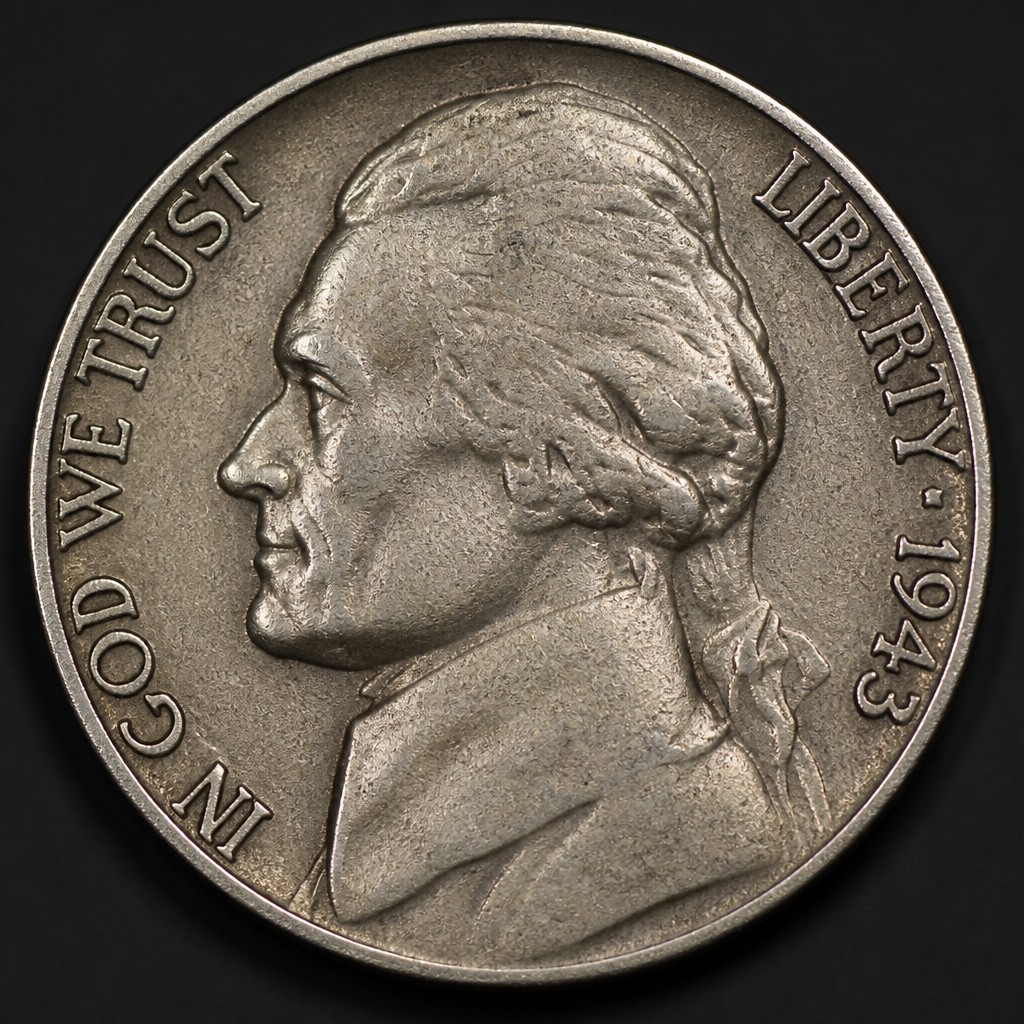
What It Is
War Nickels are Jefferson Nickels struck from late 1942 through 1945, when the U.S. Mint removed nickel metal from the coin's alloy to conserve it for wartime industrial and military use. They kept the standard Jefferson design but used a different metal composition and a distinctive mint mark placement, making them fairly easy to spot once you know exactly what visual cues to look for on the reverse.
Obverse Design
The obverse is unchanged from other Jefferson Nickels of the period: Thomas Jefferson faces left, with LIBERTY at the left rim, IN GOD WE TRUST at the right rim, and the date at the lower right near the shoulder.
Reverse Design
The reverse still shows Monticello with MONTICELLO and FIVE CENTS below it, E PLURIBUS UNUM above the roofline, and UNITED STATES OF AMERICA around the top. The key visual difference is the mint mark, which was moved to a large letter placed directly above the dome of Monticello for this wartime period only, rather than its usual small size beside the building.
Size, Weight, Metal, Edge
War Nickels are still 21.2mm in diameter and 5.00 grams, matching standard nickels in size and weight, but the alloy changed to 56% copper, 35% silver, and 9% manganese. The edge remains plain, with no reeding.
Mint Marks
Look above the dome of Monticello for a large "P," "D," or "S." The 1942 "P" mint mark is historically notable as the first time the Philadelphia Mint ever placed a mint mark on a circulating U.S. coin. Only nickels dated from mid-1942 through 1945 use this large above-dome mint mark; earlier and later Jefferson Nickels use the normal small mint mark beside the building instead.
Telling It Apart from Similar Coins
Some nickels dated 1942 were struck in the standard copper-nickel alloy before the wartime formula began partway through the year, so the date alone does not confirm a War Nickel. The large mint mark above Monticello's dome is the clearest visual sign; a normal-sized mint mark to the right of the building on a 1942 coin indicates the earlier pre-war alloy instead of the silver wartime composition.
Grading at a Glance
Wear appears first on Jefferson's cheek and hair on the obverse. On the reverse, check the steps of Monticello for sharp separation. War Nickels often tone differently than standard nickels because of their silver content, sometimes developing a duller gray, mottled, or slightly darker patina compared to the brighter, whiter luster typically seen on ordinary copper-nickel issues of the same series.
Authenticity Red Flags
Because War Nickels contain silver, be alert to pieces that have been artificially toned or chemically treated to look more attractive, as well as coins with the large mint mark added or altered to simulate a wartime issue on a coin from the wrong date range. Verifying both the date and the correct alloy-era mint mark placement together, rather than relying on either detail alone, is the most reliable way to confirm a coin's authenticity as a genuine War Nickel.
Frequently asked questions
How do I know if a nickel is a silver War Nickel?
Check for a large mint mark (P, D, or S) placed above the dome of Monticello, used only on nickels from mid-1942 through 1945.
What is the alloy of a War Nickel?
56% copper, 35% silver, and 9% manganese, replacing the standard copper-nickel mix.
Are all 1942 nickels War Nickels?
No, early 1942 nickels used the standard alloy and normal small mint mark; only the wartime alloy coins have the large above-dome mint mark.
Why is the 1942-P War Nickel mint mark notable?
It was the first time the Philadelphia Mint placed a mint mark on a circulating U.S. coin.
Do War Nickels look different in color from regular nickels?
They often develop a duller gray or mottled tone over time due to their silver content, distinct from the brighter luster of standard copper-nickel coins.