
How to Identify the Voyageur Silver Dollar
How to identify Canada's Voyageur Silver Dollar by its canoe scene reverse, monarch obverse, silver content through 1967, and later nickel version.
Read the full Voyageur Silver Dollar encyclopedia entry →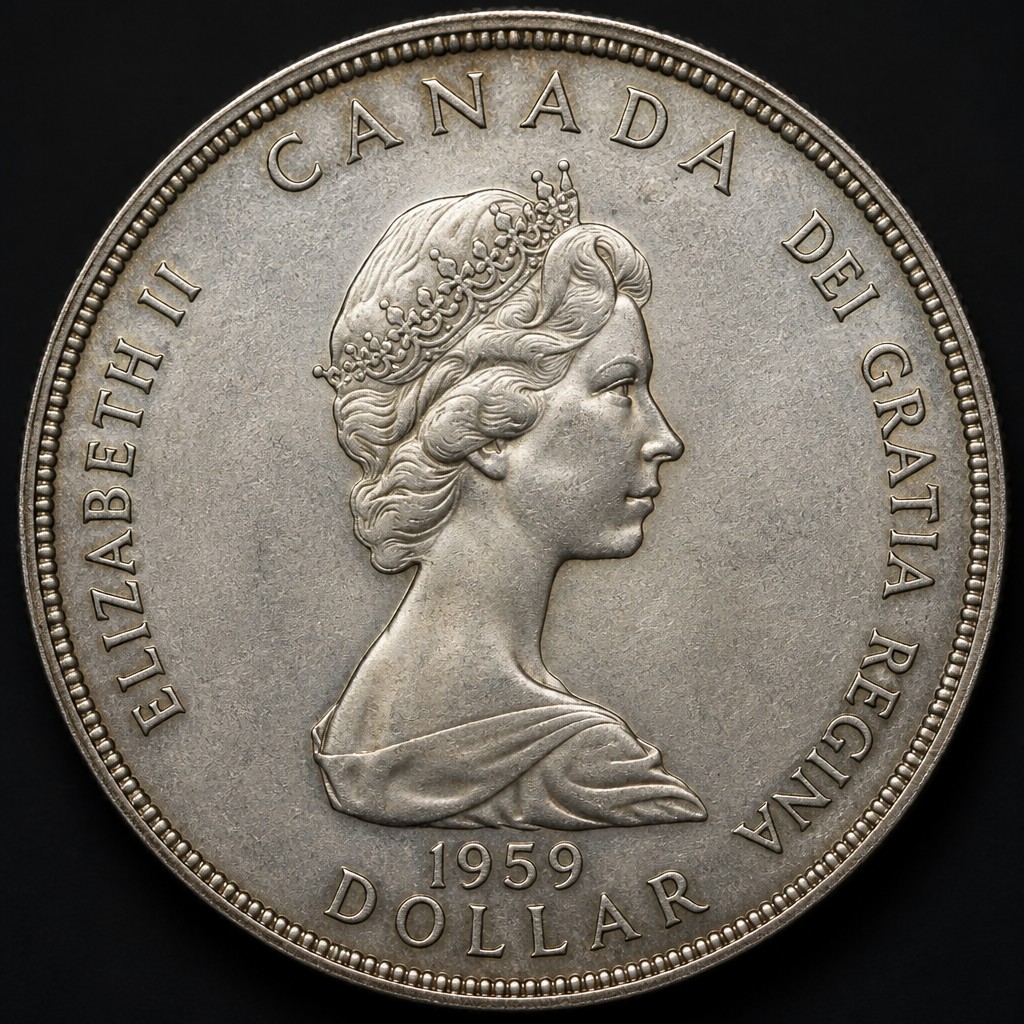
What It Is
The Voyageur design was introduced on Canadian silver dollars in 1935 to mark King George V's Silver Jubilee, created by designer Emanuel Hahn. The design remained in use, with some interruptions for special commemoratives, for decades afterward.
Obverse Design & Inscriptions
The obverse shows a portrait of the reigning monarch of the day: George V in 1935-1936, George VI afterward, and Queen Elizabeth II from 1953 onward, along with royal titles in Latin.
Reverse Design & Inscriptions
The reverse depicts a voyageur (a French-Canadian fur trader) and an Indigenous guide paddling a canoe loaded with trade goods, set against a stylized shoreline, with "CANADA," the date, and "DOLLAR."
Size, Weight, Metal, and Edge
From 1935 to 1967, silver dollars were struck in .800 fine silver (briefly .500 fine in 1967-1968), measuring 36mm across and weighing about 23.3 grams, with a reeded edge. From 1968 onward, the same denomination continued as a circulation coin struck in nickel using the same Voyageur reverse until 1986, after which the common loon design replaced it for circulating dollars.
Mint Marks & Where to Find Them
Struck by the Royal Canadian Mint; most coins of this series carry no separate branch mint mark. Some years replaced the standard Voyageur scene with a special anniversary reverse before returning to the regular design in following years.
Telling It Apart From Similar Coins
Silver Voyageur dollars (1935-1967) are noticeably heavier, have a duller grey-white tone, and give a different ring when tapped compared to the lighter, brighter nickel Voyageur dollars struck from 1968 to 1986. Also watch for special commemorative-reverse dollars issued in certain years within this run, which replace the canoe scene entirely with a unique design.
Judging Condition & Grade
Check the voyageur's arm and paddle and the guide's shoulder and headdress first, since these are the high points that show wear earliest. Unnaturally bright or hairline-scratched surfaces usually indicate a coin that has been cleaned.
Authenticity Red Flags
A silver-dated coin that feels too light, doesn't have the expected dull ring of silver, or shows a silvery wash over a base-metal core are all signs of a fake or altered piece. Mismatched date and design-style combinations are also worth checking against known genuine issues.
Frequently asked questions
How can I tell if my Voyageur dollar is silver or nickel?
Silver dollars (1935-1967) are heavier at about 23.3 grams and have a duller grey-white tone, while the later nickel version (1968-1986) is lighter and brighter.
What does the reverse of the Voyageur dollar show?
A voyageur and an Indigenous guide paddling a canoe loaded with trade goods, set against a stylized shoreline background.
Why did the design change away from the Voyageur in 1987?
Canada introduced the common loon design on a new smaller $1 coin, nicknamed the loonie, which replaced the Voyageur dollar for regular circulation.
Are all dates in this series exactly the same design?
No, a few years within the run replaced the standard canoe scene with a special commemorative reverse before returning to the regular Voyageur design.