
How to Identify the Virginia Halfpenny
A royal copper halfpenny struck in 1773 specifically for the colony of Virginia, identified by its George III bust obverse and shield-and-crown reverse.
Read the full Virginia Halfpenny encyclopedia entry →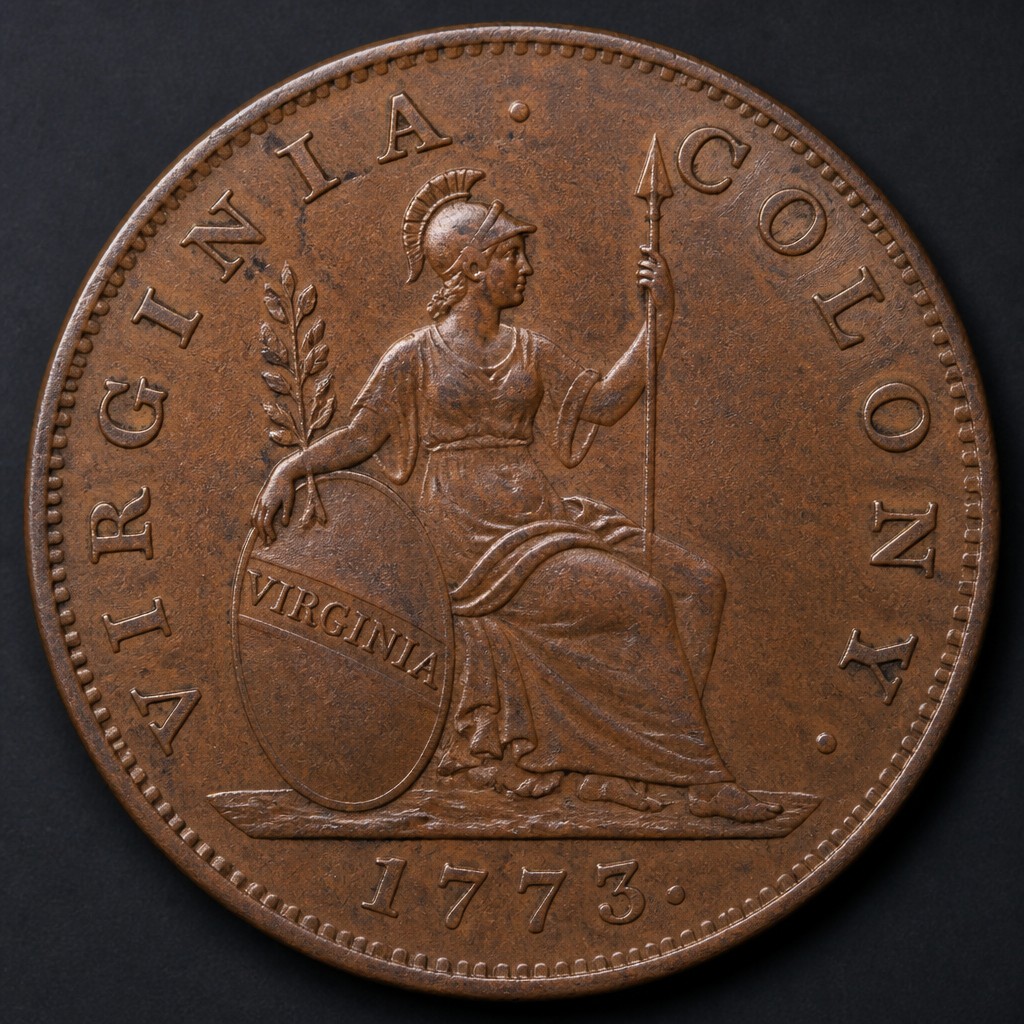
What It Is
The Virginia Halfpenny was struck in 1773 at the request of the colony of Virginia, which petitioned the Crown for an official copper coinage to relieve a shortage of small change. Unlike many earlier colonial coppers issued by private patent holders, this piece was produced under royal authority specifically for one colony, making it a distinctive transitional issue between British royal coinage and the coming independent American coinage.
Obverse Design & Inscriptions
The obverse shows a right-facing laureate bust of King George III with the legend GEORGIVS · III · REX around the border, in the standard style used on British regal coinage of the period.
Reverse Design & Inscriptions
The reverse displays a crowned shield bearing the royal arms, with the word VIRGINIA above and the date 1773 below. Some varieties show differences in the size of the date numerals or minor die details in the shield and crown.
Size, Weight, and Metal
Struck in copper, the Virginia Halfpenny follows standard British halfpenny specifications for the era, with a diameter around 29 mm and a plain edge. Because it was produced at an official mint using proper machinery, the strike quality tends to be more consistent than the crude, hand-struck colonial coppers made by private issuers decades earlier.
Mint Marks
No mint mark appears on the coin; it was produced in England for export to Virginia, and its identity is confirmed by the VIRGINIA legend on the reverse rather than any mint symbol. This makes the coin easy to identify at a glance compared to unmarked, generic colonial coppers.
Telling It Apart From Similar Coins
The clear reverse inscription VIRGINIA distinguishes this coin immediately from other George III-era British halfpennies, which instead show a seated Britannia. Collectors also note minor die varieties, such as a "period after GEORGIVS" variety versus one without, and differences in letter spacing, which can affect rarity within the series.
Judging Condition at a Glance
Check the king's hair detail and the fine lines of the crown atop the shield for sharpness. Because these coins saw significant circulation in colonial commerce, most surviving pieces show moderate wear, with high-grade examples retaining sharp definition in the bust and crown considered notably scarcer.
Authenticity Red Flags
Because the design is well documented and the coin has long been popular with collectors, altered-date or cast counterfeit pieces occasionally surface. Warning signs include a shield or crown that looks soft or blurred compared to genuine struck examples, incorrect coloring, or a weight noticeably outside the expected range for a British-struck copper halfpenny of this period. Comparing suspect coins to well-documented die varieties is the most reliable non-technical check.
Frequently asked questions
Why was the Virginia Halfpenny made?
Virginia's colonial government petitioned the Crown for official copper coinage to address a persistent shortage of small change, and this halfpenny was struck in 1773 in response.
How can I tell a Virginia Halfpenny from a regular British halfpenny?
The reverse reads VIRGINIA above a crowned shield, instead of the seated Britannia figure found on standard British halfpennies of the same era.
Is there a mint mark on this coin?
No, there is no mint mark; the VIRGINIA legend itself identifies the coin's intended colony.
What date appears on the Virginia Halfpenny?
All genuine examples are dated 1773, the single year in which this coinage was struck.
What should I check before assuming a coin is a genuine Virginia Halfpenny?
Compare the sharpness of the bust and shield details, the coloring of the copper, and the weight against documented genuine examples, since cast or altered pieces do exist.