
How to Identify the Vietnamese Tu Duc Thong Bao (cash coin)
A cast bronze or zinc cash coin from the reign of Emperor Tu Duc of Vietnam's Nguyen Dynasty, identified by its square center hole and four-character legend read top-bottom-right-left.
Read the full Vietnamese Tu Duc Thong Bao (cash coin) encyclopedia entry →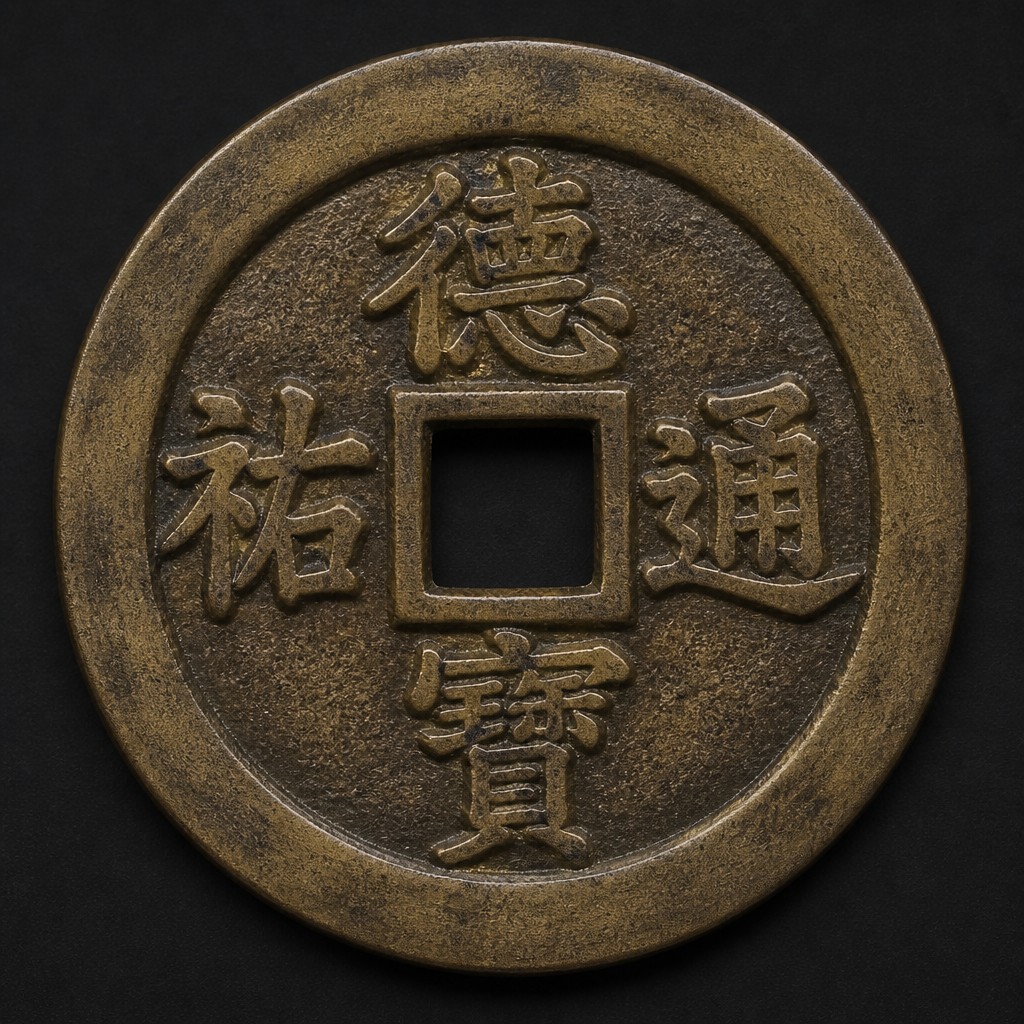
What It Is
The Tu Duc Thong Bao is a cast cash coin struck in the name of Emperor Tu Duc, who ruled Vietnam's Nguyen Dynasty from 1848 to 1883. It follows the East Asian cash coin tradition shared with China, Japan, and Korea: a round coin with a square hole punched through the center, cast rather than struck, and meant to be strung on cord in groups.
Obverse Design & Inscription
The obverse carries four Chinese characters (Han script, the writing system used for Vietnamese court documents at the time) arranged around the square hole. Read in the traditional order — top, bottom, right, left — the legend gives the reign title "Tu Duc" followed by "Thong Bao," a standard cash-coin phrase meaning roughly "circulating currency." The characters are usually in a formal, slightly angular clerical or regular script.
Reverse Design
Most common small-denomination pieces have a plain, blank reverse with only the raised rim and square hole. Larger-value pieces issued later in the reign (used for higher denominations such as 6 van or more) sometimes carry additional characters or simple motifs on the reverse indicating value, but the plain reverse is far more typical of everyday circulating pieces.
Size, Weight & Metal
Standard Tu Duc cash coins are small, generally in the 22-24mm diameter range, cast from bronze or brass alloys; some later, lower-quality issues were cast in zinc as the dynasty's finances weakened. Weight varies with alloy and wear but typically falls in the 3-4 gram range for common one-van pieces. The edge is left as cast, often slightly rough or with visible casting seams.
Mint Marks & Where to Find Them
Vietnamese cash coins were cast at multiple regional mints, and unlike Chinese cash coins of the same period, mint identification is usually inferred from calligraphy style, metal color, and rim thickness rather than a dedicated mint-mark character. Collectors compare stroke style and character spacing against reference examples to sort coins by casting batch.
Telling It Apart from Similar Coins
Tu Duc coins are easily confused with cash coins from other Nguyen emperors (Gia Long, Minh Mang, Thieu Tri) because the format is identical. The distinguishing feature is always the first two characters of the legend, which give the reign name — "Tu Duc" versus "Gia Long," "Minh Mang," and so on. Also compare against contemporary Chinese Qing cash coins, which use different reign names (such as Xianfeng or Tongzhi) covering the same era.
Judging Condition at a Glance
Because these were cast, not struck, character definition depends heavily on mold quality as well as wear. High-grade examples show crisp, well-formed strokes with a clear square hole and intact rim on both sides. Worn examples show flattened, blurry characters and a rounded, thinned rim. Corrosion and pitting are common on bronze pieces that were buried or exposed to moisture for long periods.
Authenticity Red Flags
Modern tourist reproductions of Vietnamese cash coins are common and are often cast in a lightweight, yellowish alloy with unnaturally sharp, uniform lettering and a suspiciously smooth, even patina applied for effect. Genuine excavated pieces usually show uneven, mottled surface color and casting flaws consistent with hand-poured molds. A coin that looks mechanically perfect and lightweight for its size is worth extra scrutiny.
Frequently asked questions
How do I know the legend reads "Tu Duc" and not another emperor's name?
Read the two characters directly above and below the square hole first; these give the reign title. Compare them against reference images of the Tu Duc reign characters versus other Nguyen emperors like Gia Long or Minh Mang.
Is a blank reverse a sign of a fake?
No, a plain reverse is normal for standard-denomination Tu Duc cash coins. Only some higher-value pieces carry extra reverse markings.
What metal should a genuine piece be?
Most are bronze or brass; later pieces from financially strained mint periods can be zinc. A coin that feels unusually light and bright yellow may be a modern reproduction.
Does rust or green corrosion mean the coin is fake?
No, mottled corrosion and dark patina are typical of genuine cast bronze coins buried or handled over more than a century, and are generally a good sign, not a red flag.