
How to Identify the Vietnamese Gia Long Thong Bao (cash coin)
The founding cash coin of Vietnam's Nguyen Dynasty, cast under Emperor Gia Long (r. 1802-1820) with a round shape, square hole, and a four-character legend naming his reign.
Read the full Vietnamese Gia Long Thong Bao (cash coin) encyclopedia entry →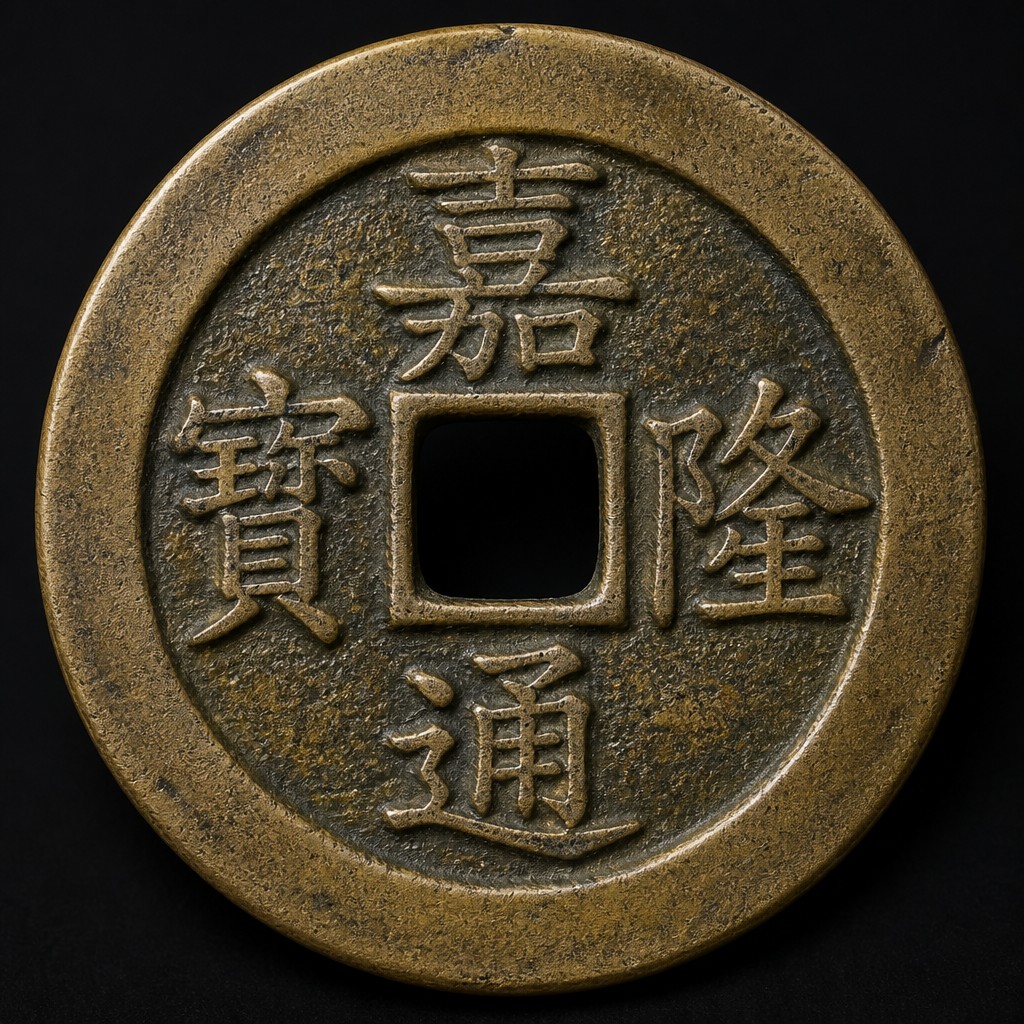
What It Is
Gia Long Thong Bao coins were cast during the reign of Emperor Gia Long (1802-1820), who unified Vietnam and founded the Nguyen Dynasty after centuries of division. As the opening cash coinage of a new dynasty, these pieces are historically significant and follow the same cast, holed-cash format used across East Asia for well over a thousand years before and after.
Obverse Design & Inscription
The obverse shows four Han characters around the central square hole, read top, bottom, right, left: the reign name "Gia Long" followed by "Thong Bao," meaning "circulating currency." The script is generally a clear regular or semi-formal style, with somewhat thicker, bolder strokes than seen on later Nguyen issues.
Reverse Design
The reverse of standard Gia Long cash coins is typically plain, showing only the raised outer and inner rims framing the square hole. This unadorned reverse is consistent with everyday, low-denomination circulating cash of the period rather than commemorative or high-value pieces.
Size, Weight & Metal
These are small coins, usually around 22-24mm in diameter and roughly 3-4 grams, cast primarily in bronze or brass. Casting quality from the early Nguyen period is generally considered good relative to later, more debased issues from the dynasty's later years, though variation exists between mint batches.
Mint Marks & Where to Find Them
As with other Vietnamese cash coins, there is no separate mint-mark character in the way Chinese Qing cash coins often carry one; instead, collectors distinguish casting variants by subtle differences in character style, stroke thickness, and rim proportions. These differences correspond to different regional foundries operating under central authority.
Telling It Apart from Similar Coins
The key identifier is always the reign name in the top and bottom characters. "Gia Long" must not be confused with "Minh Mang," "Thieu Tri," "Tu Duc," or other Nguyen reign titles that share the identical coin format. It is also worth distinguishing Vietnamese pieces from contemporaneous Chinese Qing Jiaqing-era cash coins (1796-1820), which overlap in date but carry different reign characters and often a Manchu-script mint mark on the reverse that Vietnamese coins lack.
Judging Condition at a Glance
Well-preserved Gia Long coins show sharp, legible strokes on all four characters and a clean, unworn rim. Circulated examples show progressive flattening of the highest points of the characters and a smoothed, rounded rim edge. Since these coins are now more than two centuries old, moderate wear and surface oxidation are expected and normal rather than a defect.
Authenticity Red Flags
Be cautious of coins with an unnaturally uniform, bright surface, overly crisp modern-looking lettering, or a suspiciously light weight for their diameter — these traits often point to cast tourist reproductions rather than genuine period pieces. Genuine bronze cash coins usually show natural, uneven patina, some porosity, and casting irregularities consistent with hand-poured molten metal rather than machine-perfect uniformity.
Frequently asked questions
How can I tell a Gia Long coin from a Minh Mang or Tu Duc coin?
Look at the top and bottom characters around the hole; these spell out the reign name. Each Nguyen emperor has distinct characters even though the coin format is identical.
Should the reverse have any writing?
No, standard circulating Gia Long cash coins normally have a blank reverse showing only the rims and hole.
What is the typical size and metal?
Roughly 22-24mm across, 3-4 grams, cast in bronze or brass.
Are reproductions common for this coin?
Yes, tourist and souvenir reproductions of Vietnamese cash coins circulate widely; look for uneven natural patina and slightly irregular casting on genuine antique pieces.