
How to Identify the Vietnam 2 Tien - Bao Dai
A collector's guide to the Bao Dai gold 2 tien: the sun motif, court script, gold weight, denomination and the reproductions to watch for.
Read the full Vietnam 2 Tien - Bao Dai encyclopedia entry →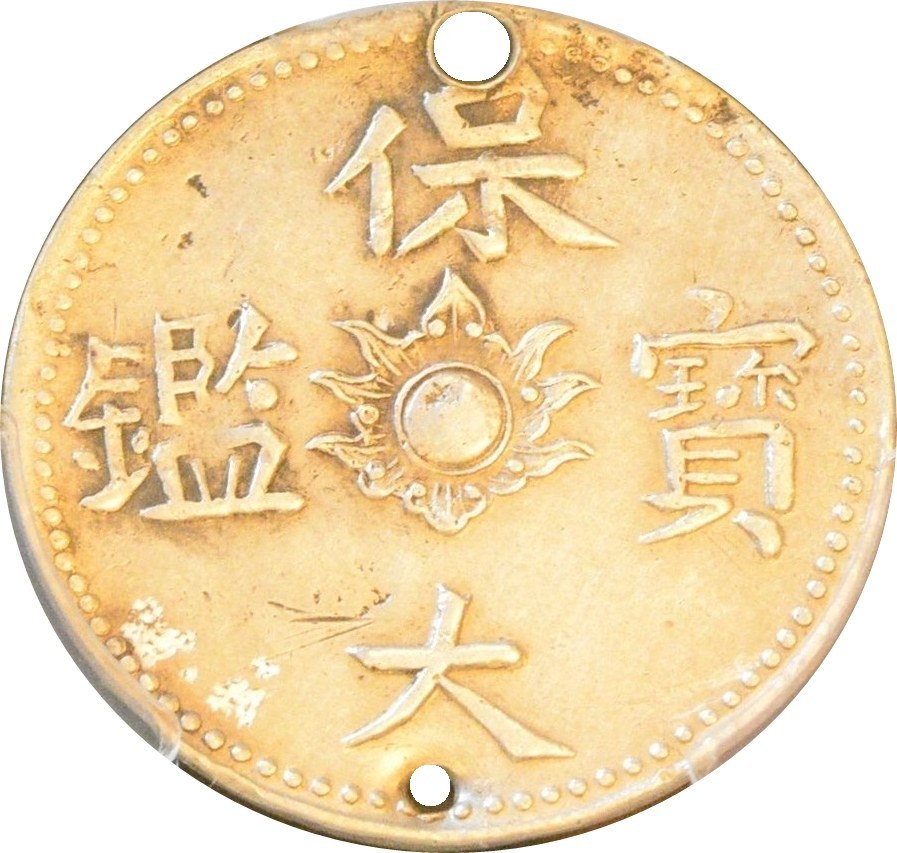
Start with the overall character of the piece. This is court gold, not a Western-style coin, so expect a decorative, inscription-heavy design rather than a portrait and numerals. The visible face here is organized around a stylized radiant sun with rays, ringed by Chinese characters (chu Han) of the type used by the Nguyen dynasty court. That ornamental sun-and-script layout is the first clue that you are looking at Vietnamese imperial gold rather than colonial piastre coinage.
Read the metal and denomination together. The coin is gold, and it is denominated in tien, a traditional Vietnamese weight unit; a 2 tien piece is a small but relatively heavy gold coin. Because tien pieces were struck to court weight standards, measure the actual weight and diameter and compare them to published figures for the series instead of relying on eye alone. Colour, density and a careful weighing help separate genuine gold from gilt or base-metal imitations.
Use the inscriptions to pin down the reign. Attribution to Bao Dai depends on matching the Chinese-character legends and style to his issues, since several Nguyen emperors struck gold tien in a similar tradition. If you cannot read the script, compare the characters directly against catalogued Bao Dai pieces; the 1926-1945 date range corresponds to his reign. The reverse, not shown in our photograph, typically carries additional court legends on related pieces and is worth documenting when present.
Be alert to look-alikes and modern productions. This is an area rich in later restrikes, souvenir "presentation" bars, and fantasy pieces made to resemble Vietnamese or Chinese court gold. Ornamental sun and dragon motifs appear on many such items, so a pretty design alone proves nothing. Treat unmarked "gold" pieces of uncertain origin with caution.
Apply firm authentication discipline. Because the metal alone gives these pieces value, fakes and altered items are common. Verify weight and fineness, look for crisp, hand-finished court engraving rather than soft cast detail, seams or bubbles, and when any doubt remains, seek assessment by a specialist in Vietnamese or East Asian gold or a reputable grading service before assigning value.
Frequently asked questions
How do I tell this from an ordinary colonial coin of the same period?
Colonial Indochinese coins carry French inscriptions, numerals and often a portrait or figure. This piece is court gold with a decorative sun motif and Chinese-character legends, marking it as Nguyen dynasty money rather than circulating piastre coinage.
How can I confirm it is a Bao Dai issue and not another emperor's?
The inscriptions identify the reign. Read or compare the Chinese characters against catalogued Bao Dai pieces; several Nguyen emperors struck similar gold tien, so the script and style, not just the sun design, settle the attribution.
What should make me suspicious of a fake?
Watch for incorrect weight or diameter, a non-gold density, casting seams or bubbles, mushy or overly uniform detail, and gilt over base metal. Souvenir bars and fantasy court pieces are widespread, so verify before trusting an example.
Do I need the reverse to identify it?
The visible sun-and-script face plus the gold metal and 2 tien denomination are strong indicators, but the reverse legends help confirm the reign. Document both faces and, for a valuable piece, have it authenticated by a specialist.