
How to Identify the Victoria Fifty Cents (half dollar)
Canada's earliest 50-cent coins, struck intermittently from 1870 to 1901 under Queen Victoria, featuring her portrait and a crowned shield reverse.
Read the full Victoria Fifty Cents (half dollar) encyclopedia entry →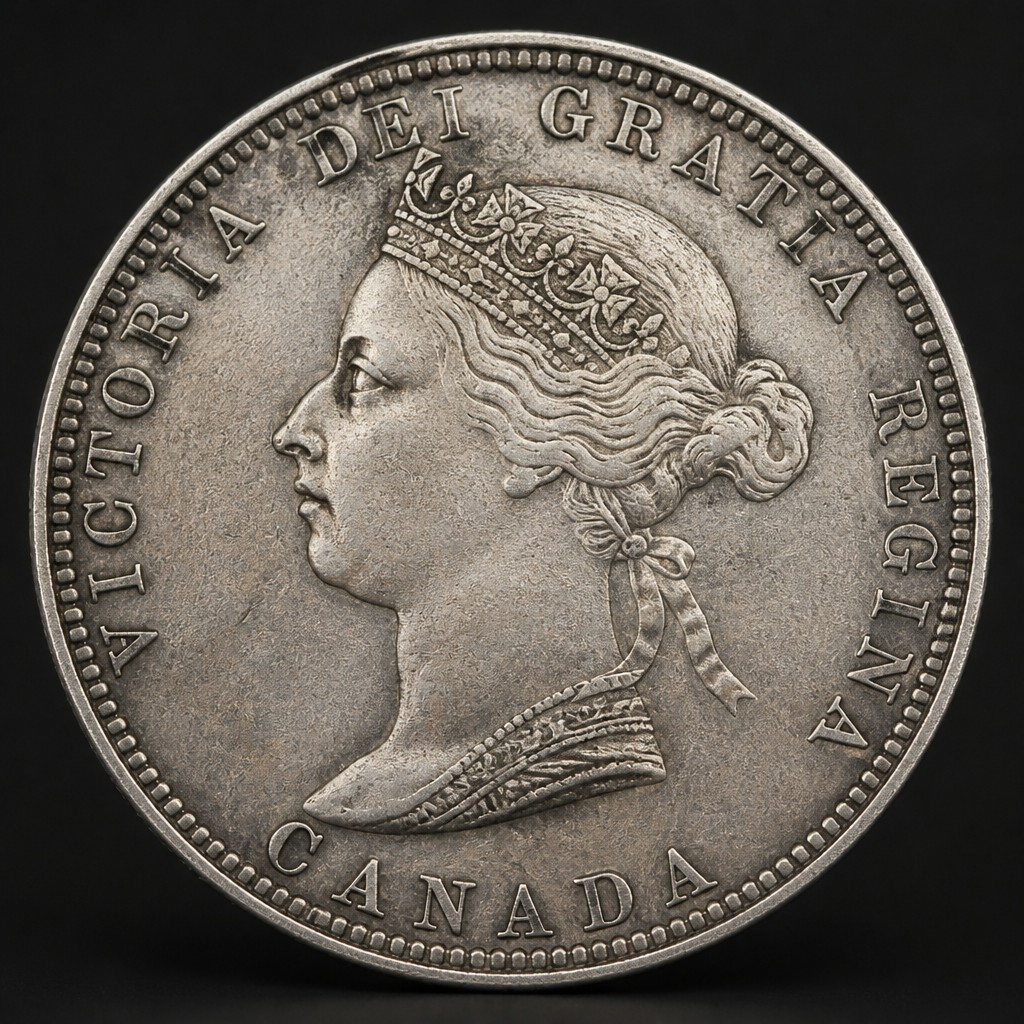
What Is This Coin?
This is the original Canadian 50-cent piece, issued during Queen Victoria's reign as part of the country's first decimal coinage following Confederation. Mintages were sporadic across the three decades it was produced, making some dates considerably harder to find than others. Because circulation demand for a coin this large was limited in the 19th century, several years saw no mintage at all, so building a complete date run is a long-term project for most collectors.
Obverse Design
The obverse bears a young, laureate portrait of Queen Victoria facing left, encircled by "VICTORIA DEI GRATIA REGINA" (or an abbreviated form). This same basic bust style was used across Canada's early silver coinage, so comparing hair detail and legend wording helps confirm the denomination when the coin is worn.
Reverse Design
The reverse displays a crowned shield bearing the arms of the four founding provinces, encircled by a wreath of maple leaves, with "50 CENTS" and the date below. This heraldic composition set the visual template that Canadian 50-cent pieces would follow, with modifications, for decades afterward. Fine details in the shield's quartered sections and the wreath's leaf veining are worth close inspection, since they are among the first features to blur with wear or misrepresentation.
Size, Weight & Metal
The coin is struck in sterling silver, weighing roughly 11.66 grams with a diameter around 29.72 mm and a reeded edge. Its substantial size and silver content give it a noticeably solid, heavy feel compared to modern base-metal coins.
Mint Marks & Where to Find Them
Most Victoria 50-cent pieces were struck at the Royal Mint in London and carry no mint mark. Some later dates show a small "H" below the date, indicating production at the Heaton Mint in Birmingham, England — a detail worth checking with a loupe since it affects rarity for certain years.
Telling It Apart From Similar Coins
This design is easily confused with the later Edward VII and George V 50-cent pieces, which share the same crowned-shield reverse layout. The obverse portrait and legend are the reliable way to separate them: Victoria's bust and "VICTORIA" wording are distinct from the bearded Edward VII or the younger George V portraits that followed.
Judging Condition at a Glance
Wear shows first on the highest points of Victoria's hair above the ear and on the crown atop the shield. Full, sharp shield lines and a clearly split wreath on the reverse indicate a well-preserved, higher-grade example, while heavily circulated coins often show a nearly smooth, low-relief shield.
Authenticity Red Flags
Because genuine 19th-century Canadian silver has real bullion value, be alert for coins with soft or blurred lettering, an incorrect diameter, or edges lacking crisp reeding — all common signs of cast or altered counterfeits. Cleaned or artificially toned surfaces can also mask such defects, so examine the coin under strong, raking light. Comparing a suspect coin's date font and spacing against a verified genuine example of the same year is another practical check, since altered or recut dates often show subtle inconsistencies up close.
Frequently asked questions
What metal is the Victoria 50 cents made of?
It is struck in sterling silver, giving it noticeable weight and a bright white-silver color when uncirculated, dulling to gray-silver with wear and age.
How do I know it's a Victoria coin and not Edward VII or George V?
Check the obverse portrait and legend — 'VICTORIA' appears in the inscription, and her portrait style differs clearly from the bearded Edward VII or youthful George V busts used later.
What does the small H below the date mean?
It indicates the coin was struck at the Heaton Mint in Birmingham rather than the Royal Mint in London, which can affect a date's relative scarcity.
Why are some dates so much harder to find than others?
Mintages were irregular during this period, with some years produced in very limited numbers based on demand, so availability varies considerably by date.