
How to Identify the Vespasian Judaea Capta Sestertius
A large orichalcum sestertius of Vespasian commemorating Rome's victory over the Jewish revolt, identified by its palm tree and mourning captive reverse and bold IVDAEA CAPTA legend.
Read the full Vespasian Judaea Capta Sestertius encyclopedia entry →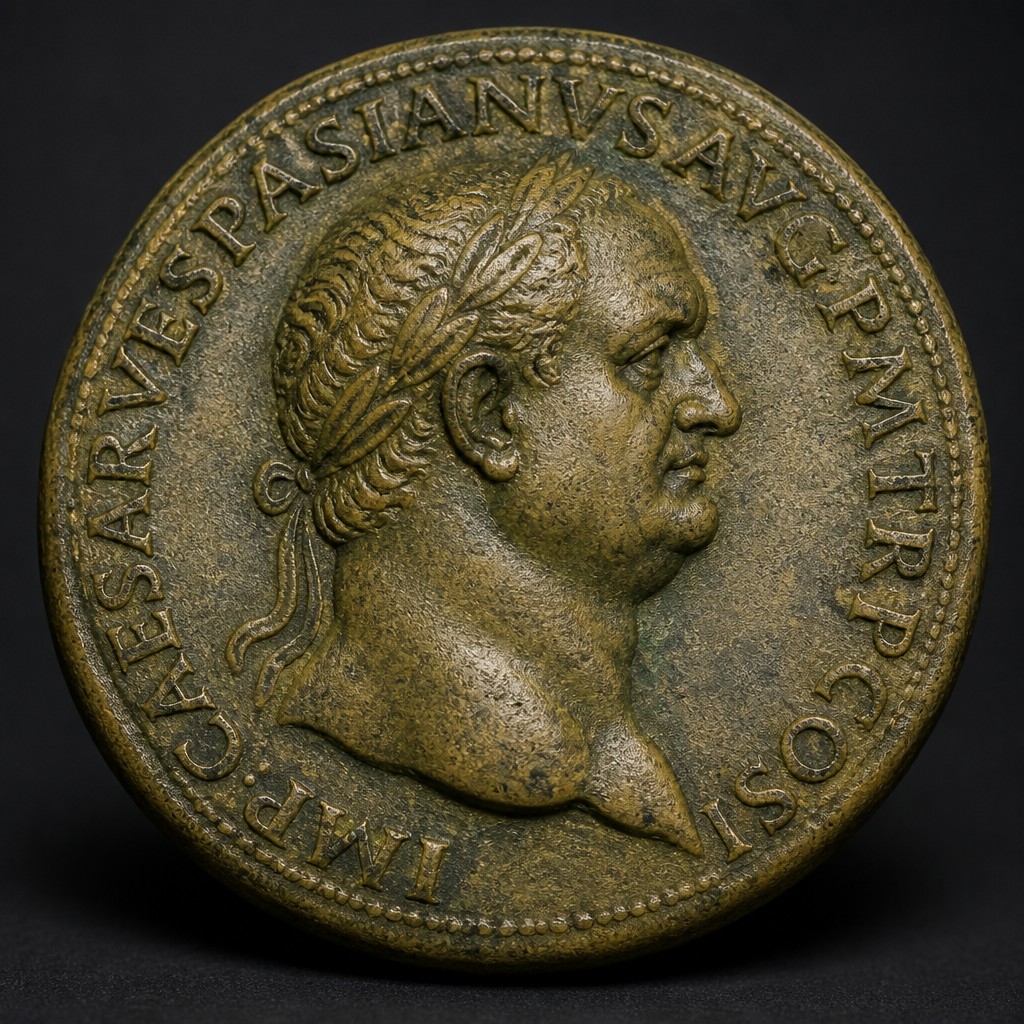
What the Coin Is
The Judaea Capta sestertius was struck in Rome under Emperor Vespasian (reigned AD 69-79) to celebrate the suppression of the Jewish revolt, most famously the fall of Jerusalem in AD 70 led by his son Titus. It is a large bronze denomination (a "sestertius") made of orichalcum, a golden-colored brass alloy, and is one of the most recognizable propaganda coins of the ancient world.
Obverse Design & Inscriptions
The obverse shows a laureate head of Vespasian facing right, with a fairly heavy, square-jawed portrait typical of his mature age. The surrounding legend reads some variation of IMP CAES VESPASIAN AVG COS, followed by his consular date and other titles, running clockwise from lower left.
Reverse Design & Inscriptions
The signature reverse shows a palm tree in the center, representing Judaea. To one side stands a bound, mourning male captive (a defeated Jewish soldier), and seated at the base of the tree on the other side is a grieving female figure personifying Judaea, head resting on her hand. The legend IVDAEA CAPTA runs around the type, with the letters S C (Senatus Consulto, "by decree of the Senate") placed in the field or exergue, marking it as Senate-authorized bronze coinage. A related variant shows Vespasian standing with foot on a helmet facing the seated captive instead of the palm-tree scene.
Size, Weight, Metal & Edge
Genuine examples measure roughly 33-36mm across and weigh approximately 24-27 grams. The metal is orichalcum, giving surviving coins a yellowish-brown to olive-brown patina depending on burial conditions. The edge is plain and flat, without the reeding seen on modern coins.
Mint Marks & Where to Find Them
There is no separate mint-mark letter system as seen on later imperial coinage; all known examples were struck at the Rome mint. The only "mark" to look for is the S C in the reverse field, confirming senatorial bronze status rather than an imperial gold or silver issue.
Telling It Apart from Similar Coins
Titus and Domitian both continued issuing Judaea Capta types after Vespasian's death, since the propaganda value of the victory lasted for years. The obverse portrait and legend are the key differentiator: look for IMP CAES VESPASIAN on Vespasian's own issues versus IMP T CAES VESPASIAN on Titus's, or DOMITIANVS on Domitian's later reissues of the theme.
Judging Condition & Grade at a Glance
Because this is a large flat bronze coin, wear shows first on the high points: Vespasian's cheek and hair curls on the obverse, and the palm fronds and captives' drapery folds on the reverse. Sharp, three-dimensional relief with full legend legibility indicates a higher grade; smoothed, flat fields with a barely legible legend indicate heavy circulation wear.
Authenticity Red Flags
Cast forgeries of this popular type are common and typically show a raised seam line around the edge, a slightly grainy or pitted surface texture from the mold, and a weight noticeably lighter than genuine struck examples of the same diameter. Overly crisp, needle-sharp details on a coin that otherwise looks heavily worn or "tumbled" are another warning sign, as is any obvious tooling or engraving used to sharpen a worn legend or add false detail to the captive figures.
Frequently asked questions
How can I tell a Vespasian sestertius from one struck by Titus or Domitian?
Check the obverse legend for the emperor's name and titles; Vespasian's reads VESPASIAN AVG, while Titus's and Domitian's later Judaea Capta reissues name themselves instead, even though the reverse scene looks similar.
What metal is this coin made of?
It is orichalcum, a brass-like copper-zinc alloy, not pure bronze or silver, which gives well-preserved examples a golden-brown color.
Why does the reverse show a palm tree and a mourning figure?
The palm tree symbolized the region of Judaea, and the seated, grieving figure personified the conquered province, a standard Roman way of depicting a defeated territory on victory coinage.
Is the coin rare?
It was produced in meaningful quantity as state propaganda after the Jewish revolt, so worn examples turn up regularly in the ancient coin market, though sharp, well-centered pieces are harder to find.
What should make me suspicious of a fake?
A visible seam line, grainy cast texture, underweight flan, or unnaturally crisp details on an otherwise worn-looking coin are the main warning signs of a modern reproduction.