
How to Identify the Venetian Gold Ducat
A practical look at the Venetian ducat (zecchino), covering its kneeling-Doge obverse, standing-Christ reverse, gold standard, and how to distinguish genuine Venetian issues from the many imitations it inspired.
Read the full Venetian Gold Ducat encyclopedia entry →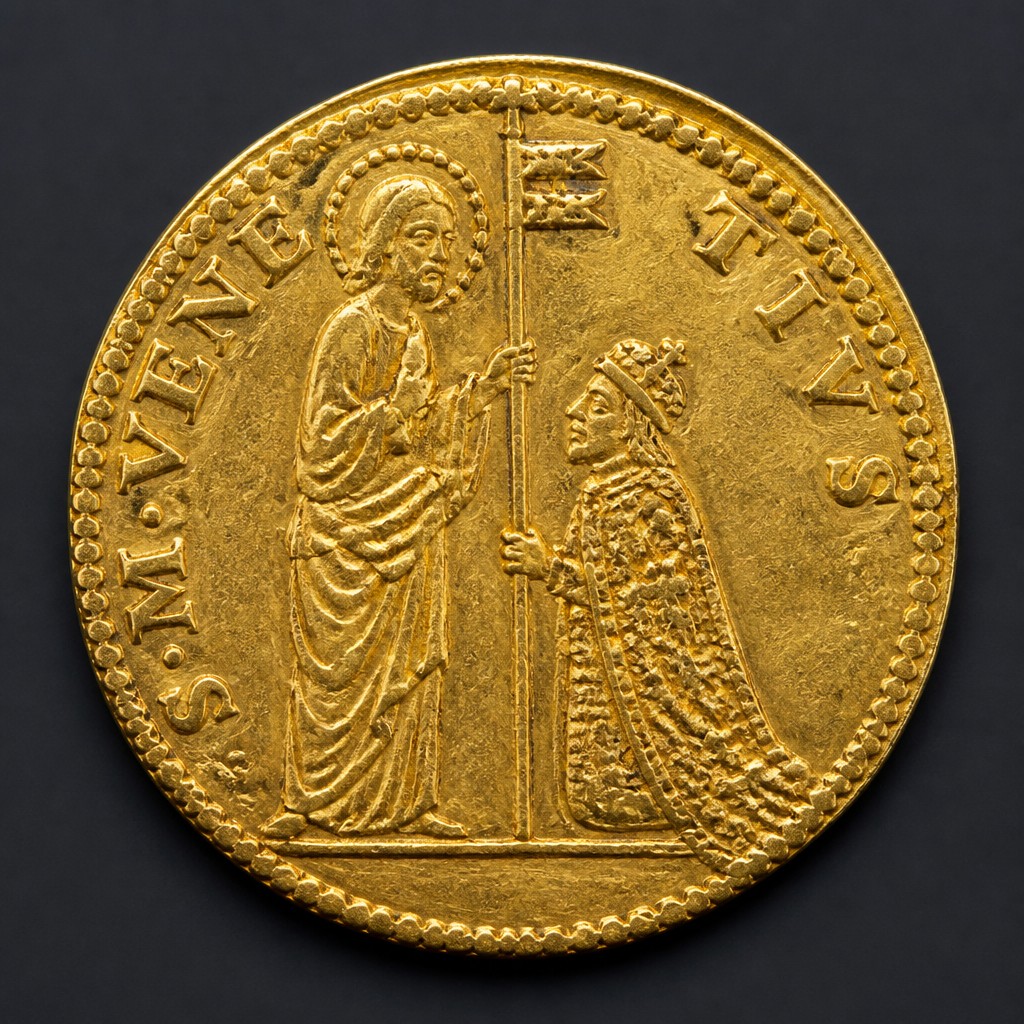
What This Coin Is
The Venetian gold ducat, also known as the zecchino, was first struck in 1284 and became one of the most trusted and widely circulated gold trade coins in medieval and Renaissance Europe, prized for its unchanging weight and purity over centuries.
Obverse Design
The obverse shows the reigning Doge of Venice kneeling before Saint Mark, who hands him a long banner (the "gonfalon"). The legend around the edge names the specific Doge, allowing collectors to date the coin fairly precisely by comparing the name to the historical list of Doges.
Reverse Design
The reverse depicts Christ standing within an oval mandorla (vesica), surrounded by a ring of stars. The legend reads SIT TIBI CHRISTE DATVS QVEM TV REGIS ISTE DVCATVS, meaning roughly "To you, Christ, be dedicated this duchy which you rule."
Size, Weight, Metal, and Edge
The ducat was struck at a very consistent standard of about 3.5 grams in high-purity gold (approximately .986 fine), with a diameter of roughly 20mm. The edge is plain, as expected from hammered striking.
Mint Marks and Attribution
Venice did not use a separate mint-mark system the way many later coinages did; instead, the coin is dated and attributed by the Doge's name in the obverse legend, along with occasional small privy marks added by mint officials to track production batches.
Telling It Apart From Imitations
Because the ducat was so trusted, it was widely copied in weight and design by other states, including various Italian city-states, Ottoman rulers, and parts of Hungary and Central Europe. These imitative ducats often use similar imagery but substitute a different ruler's name or title, or show subtle stylistic differences in the figures. Comparing the exact wording of the legend to genuine Venetian Doge names is the most reliable way to confirm origin.
Judging Condition
Examine the fine detail on the kneeling Doge and standing Christ figures, along with the sharpness of the surrounding stars and legend. Because the design remained essentially unchanged for centuries, wear patterns and legend clarity are the main indicators of grade, along with minor edge nicks from long circulation.
Authenticity Red Flags
Base-metal gilt copies will often show a different color at any high point where the gold wash has worn away. Modern tourist reproductions are common and are sometimes explicitly marked as copies, but unmarked examples can be deceptive. Be cautious of examples where the Doge's name appears to have been altered or re-cut, which can be an attempt to create a rarer variety from a common one.
Frequently asked questions
What is the difference between a ducat and a zecchino?
They refer to the same Venetian gold coin; 'zecchino' comes from the Venetian mint's name (the Zecca) and is often used interchangeably with 'ducat.'
How can I date a Venetian ducat?
Read the Doge's name in the obverse legend and compare it against the historical list of Venetian Doges, since each ducat names the ruling Doge at the time of striking.
Why were ducats copied by other countries?
The ducat's reliable weight and purity made it a trusted trade coin, so other states imitated its design and standard to gain acceptance in international commerce.
How do I know if my ducat is a fake?
Check the weight (about 3.5g) and gold color, and look closely for a genuine Doge name in the legend rather than a garbled or nonsensical inscription typical of gilt copies.