
How to Identify the Velia (Elea) Lion and Nymph Nomos
A Lucanian silver nomos from Velia (Elea) pairing a finely modeled female or Athena head with a striding lion, one of the most artistically admired series from South Italy.
Read the full Velia (Elea) Lion and Nymph Nomos encyclopedia entry →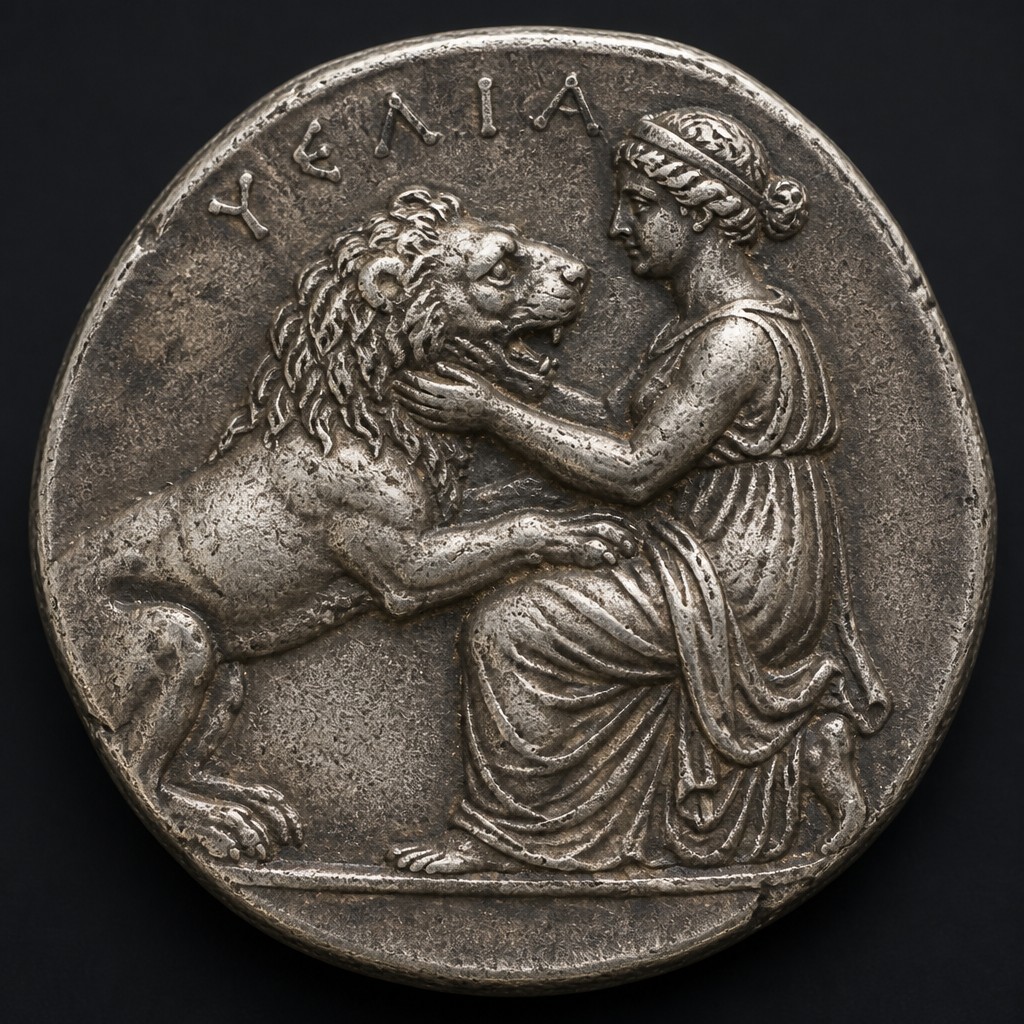
What the Coin Is
Velia, known to the Greeks as Elea, was a Lucanian city on the western coast of southern Italy famous as home to the Eleatic school of philosophy. Its silver nomos coinage, struck from the late sixth through the third centuries BC, is prized by collectors for the quality of its portrait engraving and its long-running lion reverse.
Obverse Design
Early issues show the head of a female, likely a local nymph, rendered with soft, archaic-style features. Over time the obverse shifts toward a helmeted head of Athena, often shown wearing a crested Corinthian helmet decorated with a griffin, wing, or other creature, reflecting the artistic evolution of the mint across two and a half centuries. Small letters or symbols usually appear in the field, tied to individual magistrates or die series.
Reverse Design
The reverse consistently features a lion, though its pose varies: standing, walking, seated, or occasionally attacking a stag or other prey animal. An owl sometimes appears above the lion on later issues, echoing Athenian imagery. The city's name, usually rendered as YELETON or a close variant reflecting the Greek form of Elea, typically runs around the design.
Size, Weight, and Metal
This is a silver nomos (didrachm), generally weighing close to 7.3 to 7.5 grams, consistent with other South Italian silver of the period. The fabric ranges from a slightly thick, dumpy archaic flan on the earliest issues to a broader, thinner flan on later classical and post-classical strikes.
Mint Marks and Attribution
Velia used control letters, monograms, and small symbols in the field on both sides to mark different issues and officials, and these details, paired with the helmet decoration or lion pose, allow specialists to sequence the coinage closely. There is no separate mint mark in the modern sense; the ethnic legend and control marks serve that role.
Telling It Apart from Similar Coins
The helmeted Athena head resembles those used at other Lucanian and Sicilian mints, so the lion reverse is the most reliable identifier, since few other cities in the region use a lion as their primary badge. Confusion is most common with the earlier nymph-head issues, which can be mistaken for coins of neighboring cities using similar female portraiture; checking the reverse lion and the partial ethnic legend resolves most doubts.
Judging Condition at a Glance
On the obverse, examine the crispness of the helmet crest and the profile of the face; on the reverse, look at the lion's mane and legs, which are the first areas to flatten with wear or a weak strike. A coin with a well-centered lion, visible legend, and strong helmet detail represents a high-quality example of the type.
Authenticity Red Flags
Because Velia's Athena/lion type is popular, some modern reproductions exist. Watch for lions with an unnaturally smooth or stylized mane that doesn't match the more naturalistic ancient engraving, muted or blurred legend letters, and surfaces that look artificially aged with an even, painted-on toning rather than the varied natural patina found on genuinely excavated silver.
Frequently asked questions
Why does the obverse design change over time?
Velia's coinage spanned roughly two and a half centuries, and the obverse evolved from an early nymph head to a helmeted Athena head as artistic styles and city allegiances shifted.
What does the lion on the reverse represent?
The lion served as Velia's civic badge much like an owl represented Athens, though its exact original symbolism is not recorded in surviving ancient sources.
How heavy should a genuine example be?
A full-weight silver nomos from Velia typically weighs around 7.3 to 7.5 grams, though worn or clipped ancient examples can weigh less.
How do I know if the head is a nymph or Athena?
Look for a helmet: Athena is shown wearing a crested Corinthian helmet, often decorated with a griffin or wing, while the earlier nymph head is bare or lightly adorned.