
How to Identify the Vatican Euro Coins
Modern euro-denominated coins issued by Vatican City State since 2002, featuring the reigning Pope's portrait or a special sede vacante design during a papal transition.
Read the full Vatican Euro Coins encyclopedia entry →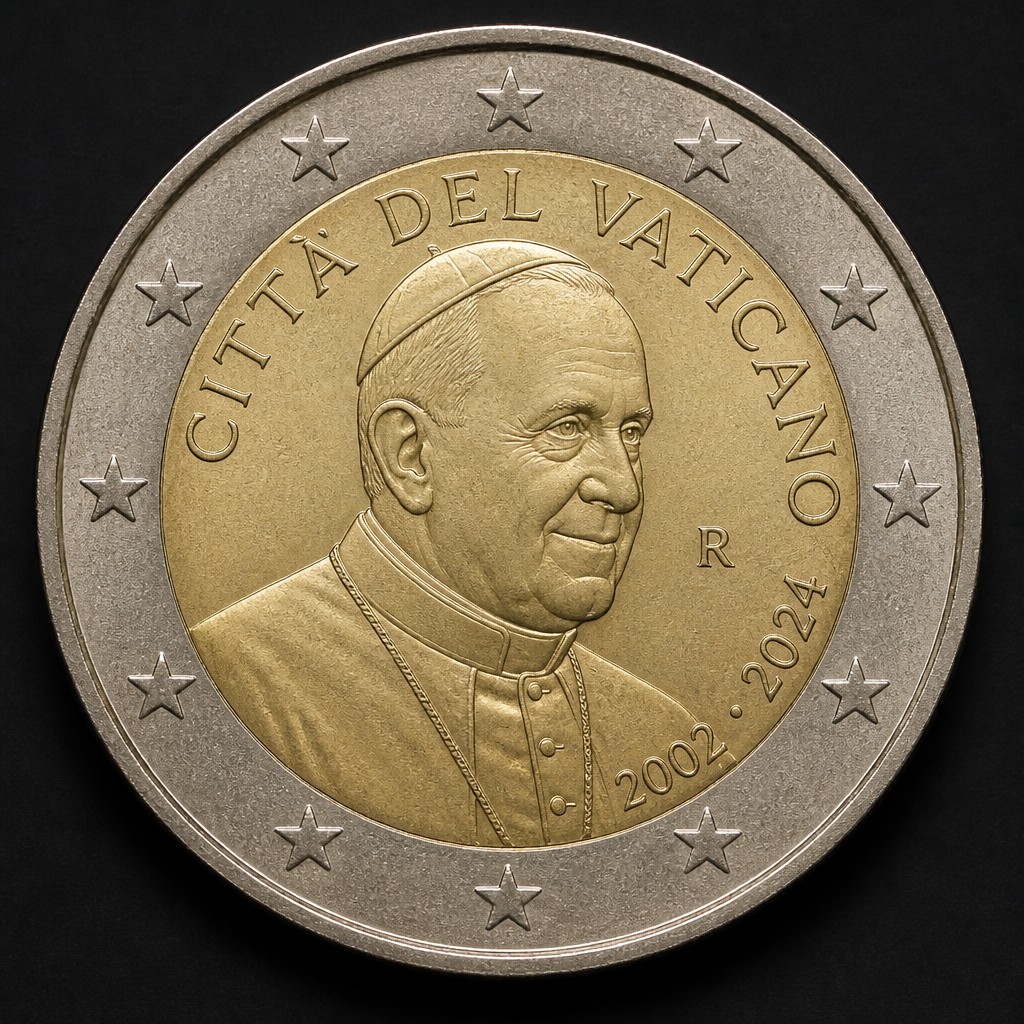
What It Is
Vatican City has issued its own euro coins since the euro's introduction in 2002, despite not being a European Union member, under a special monetary agreement. These coins are legal tender only within Vatican City but circulate in the wider euro zone as collectible pieces because the euro's common side is accepted everywhere in the currency union.
Obverse Design (National Side)
The national side, unique to Vatican coins, generally displays a profile portrait of the reigning Pope along with "CITTA DEL VATICANO" and the year of issue. During a "sede vacante" (vacant see) period between popes, coins instead show the Vatican's traditional interim symbol: the crossed keys beneath the canopy (umbraculum) used to represent the papacy without a sitting pope.
Reverse Design (Common Side)
The reverse is the standard shared euro design used across all euro zone countries, showing a map of Europe alongside the denomination value, which is identical in layout to French, German, Italian, or Spanish euro coins.
Size, Weight, and Metal
Vatican euro coins follow the exact same specifications as all other euro coinage: from the small copper-colored 1, 2, and 5 cent pieces, to the golden-colored 10, 20, and 50 cent coins, up to the bimetallic 1 and 2 euro coins, matching size, weight, and metal composition standards set for the entire euro system.
Mint Marks and Where to Find Them
Vatican euro coins are struck under contract, historically at the Italian State Mint in Rome, and carry the small "R" mint mark (for Rome) along with the mint master's mark near the edge of the national side design, similar in placement to Italian euro coins.
Telling It Apart from Similar Coins
Because the reverse is identical across all euro countries, identification always comes down to the national obverse side: a Vatican coin shows the Pope's portrait or the sede vacante keys-and-canopy design and the text "CITTA DEL VATICANO," distinguishing it clearly from Italian, San Marino, or Monaco euro coins, which use their own unique national imagery.
Judging Condition at a Glance
Because these are modern machine-struck coins, wear is less of a factor for identification than for older coinage; instead, check for handling marks, scratches, or toning on uncirculated pieces, since Vatican coins are produced in limited mintages and are popular with collectors seeking pristine examples.
Authenticity Red Flags
Given Vatican euro coins' low mintages and strong collector demand relative to other euro countries, watch for coins with incorrect coloring for the stated denomination, wrong weight or diameter versus standard euro specifications, or blurry, poorly centered strikes, all of which suggest a counterfeit produced to exploit collector premiums rather than genuine mint output.
Frequently asked questions
Are Vatican euro coins legal tender outside Vatican City?
They are official legal tender within Vatican City, but because the reverse follows the shared euro design, they can also be spent as ordinary euro coins anywhere in the euro zone.
What is a sede vacante Vatican coin?
It is a coin struck during the interval between one pope's death or resignation and the election of his successor, showing crossed keys under a canopy instead of a papal portrait.
How can I tell a Vatican euro coin from an Italian one?
Check the national side: Vatican coins say 'CITTA DEL VATICANO' and show the Pope's portrait or sede vacante symbol, while Italian coins show Italian national imagery and 'REPUBBLICA ITALIANA.'
Why are Vatican euro coins considered valuable to collectors?
Vatican City issues much smaller mintages than larger euro zone countries, making its coins comparatively scarce and sought after despite sharing standard euro specifications.