
How to Identify the Valens Siliqua
A thin silver siliqua struck for Emperor Valens, commonly identified by its light weight, small size, and a seated Roma reverse.
Read the full Valens Siliqua encyclopedia entry →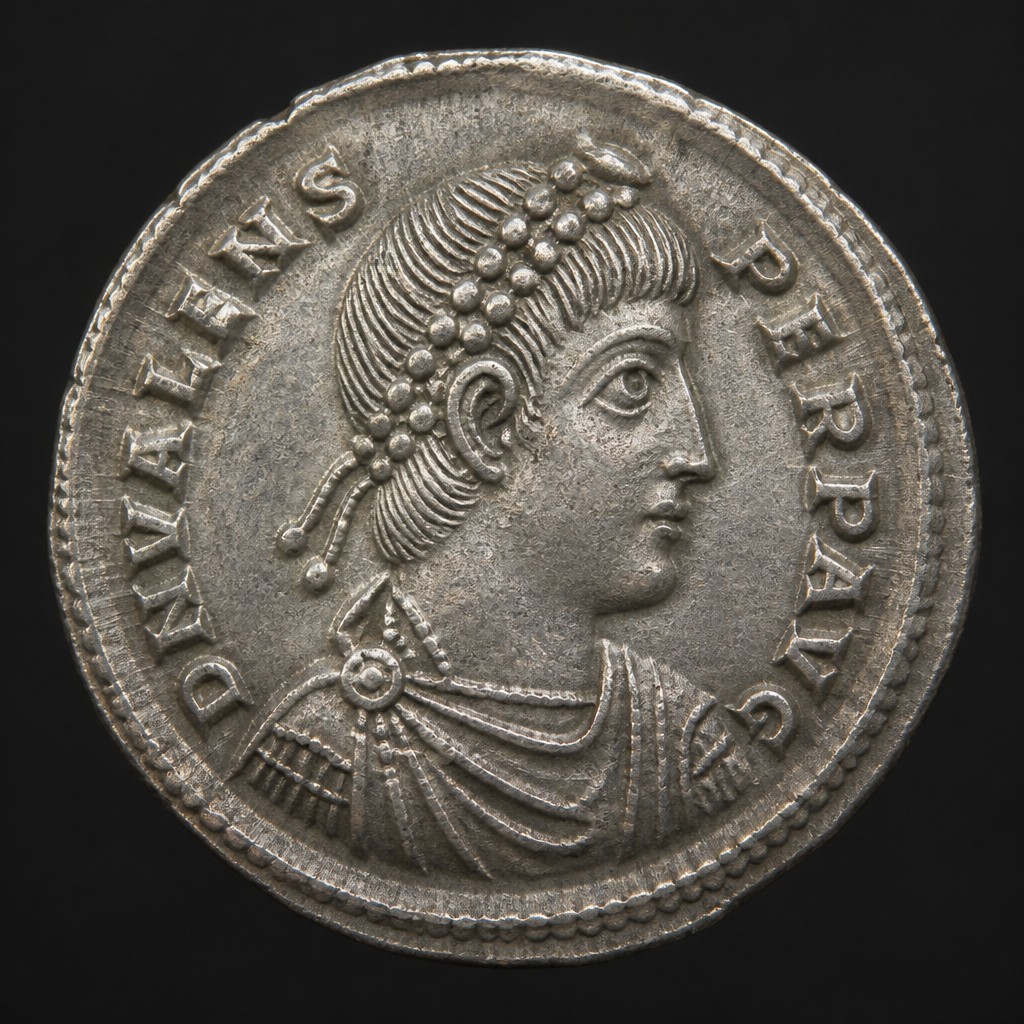
What This Coin Is
The siliqua was a small, thin silver denomination widely struck across the later Roman Empire, and this example was issued in the name of Valens, who ruled the eastern half of the empire from 364 until his death fighting the Goths at the Battle of Adrianople in 378 AD. Siliquae are prized by collectors for their crisp, high-relief portraits despite their modest size.
Obverse Design & Inscriptions
The obverse shows a pearl-diademed, draped bust of Valens facing right. The legend reads D N VALENS P F AVG, following the standard imperial titulature abbreviation pattern of the period.
Reverse Design & Inscriptions
A frequently seen reverse type shows Roma seated left on a throne, holding a small Victory on a globe in one hand and resting the other on a shield, with the legend VRBS ROMA around the scene. Other reverse varieties from his reign include vota (vow) inscriptions within a wreath, such as VOT V MVLT X, marking anniversaries of his reign.
Size, Weight, Metal, and Edge
Siliquae are notably thin and light, typically around 17-19mm in diameter and weighing only about 1.5-2.2 grams depending on the specific weight standard in effect at the time of striking. The silver used is usually of good purity but can appear a bit dull compared to earlier, heavier Roman silver denominations. The edge is plain and, due to the thinness of the flan, sometimes shows a slightly clipped or irregular outline even on genuine, uncirculated-era pieces.
Mint Marks and Where to Find Them
Because many reverse types have no exergue line, the mint mark for siliquae often appears simply below the design or is faintly present in a very narrow exergue space; common examples include TR (Trier), CON or CONS (Constantinople), and ANT (Antioch).
Telling It Apart From Similar Coins
Siliquae of Valens closely resemble those of his brother Valentinian I and nephew Gratian in fabric, weight, and general style, so the obverse legend naming VALENS specifically is the key identifying feature. Be careful not to confuse the seated Roma reverse with the standing Roma types found on some contemporary bronze commemoratives, which are a different denomination and metal entirely.
Judging Condition at a Glance
Because siliquae are thin and were often lightly struck, look for a well-centered strike with a full, unclipped edge and clear detail in the drapery folds and facial features of the portrait. Genuine period clipping (the practice of shaving silver from the edges, common especially in coins that circulated into Britain) is historically documented and does not necessarily indicate a modern problem coin, but excessive or oddly shaped clipping is worth noting when assessing a piece.
Authenticity Red Flags
Watch for coins that feel unusually thick or heavy for the type, since this can indicate a cast fake rather than a genuine hammered silver flan. Also examine the surface for a soft, grainy texture lacking crisp die-struck lines, and check for a raised seam around the edge that would suggest casting. A dull gray or chalky surface inconsistent with silver's typical luster under light cleaning can also be a warning sign of a base-metal counterfeit with a silver wash.
Frequently asked questions
What is a siliqua?
It is a small, thin silver coin denomination used widely in the later Roman Empire, valued by collectors for its detailed portraiture despite its light weight.
Why do some siliquae look clipped at the edges?
Silver clipping was a documented historical practice, especially in coins that circulated in Britain, where slivers of silver were shaved from the edge; this is a known ancient phenomenon rather than necessarily a modern flaw.
How do I distinguish a Valens siliqua from one of Valentinian I?
Check the obverse legend for the specific name, VALENS versus VALENTINI ANVS, since the reverse types and overall style are often very similar between the two co-ruling brothers.
What does VOT V MVLT X mean on some reverses?
It is a vow inscription marking anniversaries of the emperor's reign, roughly translating to vows fulfilled for five years and pledged for ten, a common formula on late Roman coinage.