
How to Identify the US Morgan Dollar
A classic American silver dollar minted from 1878 to 1904 and again in 1921, featuring Liberty's profile and a heraldic eagle, named after its designer George T. Morgan.
Read the full US Morgan Dollar encyclopedia entry →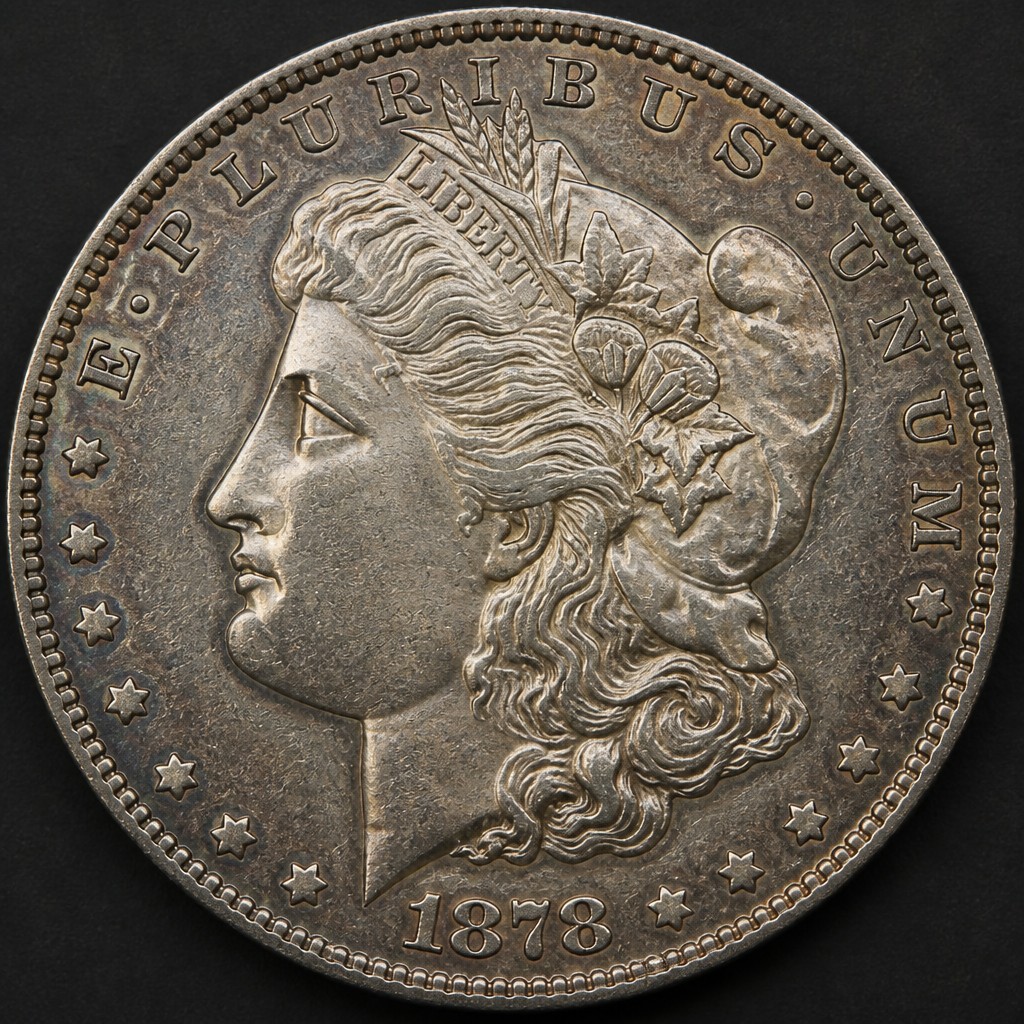
What This Coin Is
The US Morgan Dollar is a silver dollar coin struck by the United States Mint primarily from 1878 to 1904, with a final year of production in 1921. Designed by engraver George T. Morgan, it remains one of the most widely collected American coins due to its size, silver content, and long production run across multiple mints, and it was produced in enormous quantities that still surface regularly in circulated and uncirculated bags today.
Obverse Design & Inscriptions
The obverse features a left-facing profile of Liberty wearing a cap adorned with wheat and cotton, with "LIBERTY" inscribed on a headband, surrounded by thirteen six-pointed stars representing the original states. "E PLURIBUS UNUM" appears above and the date sits below the portrait.
Reverse Design & Inscriptions
The reverse shows a heraldic eagle with wings outstretched, holding an olive branch and arrows in its talons, encircled by a wreath. "UNITED STATES OF AMERICA" arcs above, "ONE DOLLAR" appears below, and "IN GOD WE TRUST" is inscribed on a ribbon above the eagle's head.
Size, Weight, Metal, and Edge
The Morgan Dollar measures 38.1 mm in diameter and weighs 26.73 grams, struck in 90% silver and 10% copper. The edge is reeded, a standard security feature for United States silver coinage of the era.
Mint Marks and Where to Find Them
Mint marks appear on the reverse below the wreath, just above the "DO" in "DOLLAR." Look for "O" (New Orleans), "S" (San Francisco), "CC" (Carson City), or "D" (Denver, only on 1921 issues); coins with no letter were struck at the Philadelphia mint.
Telling It Apart From Similar Coins
The Morgan Dollar is easily confused with the later Peace Dollar, but the two are distinguished by Liberty's hairstyle and cap versus Peace Dollar's tiara and radiant crown, and by the eagle design versus Peace Dollar's perched eagle on a rock. Comparing the obverse portrait style is the fastest way to separate the two series at a glance.
Judging Condition at a Glance
Check Liberty's hair above the ear and the eagle's breast feathers, both classic high points that show wear first. Fully struck, lustrous coins with sharp cheek and hair detail grade in the mint state range, while worn examples show a flat, smooth cheek and indistinct feather lines, and heavily circulated pieces may also show a smooth, low rim from years of handling.
Authenticity Red Flags
Be alert for added or altered mint marks, particularly fake "CC" marks applied to more common coins to simulate rarer Carson City issues, since genuine mint marks should show natural, consistent metal flow around the letter. Also check overall weight and diameter, and be wary of coins with a dull, grainy surface or soft details suggesting a cast counterfeit rather than a properly struck coin.
Frequently asked questions
What years were Morgan Dollars minted?
Mainly 1878 through 1904, with a final year of production in 1921.
Where is the mint mark located?
On the reverse, just below the wreath and above the 'DO' in 'DOLLAR.'
What is the coin's silver content?
It is 90% silver and 10% copper, weighing 26.73 grams total.
How do I tell a Morgan Dollar from a Peace Dollar?
Compare the obverse: Morgan shows Liberty in a cap facing left, while Peace Dollar shows Liberty with a radiant tiara and a different hairstyle.
What is the biggest fake mint mark concern?
Added fake 'CC' mint marks to make common coins appear to be rarer Carson City strikes; look for unnatural surface disturbance around the letter.