How to Identify the US Bicentennial Quarter (1976)
The 1976 Bicentennial quarter commemorates America's 200th anniversary with a dual date (1776-1976) and a colonial drummer boy reverse, replacing the standard eagle design for that release only.
Read the full US Bicentennial Quarter (1976) encyclopedia entry →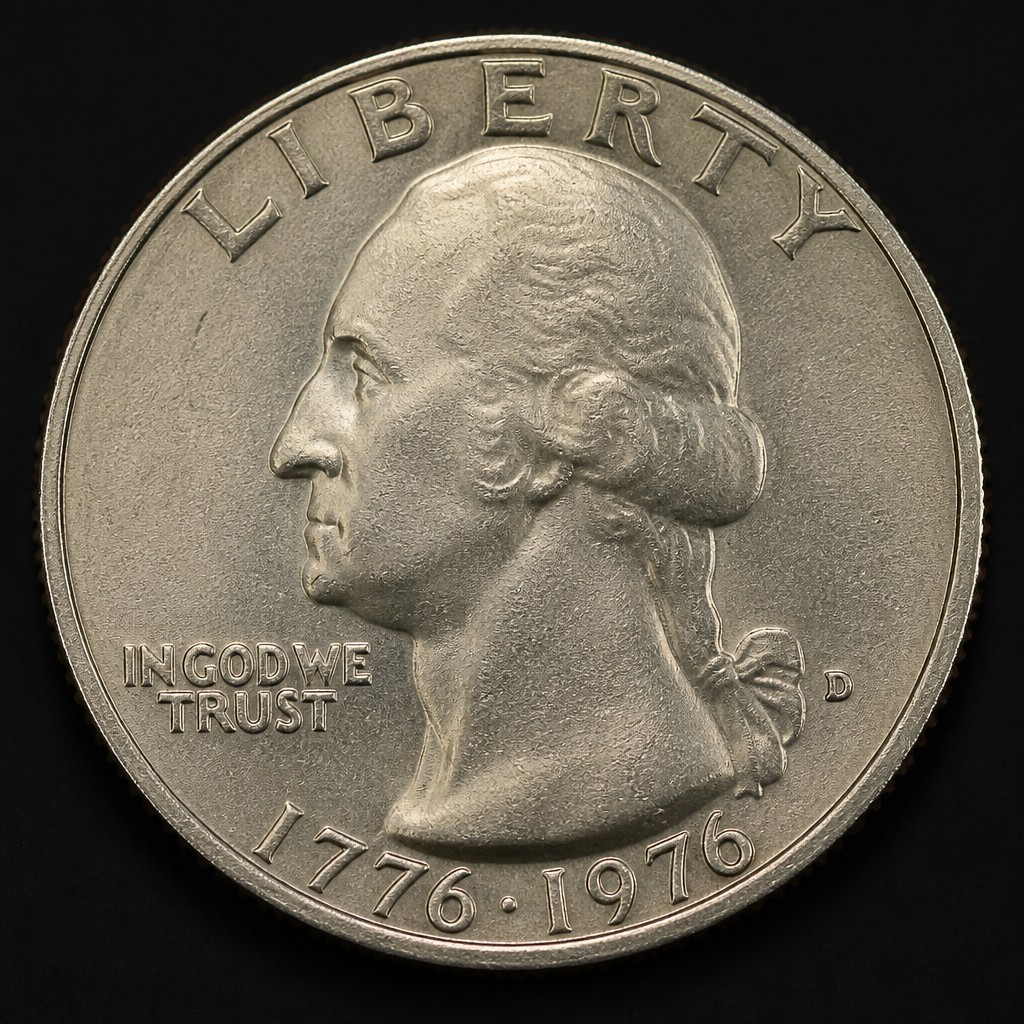
What It Is
The Bicentennial quarter was a special one-time design issued in 1975 and 1976 to celebrate the 200th anniversary of American independence, temporarily replacing the standard Washington quarter reverse. All coins bear the dual date "1776-1976" rather than a single mint year, since they were struck across two calendar years using that fixed dating, and the same commemorative treatment was also applied that year to the Kennedy half dollar and Eisenhower dollar.
Obverse Design & Inscriptions
The obverse retains the familiar left-facing portrait of George Washington used since 1932, with "LIBERTY" above, "IN GOD WE TRUST" to the left of the portrait, and the dual date "1776-1976" below, replacing what would normally be a single-year date.
Reverse Design & Inscriptions
The reverse features a special design by artist Jack L. Ahr showing a colonial-era drummer boy walking left, with a victory torch encircled by thirteen stars representing the original colonies in the background. "UNITED STATES OF AMERICA," "QUARTER DOLLAR," and "E PLURIBUS UNUM" surround the design.
Size, Weight, Metal, and Edge
Standard circulating Bicentennial quarters measure 24.3mm in diameter and weigh 5.67 grams, struck in the regular copper-nickel clad composition used for quarters since 1965. A separate silver-clad version (40% silver) was also produced for collectors in proof and uncirculated sets, weighing slightly more at 5.75 grams due to the different metal content.
Mint Marks and Where to Find Them
The mint mark appears on the obverse near the date, to the right of Washington's hair ribbon: no mint mark indicates Philadelphia, "D" indicates Denver, and "S" indicates San Francisco, with San Francisco strikes limited to proof coins and the special silver-clad collector sets.
Telling It Apart From Similar Coins
Bicentennial quarters are easily distinguished from other Washington quarters by the dual date "1776-1976" and the drummer boy reverse, since no other year uses this design or dating format. The main identification challenge is separating the common copper-nickel clad version from the scarcer 40% silver-clad version, best done by weight or by the visible copper-colored edge stripe absent on the silver-clad coin's edge, and collectors should also be aware that proof versions in both compositions exist with a distinct mirrored finish.
Judging Condition at a Glance
Grade is judged by the sharpness of Washington's hair detail on the obverse and the drummer boy's clothing folds and torch flame on the reverse, areas that show wear first. Because so many were saved as souvenirs at the time of issue, high-grade examples remain widely available.
Authenticity Red Flags
Since Bicentennial quarters were minted in very large quantities, straightforward fakes are uncommon, but be cautious of coins advertised as "silver" that are actually the common copper-nickel clad version, which can be checked by weight and by looking for the absence of a copper-colored edge stripe on genuine silver-clad pieces. Also watch for artificially toned or altered surfaces marketed as rare color varieties, since natural toning develops gradually and unevenly rather than in the uniform bright patterns sometimes seen on chemically treated coins.
Frequently asked questions
Why does the Bicentennial quarter show two dates?
It displays '1776-1976' to mark the 200th anniversary of American independence, replacing the single mint year used on other quarters, since the coin was struck during both 1975 and 1976.
What design replaced the eagle on the reverse?
A colonial drummer boy design by artist Jack L. Ahr replaced the standard eagle reverse for this commemorative issue only.
How do I tell a silver Bicentennial quarter from a regular one?
The 40% silver-clad version lacks the copper-colored edge stripe seen on the common copper-nickel clad quarter and weighs slightly more, which can be confirmed with a precise scale.
Where is the mint mark located on a Bicentennial quarter?
It appears on the obverse near the date, to the right of Washington's hair ribbon, showing no letter for Philadelphia, 'D' for Denver, or 'S' for San Francisco.
Are Bicentennial quarters rare?
No, they were struck in very large numbers and widely saved by the public, so most examples in circulated or uncirculated condition are common and easy to find.
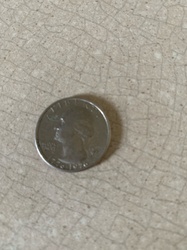
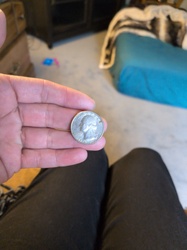
US Bicentennial Quarter (1976) identified by the community
Recent US Bicentennial Quarter (1976) coins identified with Coin Identifier.