
How to Identify the Unite
The Unite was a gold pound coin of James I, named to mark the symbolic union of the English and Scottish crowns and later revived briefly under Charles I.
Read the full Unite encyclopedia entry →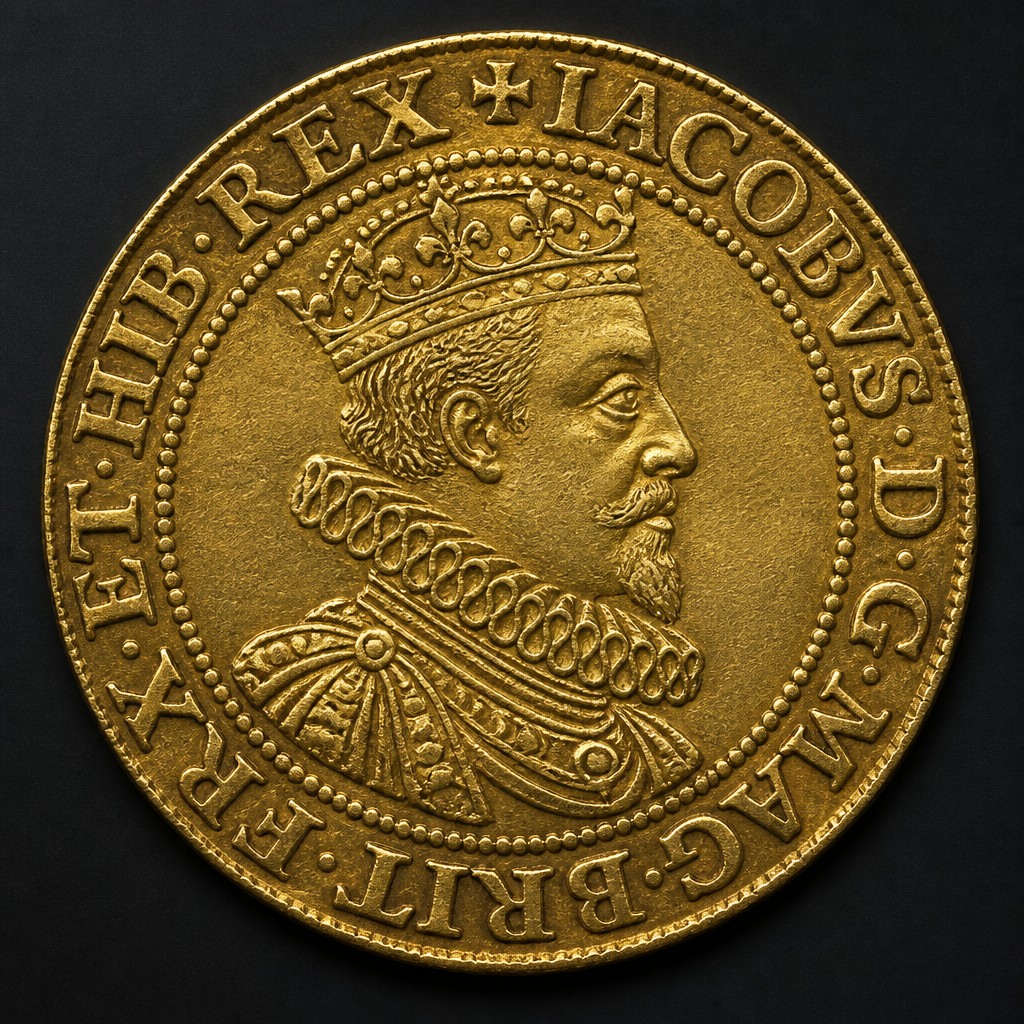
What It Is
The Unite was an English gold coin worth twenty shillings, first struck in 1604 under James I. Its name celebrated the union of the crowns of England and Scotland under one king, a political milestone reflected directly in the coin's design and inscriptions, making it as much a political statement as a piece of currency.
Obverse Design
The obverse shows a crowned, armored bust of the king in profile, with a Latin legend giving his name and titles across both England and Scotland, reflecting the newly unified monarchy and its expanded royal titulature.
Reverse Design
The reverse displays a crowned shield quartered with the arms of England, Scotland, France, and Ireland. The surrounding Latin legend often reads "I will make them one nation," a direct reference to the union theme that gave the coin its name and its historical significance.
Size, Weight, Metal & Edge
Struck in gold, the Unite weighs approximately 9 grams and measures around 30-33mm in diameter, varying slightly by issue. As a hand-hammered coin from this period, it has an irregular edge rather than a milled one, though some later Charles I issues show early milling experiments at select mints.
Mint Marks & Dating
A small mintmark appears at the top of the obverse legend, changing periodically throughout the reign and useful for narrowing down the exact issue date, since Unites generally do not carry a full numeral year in the way later milled coins do.
Telling It Apart From Similar Coins
The Unite is closely related to the Laurel, which replaced it in 1619 and shows the king wearing a laurel wreath rather than a plain crown. Comparing the portrait's headwear is the fastest way to distinguish the two: a plain crown suggests a Unite, while a wreath suggests a Laurel, though both share a similar overall size and gold weight.
Grading at a Glance
Check the sharpness of the king's facial features and the crown's detail, along with the clarity of the quartered shield on the reverse. A well-struck, lightly handled Unite shows crisp lettering around the rim; excessive wear flattens the portrait and blurs the shield's quarters into indistinct shapes.
Authenticity Red Flags
Genuine Unites show the natural irregularity of hand-hammered striking, with slightly uneven edges and off-center strikes being common rather than suspicious. Be wary of examples that are perfectly round and centered, have incorrect gold weight for their size, or show a portrait style inconsistent with early 17th-century engraving conventions, all of which point toward a later-made copy rather than an original issue.
Frequently asked questions
Why was it called the Unite?
The name and its inscriptions celebrated the union of the English and Scottish crowns under James I.
What replaced the Unite?
The Laurel, introduced in 1619, which shows the king wearing a laurel wreath instead of a plain crown.
What was the Unite's face value?
Twenty shillings, equivalent to one pound.
How can I date a Unite without a printed year?
By identifying the small mintmark in the obverse legend, which changed periodically during the reign.