
How to Identify the Unidentified Silver Coin (Louis XV era)
A step-by-step collector's guide to attributing an 18th-century French royal silver coin by its portrait, fleur-de-lis reverse, legends, size and mint mark.
Read the full Unidentified Silver Coin (Louis XV era) encyclopedia entry →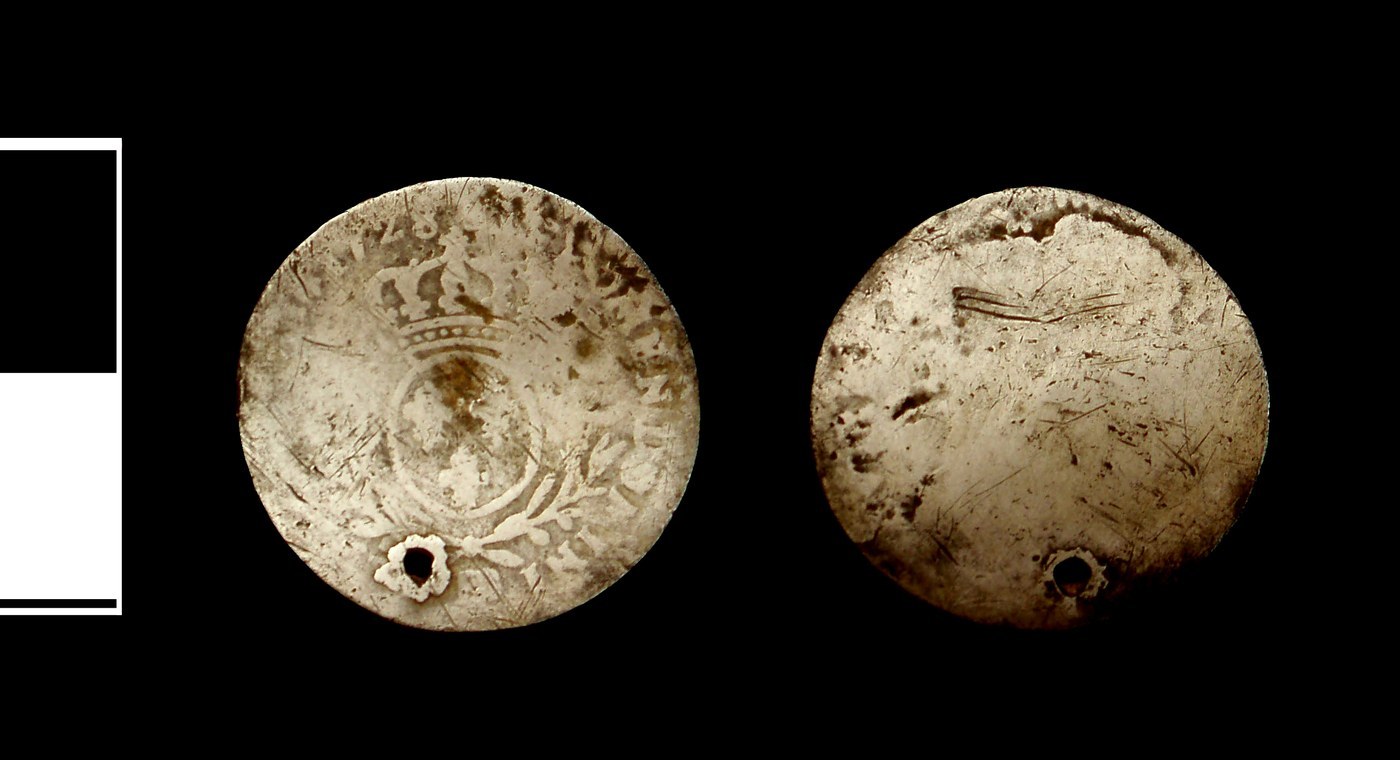
Begin with what the photographs already tell you: a right-facing bust with a surrounding inscription on the obverse, and a royal shield of fleur-de-lis within a wreath on the reverse. This pairing marks the coin as French royal (Bourbon) silver, the family to which Louis XV's coinage belongs. Your goal is to move from this type-level match to a specific attribution.
Work the obverse legend first. French royal silver names the ruler in Latin around the portrait — for Louis XV, look for forms such as LUD(OVICUS) XV D G FR(ANCIÆ) ET NAV(ARRÆ) REX. Even a few legible letters (a name, a regnal numeral, the titles FR ET NAV) confirm the king and separate a Louis XV piece from those of Louis XIV or Louis XVI, whose portraits and legends differ.
Next read the reverse in detail. The exact composition of the shield, whether it sits beneath a crown, the style of the wreath or branches, and any surrounding legend or date all point to a particular denomination and issue. Crucially, look for a single mint letter (French royal coins used letters such as A for Paris and other letters for provincial mints) and for a date; together these fix the coin within the catalogue.
Measure and weigh the coin. French royal silver ran from small fractions up to the large écu of roughly 40 mm and around 29 grams, so diameter and weight are decisive for pinning the denomination. Record the metal (silver), the exact diameter in millimetres, and the weight in grams before comparing against reference tables.
Watch for look-alikes and authentication cautions. Other Bourbon reigns and even some foreign coins use similar royal portrait-and-shield layouts, so do not assume Louis XV from the design alone — confirm it from the legend. Be wary of cast copies (soft detail, a visible seam, wrong weight), cleaned or tooled surfaces, and holed or mounted pieces that once served as jewellery. For a coin of uncertain type or potential value, have it examined in hand by a reputable dealer or grading service rather than relying on images.
Frequently asked questions
What is the single most useful thing to read on the coin?
The obverse legend. The ruler's Latin name and titles around the portrait confirm the king and rule out other reigns; even partial letters help narrow the attribution.
Where is the mint mark on a French royal coin?
French royal coins carry a mint letter (for example A for Paris) usually on the reverse or in the legends. Finding that letter, plus the date, is essential to identifying the exact issue.
How do I tell the denomination apart?
By size and weight. Measure the diameter in millimetres and weigh the coin in grams, then match those figures to a catalogue of Louis XV silver, which ranges from small fractions up to the large écu.
Can I trust the identification from photos alone?
Only to type level. The design confirms French royal silver of the Louis XV era, but exact denomination, date and mint — and authenticity — should be verified in hand before relying on the identification.