
How to Identify the Type 1 Liberty Head Gold Dollar
The first U.S. gold dollar, minted 1849–1854, identified by its small size, coronet Liberty portrait, and a wreath enclosing the value on the reverse.
Read the full Type 1 Liberty Head Gold Dollar encyclopedia entry →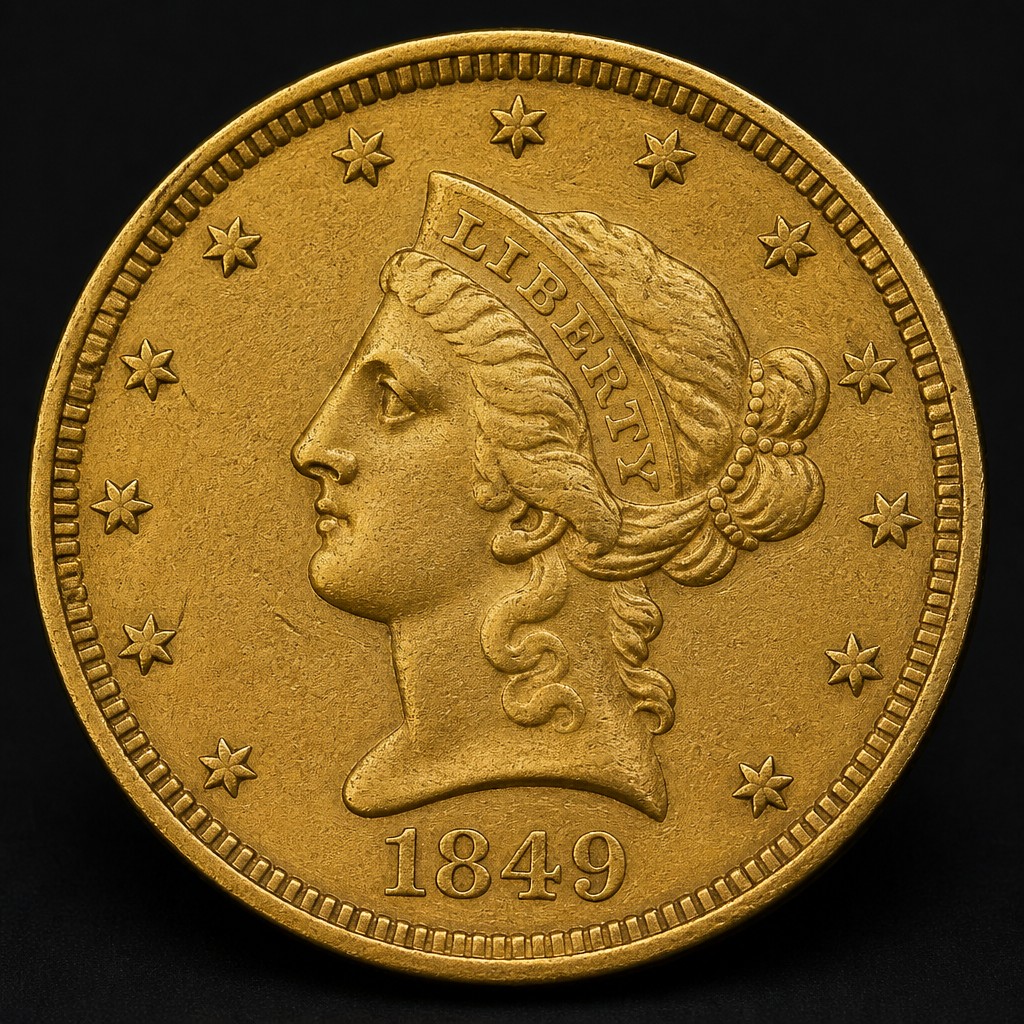
What It Is
The Type 1 Liberty Head gold dollar was the first gold dollar coin struck by the United States Mint, produced from 1849 to 1854. Designed by James B. Longacre, it was created in response to the increased gold supply from the California Gold Rush and remains one of the smallest coins ever issued by the U.S. Mint.
Obverse Design
The obverse shows Liberty's head facing left wearing a coronet inscribed "LIBERTY." Stars surround the portrait and the date is below.
Reverse Design & Inscriptions
The reverse shows the denomination "1 DOLLAR" set within a wreath of wheat, cotton, corn, and tobacco leaves, with "UNITED STATES OF AMERICA" arching around the border.
Size, Weight, Metal, and Edge
The coin weighs 1.672 grams, is struck in .900 fine gold, measures just 13 mm in diameter, and has a reeded edge. Its diminutive size makes it one of the easiest gold dollar types to recognize, and also one of the easiest to lose.
Mint Marks and Where to Find Them
The mint mark appears on the reverse, below the wreath near the bottom. Look for "C" (Charlotte), "D" (Dahlonega), "O" (New Orleans), or "S" (San Francisco, 1854 only for this type); no mint mark indicates Philadelphia.
Telling It Apart From Similar Coins
Type 1 is distinguished from the Type 2 gold dollar (1854–1856) by its coronet Liberty portrait rather than a feathered Indian princess headdress, and by its smaller 13 mm diameter compared to the larger 15 mm planchet used for Types 2 and 3. Because of its tiny size, it should not be confused with a dime or other small silver coin at a glance — gold color and weight are the quickest tells.
Judging Condition at a Glance
Check Liberty's hair curls near the coronet and the highest leaves in the reverse wreath for early wear. Given the coin's small size and shallow relief, even modest circulation wear can noticeably soften these details.
Authenticity Red Flags
Because of its small size and genuine gold content, careful weight and diameter verification is important — a coin that is too large, too small, or off in weight should be treated with suspicion. Watch for softened or mushy details consistent with cast reproductions, and examine any mint mark for consistent size, shape, and placement compared to verified genuine examples.
Frequently asked questions
How big is a Type 1 gold dollar?
It measures only 13 mm in diameter, making it one of the smallest coins the U.S. Mint has ever produced.
Where is the mint mark located?
On the reverse, below the wreath near the bottom rim.
How is Type 1 different from Type 2?
Type 1 shows a coronet-style Liberty portrait on a smaller 13 mm planchet, while Type 2 shows a feathered Indian princess headdress on a larger 15 mm planchet.
What years were Type 1 gold dollars made?
From 1849 through 1854, after which the design changed to the Type 2 Indian princess style.