
How to Identify the Tymf
A collector's guide to recognizing the 1663 Polish Tymf by its crowned monogram, eagle-and-arms reverse, distinctive Latin motto, and broad thin silver format.
Read the full Tymf encyclopedia entry →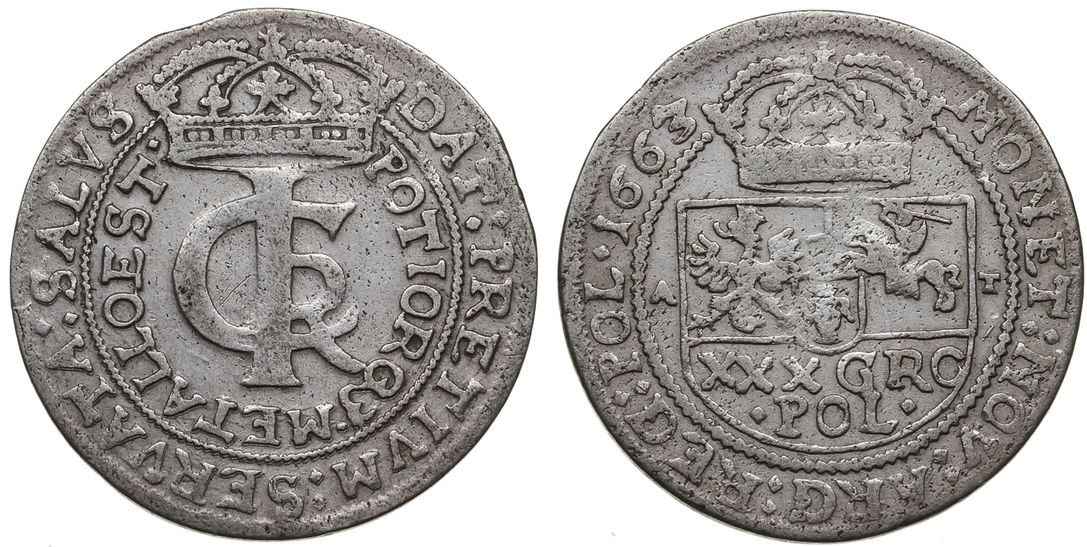
Read the Reverse Motto First
The surest single clue is the Latin inscription on the reverse. The Tymf carries a motto expressing that the preserved safety of the state is worth more than the metal, wording that is specific to this issue. If a Polish coin of this era shows an eagle and coat of arms wrapped in that kind of Latin legend rather than a plain denomination, you are very likely looking at a Tymf.
Confirm Both Sides Match the Type
The obverse should show a crown with heraldic elements over the crowned royal monogram of John II Casimir, not a full royal portrait bust. The reverse should show the eagle (Orzel) with a central coat of arms surrounded by the Latin motto. Both sides together, the crowned monogram and the eagle-and-arms with motto, define the type; a coin missing either element is something else.
Check the Date and Format
Look for the 1663 date and note the physical format. The Tymf is a broad, comparatively thin silver coin rather than a thick heavy crown, reflecting its deliberately reduced silver content and its tariff of thirty groszy. A coin of this design that is unusually heavy and thick, or that reads as a small denomination groszy, does not fit the Tymf profile.
Rule Out Look-Alikes
The Commonwealth issued many silver denominations under John II Casimir, including ordinary groszy, ort, and larger silver, that share the crowned monogram or eagle motifs. The distinguishing features of the Tymf are the specific value-and-metal motto and the thin, broad flan tied to the thirty-groszy tariff. Always match the legend, not just the eagle, before concluding you have a Tymf.
Authentication Cautions
Because it is a famous and much-discussed type, the Tymf is imitated, and modern replicas and cast fakes exist. Compare the lettering, crown, and eagle details to trusted reference images, watch for soft or mushy strikes, wrong weight, casting seams, or filed edges, and be wary of pieces with tooled or heavily cleaned surfaces. For higher-value examples, third-party authentication is worthwhile.
Frequently asked questions
What is the fastest way to recognize a Tymf?
Read the reverse. A Tymf shows an eagle and coat of arms surrounded by a Latin motto about the state's safety being worth more than the metal, which is unique to this issue.
Does the Tymf show a king's portrait?
No. The obverse features a crown with heraldic elements over the crowned royal monogram of John II Casimir, not a full facing or profile portrait bust of the king.
How is it different from ordinary Polish groszy of the period?
The Tymf is a broad, thin silver coin tariffed at 30 groszy and carries its distinctive value-and-metal motto. Ordinary groszy are smaller, differently inscribed, and lack that legend.
Are there fakes to watch for?
Yes. As a famous type it attracts replicas and cast counterfeits. Check weight, strike sharpness, and lettering against references, and consider certification for valuable pieces.