
How to Identify the Two Pound Gold (Double Sovereign)
The Two Pound piece is Britain's gold double sovereign, struck since the 1820s and revived for Victoria's jubilees, weighing almost 16 grams of 22-carat gold.
Read the full Two Pound Gold (Double Sovereign) encyclopedia entry →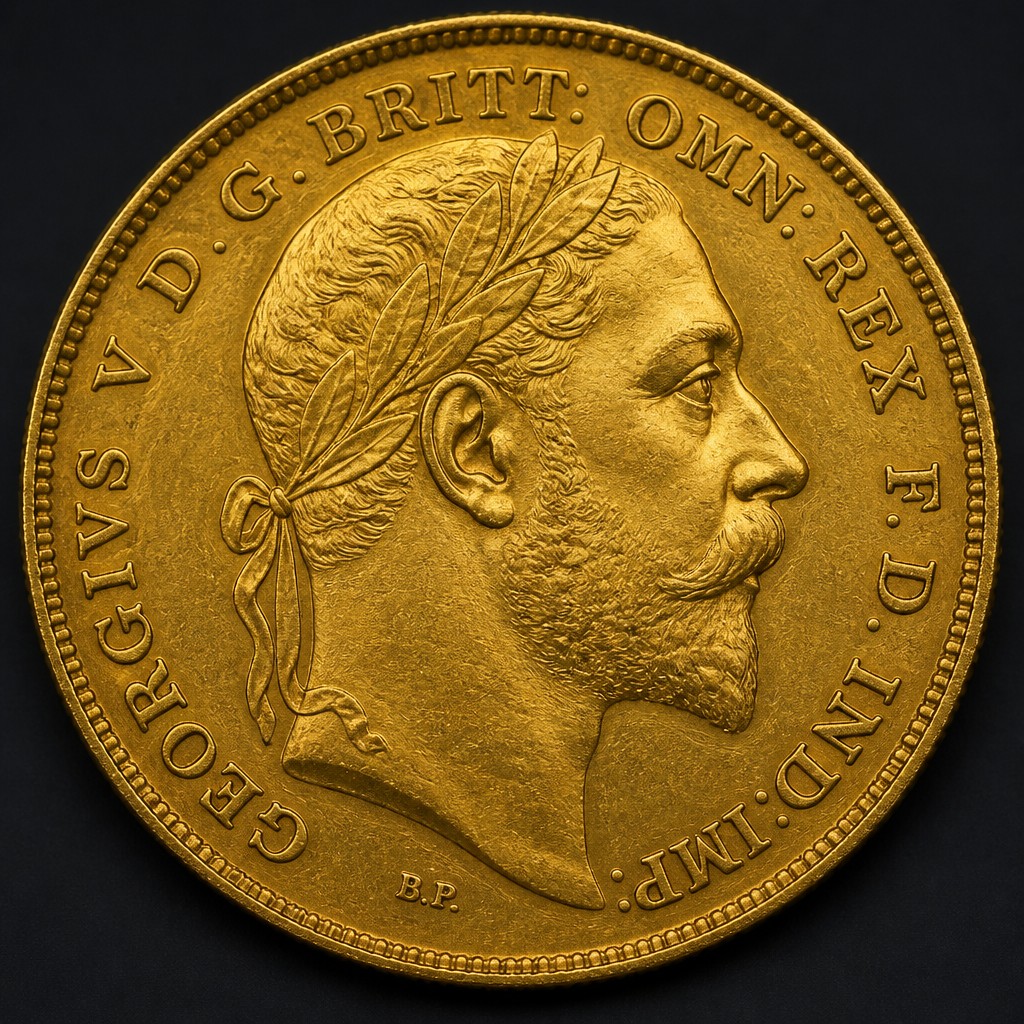
What Is It
The Two Pound coin, often called the double sovereign, is a British gold denomination worth two pounds sterling (double the value of a standard sovereign). It first appeared as a pattern under George IV in the 1820s, then was struck for circulation and as a proof/commemorative coin from 1887 onward under Victoria, and has continued periodically through the reigns of Edward VII, George V, and into the modern era as a collector and bullion piece.
Obverse Design
The obverse always carries the reigning monarch's portrait facing left or right depending on the "turning heads" tradition, surrounded by the monarch's name and titles in Latin abbreviation (for example VICTORIA DEI GRATIA or ELIZABETH II DEI GRA REG FID DEF). Older coins show a bare or veiled head; more recent issues show a crowned or laureate portrait depending on the era.
Reverse Design
Reverse designs vary by period. Many Victorian and modern double sovereigns carry Benedetto Pistrucci's famous Saint George and the Dragon, showing a mounted, nearly nude Saint George spearing a dragon with a broken lance beneath the horse's hooves. Other issues, notably around 1887 and 1893, instead show a crowned shield of the royal arms within a wreath or Garter belt. Modern commemorative double sovereigns sometimes use special one-off designs for royal anniversaries.
Size, Weight, and Metal
The double sovereign is struck in 22-carat (91.7% fine) gold, weighs approximately 15.98 grams, and measures about 28.4mm in diameter. The edge is finely milled (reeded). Its weight and diameter sit roughly midway between the standard sovereign and the much larger five pound piece, which is a helpful clue when a coin is unlabelled.
Mint Marks and Where to Find Them
London-struck coins normally show no mint mark. Coins produced at British Empire branch mints carry a small letter beneath the date or ground line on the reverse: S for Sydney, M for Melbourne, and P for Perth. A magnifying glass is usually needed to spot these small marks clearly.
Telling It Apart from Similar Coins
The easiest confusion is with the standard sovereign, which shares the same designs but is noticeably smaller (22mm) and lighter (7.98g). The five pound piece uses the same imagery again but is considerably larger (about 36mm) and heavier (nearly 40g). Comparing diameter and heft against a known sovereign is the fastest way to confirm a double sovereign.
Judging Condition at a Glance
On the Saint George reverse, check the horse's front leg, the highest fold of Saint George's cloak, and the dragon's wing tips first, since these are the highest points and wear first. On portrait obverses, the hair curls and coronet or crown details show wear earliest. Sharp, unbroken lettering close to the rim indicates a lightly circulated or proof example.
Authenticity Red Flags
Genuine gold sovereigns and double sovereigns have a distinctive warm yellow color and ring clearly when gently spun on a hard surface; a dull, pale, or grayish tone can indicate a base-metal fake or plated copy. Weigh and measure any suspect coin, since correct diameter and weight are difficult for counterfeiters to replicate exactly. Soft, mushy details or slightly wrong lettering fonts are common on cast forgeries.
Frequently asked questions
What is a Two Pound gold coin worth in face value?
Its face value is two pounds sterling, but as a 22-carat gold coin its actual value is tied to its gold content and collector demand, not its stamped denomination.
How can I tell a double sovereign from a regular sovereign?
Compare size and weight: the double sovereign is about 28.4mm and 15.98g, roughly double the standard sovereign's 22mm and 7.98g, even though the designs look nearly identical.
Why do some double sovereigns show a shield instead of Saint George?
Different reverse designs were used in different periods; the shield-in-garter reverse appeared mainly around the 1887 Jubilee and 1893 Old Head issues, while Pistrucci's Saint George appears in most other years.
What do the small letters near the date mean?
A small S, M, or P below the design indicates the coin was struck at a branch mint in Sydney, Melbourne, or Perth rather than London, which struck coins without a mint mark.