
How to Identify the Two Pound Coin
How to identify the UK £2 coin by its bimetallic construction, changing commemorative reverse designs, edge inscriptions, and Queen's portrait.
Read the full Two Pound Coin encyclopedia entry →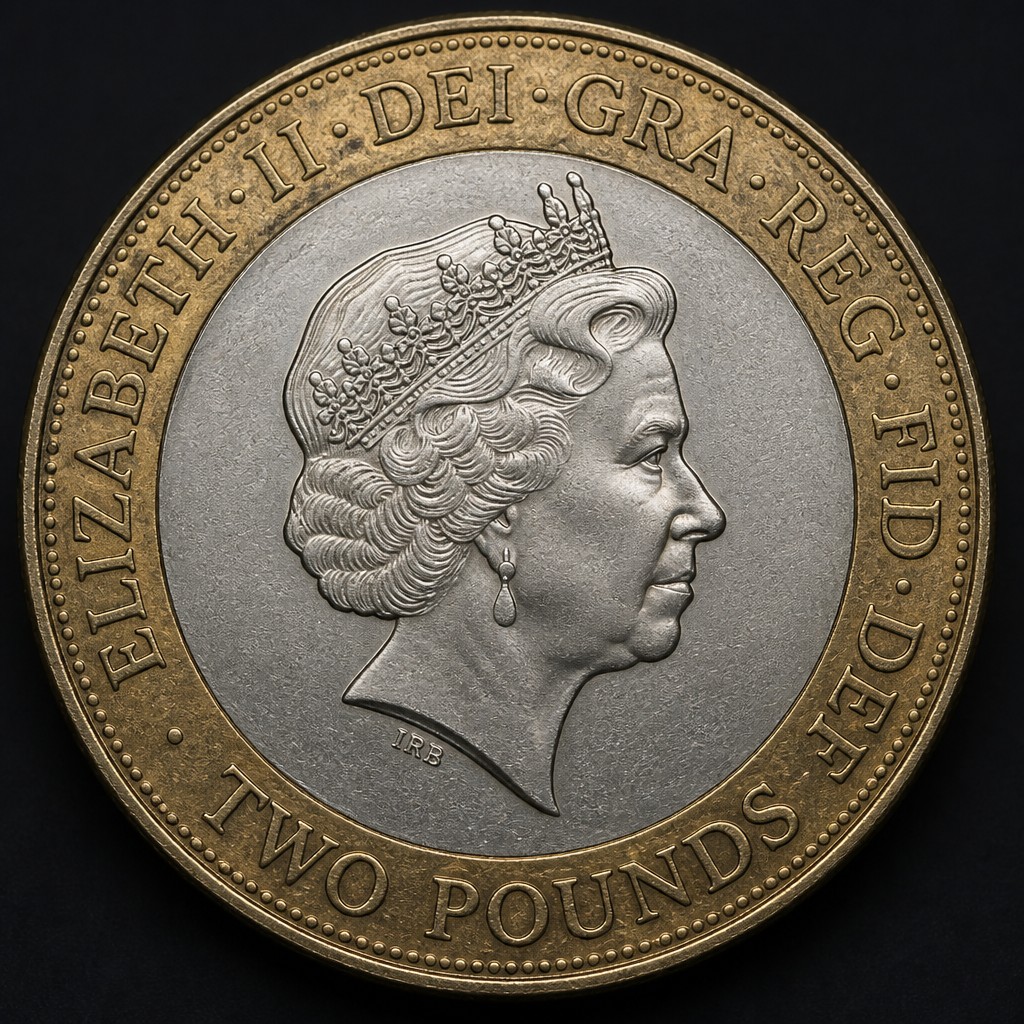
What It Is
The two-pound coin is the United Kingdom's largest-value circulating coin denomination. A cupro-nickel commemorative-only £2 existed from 1986 to 1996 for special occasions, but the modern bimetallic £2 entered general circulation in 1997.
Obverse Design & Inscriptions
The obverse carries a portrait of Queen Elizabeth II, updated with different official effigies over the decades, alongside "ELIZABETH II" and the date.
Reverse Design & Inscriptions
Reverse designs change frequently to mark anniversaries and events. Examples include a 1997 technology-themed design with a rotating gearwheel motif, regional designs for the 2002 Commonwealth Games, and a standard Britannia design introduced in 2015 used in years without a special commemorative theme. Many one-off designs mark historic anniversaries, scientific figures, or major sporting events.
Size, Weight, Metal, and Edge
The coin is bimetallic, with a nickel-brass outer ring around a cupro-nickel inner disc. It measures 28.4mm across and weighs 12 grams. The edge carries an inscription tied to that year's theme, often a relevant quote or phrase rather than a fixed standard wording.
Mint Marks & Where to Find Them
All are struck at the Royal Mint. There is no separate branch mint mark; instead, the specific reverse design and edge inscription together identify the exact year and theme.
Telling It Apart From Similar Coins
The bimetallic build distinguishes the £2 instantly from any single-metal UK coin. To identify a specific commemorative type, match the reverse artwork and edge wording against the year, since many designs were issued for only a single year.
Judging Condition & Grade
Check the joint between the outer ring and inner disc for a tight, even fit with no gap or looseness. Wear appears first on the high points of the portrait and on raised reverse lettering.
Authenticity Red Flags
A poorly fused or loose bimetallic join, a color mismatch between the two metals compared to genuine references, and blurred or missing edge lettering are all signs of a counterfeit or altered coin.
Frequently asked questions
Why do £2 coins have so many different reverse designs?
The Royal Mint regularly issues commemorative £2 designs to mark anniversaries, historic figures, and major events, alongside a standard Britannia design used in other years.
What metals make up the £2 coin?
It is bimetallic, with an outer ring of nickel-brass and an inner disc of cupro-nickel.
Where is the edge inscription located and what does it usually say?
It runs around the rim of the coin and typically relates to that year's specific commemorative theme rather than a single fixed phrase used on every coin.
How can I tell if a £2 coin's bimetallic construction is genuine?
Genuine coins have a tight, seamless join between the outer ring and inner disc with no visible gap, rotation, or mismatched coloring.