
How to Identify the Two Guineas of George II
A collector's guide to confirming a George II two-guinea piece by its portrait, crowned-shield reverse, size and weight, and to telling it apart from the guinea and five guineas.
Read the full Two Guineas of George II encyclopedia entry →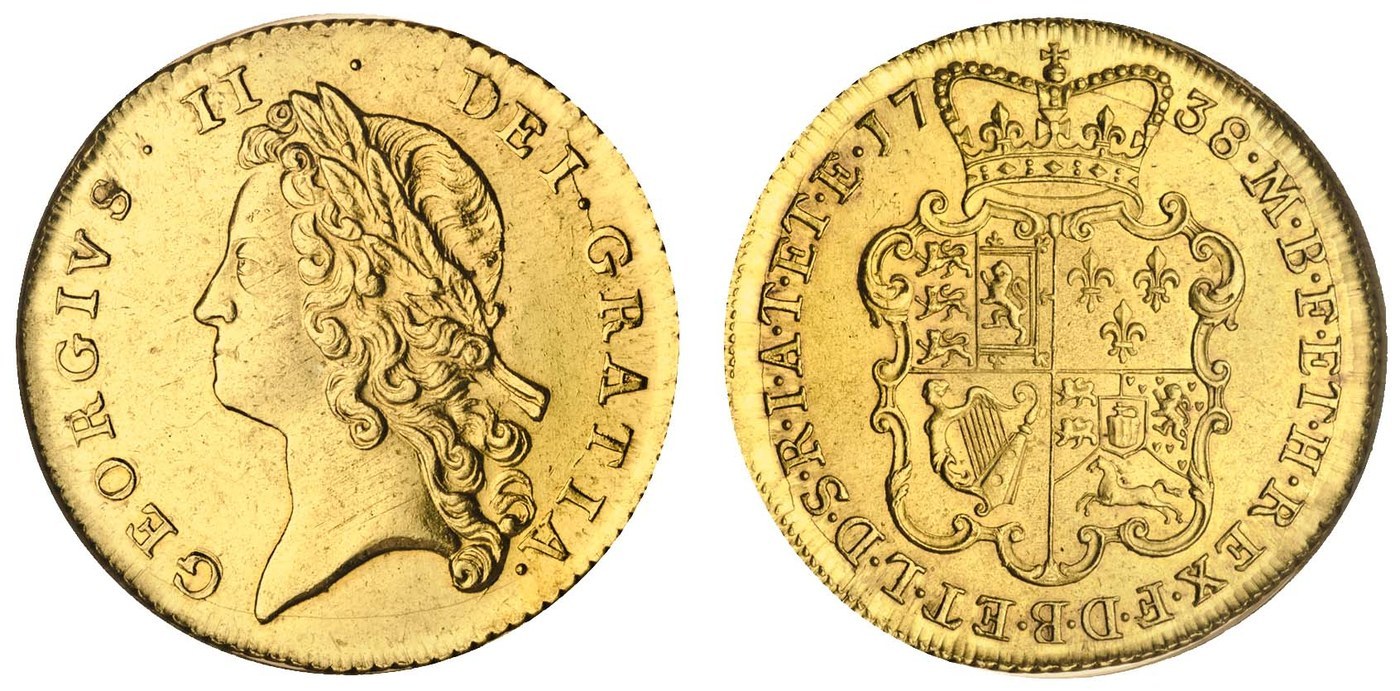
Start with the obverse portrait and legend. A George II two guineas shows his laureate head facing left, surrounded by an abbreviated Latin legend giving his name and titles. Note the style of the bust: earlier issues such as the 1738 coin use a "young head" portrait, while later dates in the series use revised, older portraits. Reading the date and matching the portrait style is the first step in placing the coin within the reign.
Examine the reverse shield closely. The coin should show a single large crowned shield with ornate garniture, quartered with the arms of England and Scotland, France, Ireland, and Hanover, and framed by a Latin legend and the date. This single-shield layout is characteristic of George II gold; a cruciform arrangement of four separate shields points instead to a different reign and should make you question the identification.
Measure and weigh the coin, because design alone will not distinguish the denomination. The two guineas, guinea, and five guineas of George II share the same portrait and shield reverse, so the two guineas is identified by its intermediate diameter and gold weight, larger than a guinea but smaller than a five guineas. Use calipers and a scale and compare against published specifications; the metal should read as gold in colour and density.
Inspect the edge and surfaces. Genuine pieces have a milled edge and the crisp, even relief of a struck coin. Look for signs of mounting, solder, filing, or a smoothed area on the edge that would indicate the coin was once used as jewellery, all of which affect both authenticity assessment and value.
Authenticate before trusting the coin. As a high-value gold denomination, the two guineas is a target for cast and struck forgeries and for altered dates, where a common date is re-cut to imitate a scarcer one. Check the weight and diameter precisely, watch for tooling around the date and legends, and have any significant example examined and ideally independently graded by a recognised authority before relying on an attribution or a price.
Frequently asked questions
Which side is the obverse?
The side with the laureate head of George II facing left and the surrounding Latin name-and-titles legend is the obverse. The crowned garnished shield of the royal arms with the date is the reverse.
How do I tell a two guineas from a guinea or five guineas?
They share the same portrait and shield design, so measure the diameter and weigh the coin and compare against published specifications. The two guineas is larger and heavier than a guinea but smaller and lighter than a five guineas.
How do I confirm the date and portrait type?
Read the date on the reverse and compare the obverse bust to reference images. Earlier issues like 1738 use a younger portrait, while later dates use an older head, so date and portrait together place the coin in the series.
How can I spot a fake or altered coin?
Check that the weight and diameter match specifications, look for casting seams, soft detail, or tooling around the date and legends, and inspect the edge for signs of mounting or repair. Because it is a valuable gold coin, have any important example authenticated and independently graded.