
How to Identify the Two Guinea (Double Guinea)
The Two Guinea, or double guinea, is a gold coin worth 42 shillings, struck intermittently from Charles II's reign in the 1660s through George III's in 1777.
Read the full Two Guinea (Double Guinea) encyclopedia entry →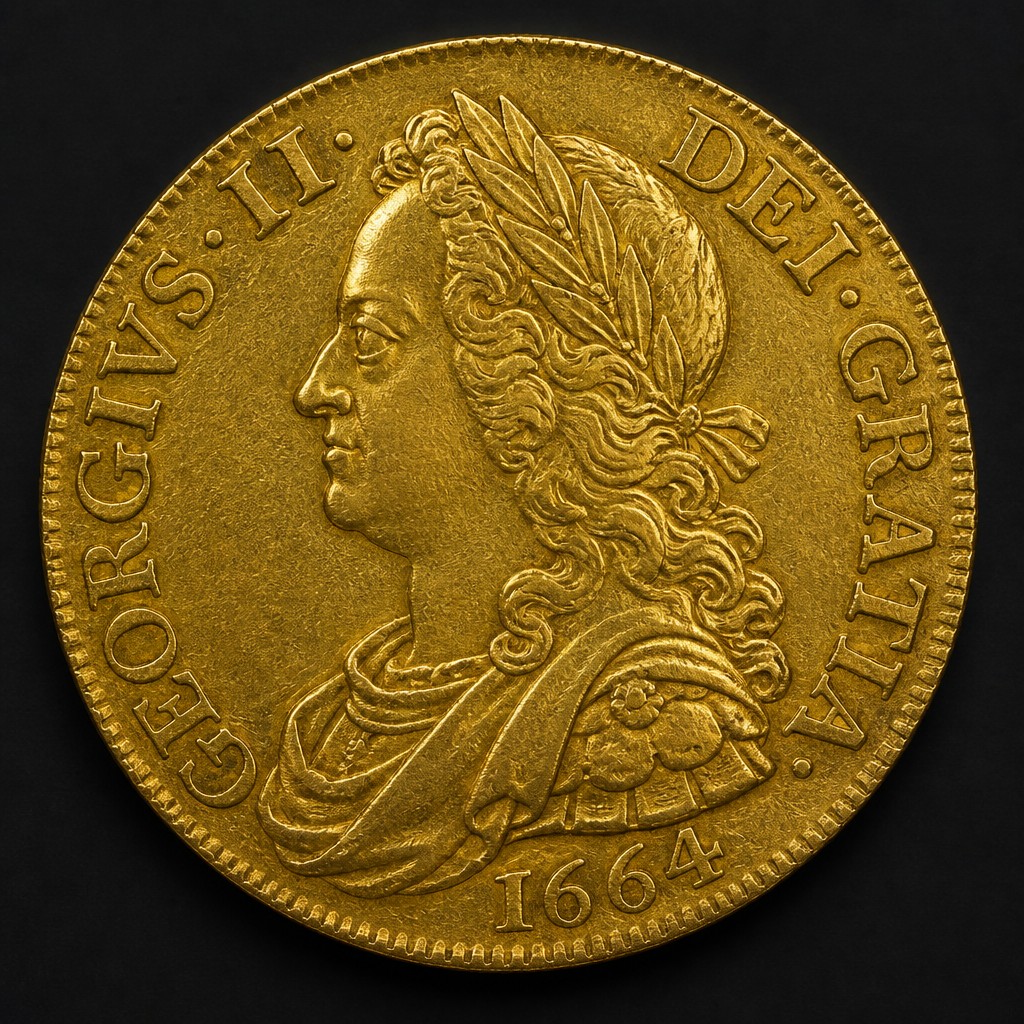
What Is It
The Two Guinea, also called the double guinea, is a gold coin worth two guineas, or 42 shillings, struck intermittently across more than a century of British coinage, from its introduction under Charles II in the 1660s through its final issues under George III in the 1770s. As a substantial gold denomination, it was used mainly for larger transactions rather than everyday spending.
Obverse Design
The obverse carries the portrait of the reigning monarch appropriate to its date, styled according to the artistic conventions of the period: laureate, draped busts for the Stuart and early Hanoverian kings, evolving to the plainer bare-head style seen on later George III coinage.
Reverse Design
Early Two Guinea pieces from Charles II, William and Mary, and William III show four crowned cruciform shields around a central emblem, with scepters filling the angles between shields. Later issues, including those of George III, instead show a single crowned shield of the royal arms. On some 17th-century examples, a small elephant, or elephant-and-castle mark beneath the bust indicates the gold was supplied by the Royal African Company.
Size, Weight, and Metal
The Two Guinea is struck in 22-carat gold, weighs approximately 16.8 grams, and measures around 31mm in diameter, making it noticeably larger and heavier than the standard single guinea. This substantial size and weight is one of the clearest ways to identify the denomination at a glance.
Mint Marks and Where to Find Them
All Two Guinea coins were struck at the Royal Mint in London. Special privy marks, such as the elephant or elephant-and-castle beneath the monarch's bust on certain 17th-century issues, function as a mark of the gold's origin rather than a branch mint mark, since no overseas mints struck this denomination.
Telling It Apart from Similar Coins
The standard single guinea shares similar design themes but is noticeably smaller and lighter, at roughly 8.4 grams and 25mm. The much rarer Five Guinea piece, by contrast, is considerably larger and heavier still, at nearly 42 grams and 37-38mm. Comparing diameter and weight against these related denominations quickly confirms which guinea coin is in hand.
Judging Condition at a Glance
Wear appears first on the monarch's portrait, particularly the hair or wig detail and the cheek, and on the raised elements of the crowned shields or cruciform arrangement on the reverse. Because these were valuable, carefully handled coins even in their own time, well-preserved examples do exist, but centuries of circulation and handling mean noticeable wear is common on most surviving pieces.
Authenticity Red Flags
Given their gold content and long production history, Two Guineas have long attracted contemporary and modern counterfeits, so weighing and measuring a suspect coin against the expected 16.8 grams and 31mm diameter is an essential first check. Soft or blurred portrait detail, an incorrect edge treatment, or coloring that looks too pale or too orange compared with genuine 22-carat gold are additional signs that a piece may not be authentic.
Frequently asked questions
How much was a Two Guinea coin worth?
It was worth two guineas, equivalent to 42 shillings in pre-decimal British currency.
What does the elephant mark on some Two Guineas mean?
A small elephant or elephant-and-castle symbol beneath the monarch's bust indicates the gold used to strike that coin was supplied by the Royal African Company, not a mint location.
How can I tell a Two Guinea from a regular guinea?
The Two Guinea is noticeably larger and heavier, at about 31mm and 16.8 grams, compared with the standard guinea's 25mm and 8.4 grams, so comparing size is the quickest way to distinguish them.
When was the last Two Guinea coin struck?
Two Guinea pieces were last issued under George III in 1777, after which the denomination was not continued.