
How to Identify the Twenty Pence
How to identify the UK 20p coin by its seven-sided shape, cupro-nickel content, Tudor rose or shield reverse, and the famous undated 2008 mule error.
Read the full Twenty Pence encyclopedia entry →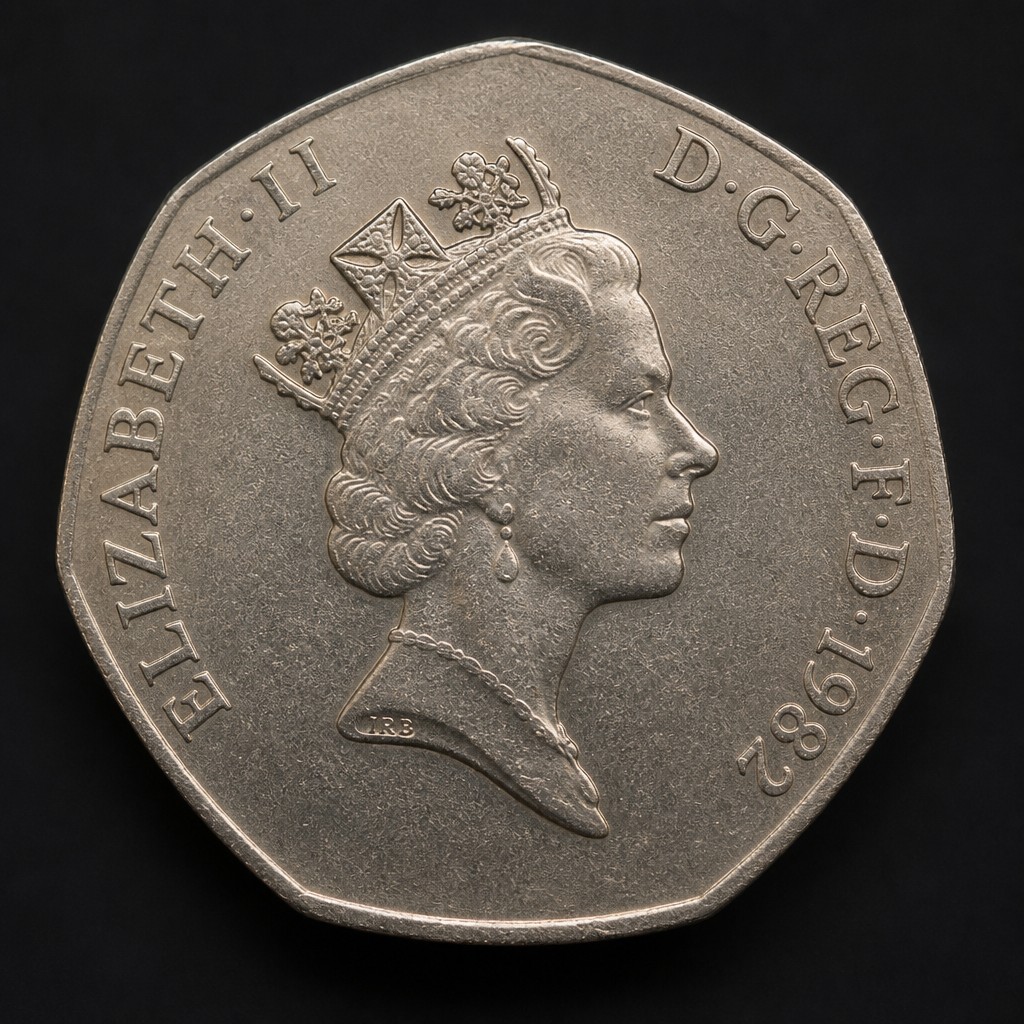
What It Is
The twenty pence coin was introduced in 1982 to fill the value gap between the 10p and 50p coins. Like the 50p, it is a seven-sided Reuleaux-curve coin, but smaller.
Obverse Design & Inscriptions
The obverse shows a portrait of Queen Elizabeth II with her name around the rim. Notably, on coins struck before 2008 the date does not appear on this side at all.
Reverse Design & Inscriptions
From 1982 to 2008 the reverse showed a crowned Tudor rose, with the date placed beneath it. In 2008 this changed to a segment of the Royal Shield, part of a redesigned set where the reverses of the 1p through £1 coins combine to form the full Royal Arms; the date moved to the obverse in this redesign.
Size, Weight, Metal, and Edge
The coin is cupro-nickel, measuring 21.4mm across its flats and weighing 5 grams, with smooth curved sides rather than milling.
Mint Marks & Where to Find Them
Struck at the Royal Mint with no separate branch mint mark; the design era (rose versus shield reverse) is the main way to place a coin in time.
Telling It Apart From Similar Coins
Check whether the date sits on the Queen's side (2008 onward) or beneath the rose on the reverse (1982-2008). A small number of genuine 2008-dated coins were struck by mistake pairing an old-style obverse die, which had no space for a date, with the new dateless shield reverse, producing coins with no date anywhere on them at all. These "mule" errors are a well-documented genuine mint mistake rather than a sign of tampering.
Judging Condition & Grade
Wear shows first on the Queen's hair and crown detail and on the raised rose or shield relief on the reverse.
Authenticity Red Flags
An undated 20p is not automatically suspicious given the known 2008 mule error, but it should still show the correct weight, diameter, cupro-nickel color, and plain curved edge; a coin with reeded or milled edges, or incorrect weight, would not match a genuine 20p regardless of date.
Frequently asked questions
Why does an undated 20p coin exist?
A small batch struck in 2008 mistakenly paired an older obverse die, which had no date space, with the new shield reverse that had also moved its date elsewhere, producing coins with no date at all — a documented genuine mint error.
Where should the date normally appear on a 20p coin?
On coins from 1982 to 2008 the date is on the reverse beneath the Tudor rose; from 2008 onward it appears on the obverse alongside the Queen's portrait.
What shape is the 20p coin?
It is seven-sided, using the same constant-width curved heptagon shape as the 50p, just smaller.
Is an undated 20p worth more than face value?
Genuine examples of the 2008 undated mule have drawn collector interest due to their scarcity, but ordinary dated 20p coins circulate at face value.