
How to Identify the Turban Head Half Eagle
A collector's walkthrough: read the capped Liberty portrait, the heraldic eagle reverse, the 1795 date, gold size and weight, and the authentication cautions.
Read the full Turban Head Half Eagle encyclopedia entry →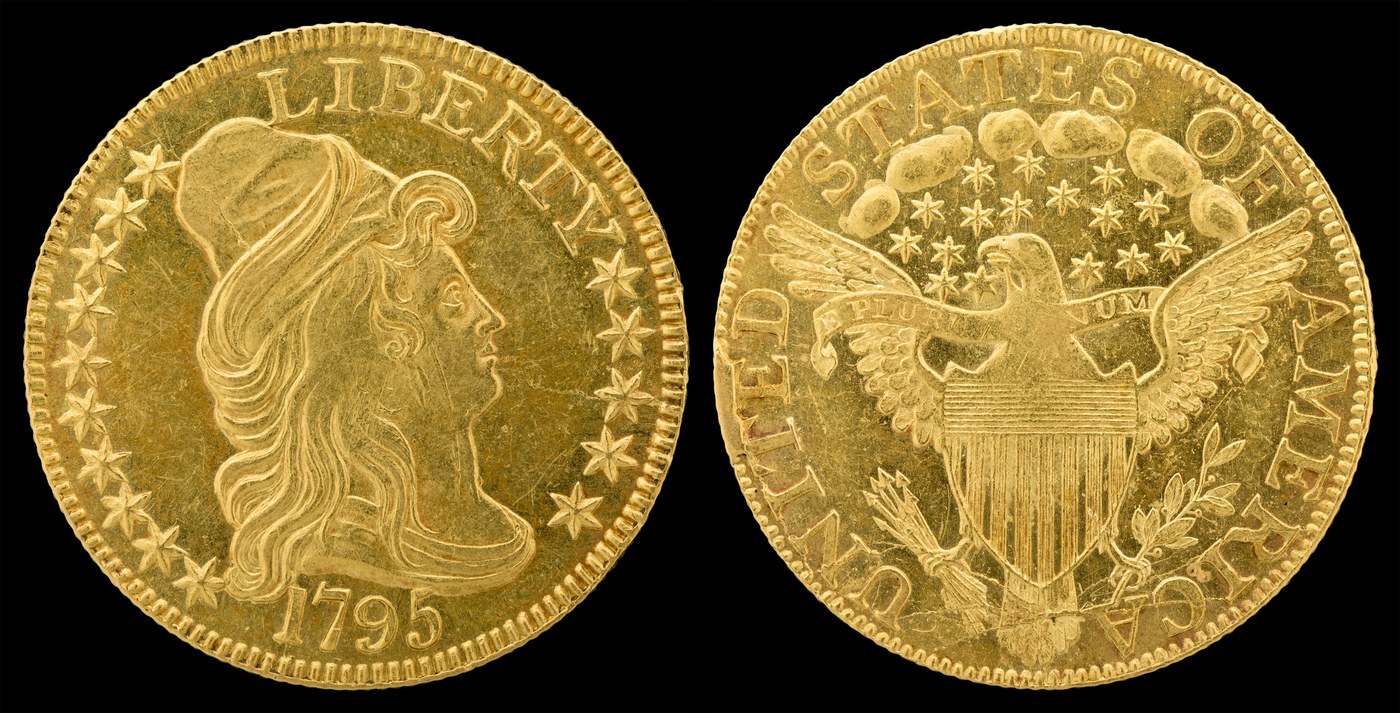
Begin with the obverse portrait. The Turban Head half eagle shows Liberty facing right in a soft, draped cap that gathers behind the head, with loose curls beneath. LIBERTY curves across the top, the date is at the bottom, and stars line the field on either side. On the coin shown the date reads 1795. That rightward-facing capped bust is the signature of the Capped Bust to Right type and rules out the later left-facing Capped Bust designs.
Turn to the reverse to pin down the variety. Look for a heraldic eagle with a striped shield on its chest, an olive branch and arrows in its talons, and a ribbon reading E PLURIBUS UNUM, with clouds and stars above and UNITED STATES OF AMERICA around the edge. This is the Heraldic (Large) Eagle reverse. If instead you see a slim eagle perched on a palm branch inside a wreath, you have the earlier Small Eagle reverse — a different, also-1795 variety. Note that no denomination appears on either side, which is correct for the type.
Confirm size and metal. A genuine piece is small and heavy for its size: roughly 25 mm in diameter, about 8.75 grams, struck in early U.S. gold near 22 karat with a reeded edge. Gold has a distinctive dense heft and warm color that base-metal copies lack. A coin that is light, oversized, magnetic, or brassy in tone should be treated with suspicion.
Because the dies were hand-cut, expect variety differences — star counts, date and letter spacing, and eagle details vary between die pairs, and specialists attribute these against published reference plates. Do not be surprised by minor differences from another 1795 example; they can indicate a different, sometimes rarer, die marriage.
Finally, apply strong authentication caution. This is one of the most valuable and most faked areas of U.S. coinage: cast and struck counterfeits, added or altered dates, repairs, and cleaning are all common. Never judge value from a photo, and never clean the coin. If you believe you have a genuine 1795 half eagle, submit it to PCGS or NGC for authentication, grading, and variety attribution before buying, selling, or insuring it.
Frequently asked questions
How do I tell the Heraldic Eagle reverse from the Small Eagle reverse?
The Heraldic Eagle has a shield on its breast, holds arrows and an olive branch, and carries an E PLURIBUS UNUM scroll with stars and clouds above. The Small Eagle is a thin bird standing on a palm branch inside a wreath. This coin shows the Heraldic Eagle.
How can I check it is genuine gold and the right size?
Measure about 25 mm across and weigh near 8.75 grams, and confirm a reeded edge. Early gold is dense and non-magnetic with a warm color. Light weight, magnetism, wrong diameter, or a brassy tone points to a counterfeit and warrants professional testing.
There is no denomination on my coin — is it wrong?
No. Early U.S. half eagles do not state a value on the coin. The absence of a "5 dollars" legend is normal for the Turban Head type and is not a sign of a fake by itself.
Should I clean the coin before identifying it?
No. Cleaning damages the surface and sharply reduces value on early gold. Identify it as-is and, if it appears genuine, send it to a reputable grading service for authentication and variety attribution.