
How to Identify the Tunisian Franc (Beylik Era)
Franc-denominated coinage struck under the Beys of Tunis in the late Ottoman period, blending French decimal denominations with Arabic and Ottoman-style inscriptions.
Read the full Tunisian Franc (Beylik Era) encyclopedia entry →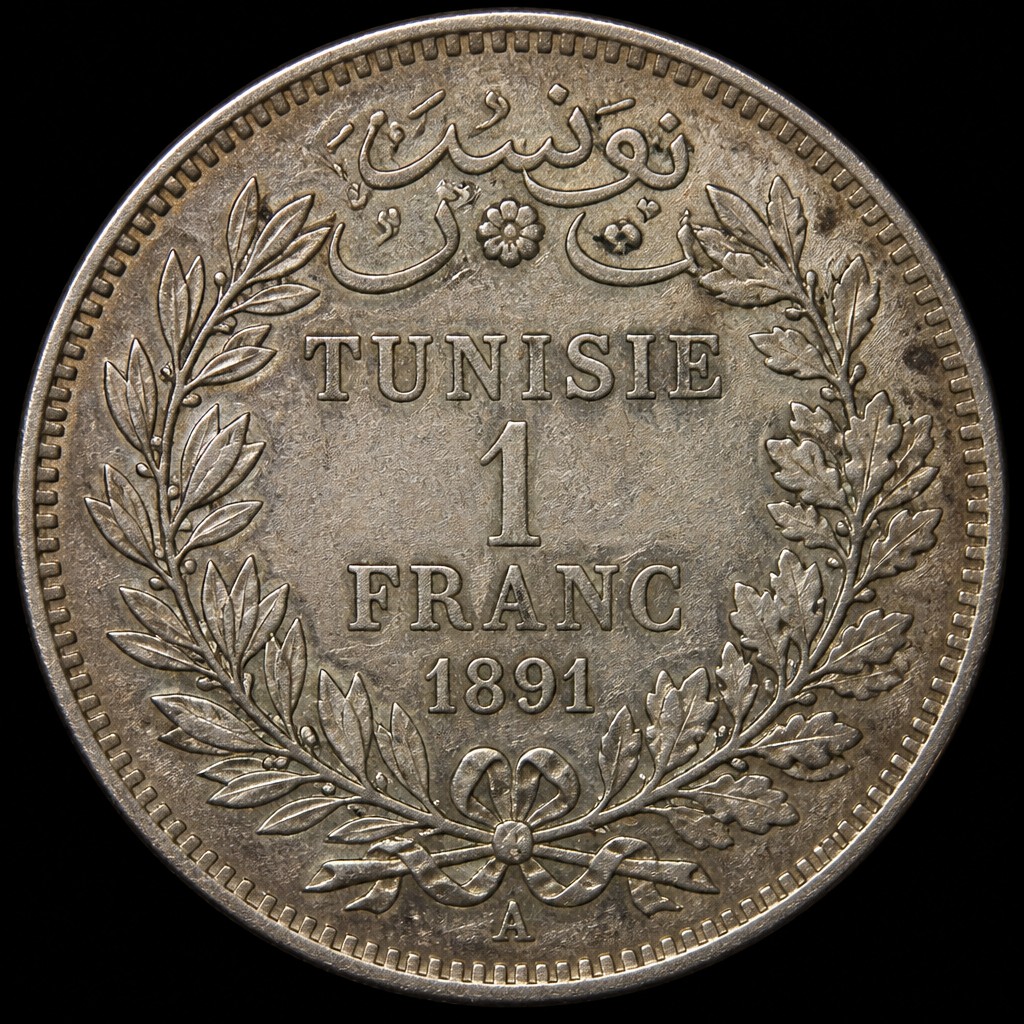
What It Is
The Tunisian franc was introduced in the late 19th century under the Beylik (the local hereditary Beys who ruled Tunisia under nominal Ottoman suzerainty and, later, French protectorate oversight). This coinage marked a shift toward a French-influenced decimal currency system while still carrying traditional Arabic and Ottoman-style design elements, reflecting Tunisia's transitional political status during this period.
Obverse Design & Inscriptions
The obverse typically carries a tughra-like calligraphic emblem or the Bey's name and title in Arabic script, continuing the visual tradition inherited from Ottoman provincial coinage, without any portrait bust.
Reverse Design & Inscriptions
The reverse states the denomination in French ("franc" or "centimes") along with Western numerals, marking a clear departure from purely Arabic-numeral Ottoman coinage and reflecting growing French commercial and administrative influence in Tunisia even before the formal protectorate began in 1881.
Size, Weight, Metal & Edge
Denominations follow the French decimal franc system, struck in silver for the higher franc denominations and in bronze or copper-nickel for smaller centime pieces, generally matching the size and weight conventions of French colonial coinage of the era. Edges are typically reeded on the silver denominations and plain on the small bronze pieces.
Mint Marks & Where to Find Them
Mint information, where present, is generally incorporated into the coin's legend or a small identifying mark near the date rather than a widely varying series of mint letters, since Tunisian coinage of this era was produced through a limited number of mint arrangements. Check the area around the date and denomination text closely for any small identifying marks.
Telling It Apart From Similar Coins
Because the design mixes Arabic calligraphy with French decimal denominations, these coins are distinctive compared with purely Arabic Ottoman qirsh coinage or purely French colonial coinage without Arabic script. The combination of a Bey's Arabic name or emblem alongside a French-language franc or centime denomination is the clearest signal that a coin belongs to this transitional Tunisian Beylik series.
Judging Condition at a Glance
Wear shows first on the raised calligraphic emblem and the French numeral denomination, both of which soften and blur with circulation. A well-preserved coin shows crisp Arabic script alongside sharply defined French lettering and numerals, while a worn example shows both elements flattened and harder to read.
Authenticity Red Flags
As with other transitional colonial-era coinage, watch for surface color inconsistent with the claimed metal (for example, a silver-colored coin that shows a base-metal color at a scratch or edge, suggesting plating), incorrect weight or diameter for the stated franc or centime denomination, and Arabic or French lettering that appears crudely formed or inconsistent with the neat, standardized lettering typical of genuine period mint production.
Frequently asked questions
Why does this coin mix Arabic and French text?
It reflects Tunisia's transitional status in the late 19th century, ruled locally by the Bey under nominal Ottoman authority while French commercial and, later, protectorate influence grew, producing coinage with both Arabic calligraphy and French franc/centime denominations.
Does the coin show a portrait of the Bey?
No, the design uses Arabic calligraphy or a tughra-style emblem representing the Bey's name and title rather than a portrait bust.
What denominations were used?
The coinage followed the French decimal system, with franc denominations struck in silver and smaller centime denominations struck in bronze or copper-nickel.
How can I tell this apart from Ottoman coinage from other provinces?
Look for the combination of French-language denomination text (franc or centimes) alongside the Arabic emblem, a pairing specific to this Tunisian transitional series rather than standard Ottoman qirsh coinage elsewhere in the empire.