
How to Identify the Tunisia 1 Millime
A collector's guide to recognizing Tunisia's 1960 aluminum-bronze 1 millime by its laurel-framed value, numeral profile, size, and golden alloy.
Read the full Tunisia 1 Millime encyclopedia entry →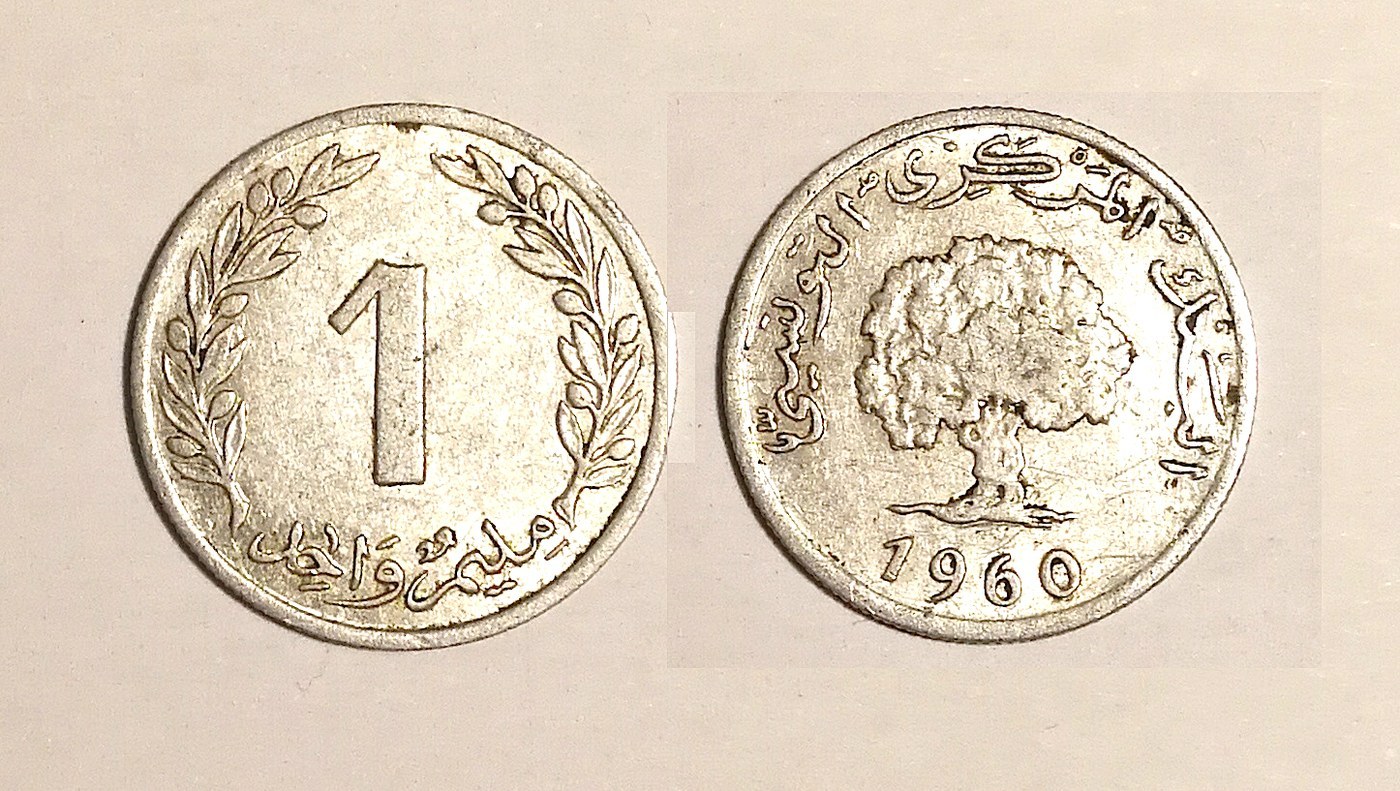
Begin with the value face. A genuine Tunisia 1 millime shows a single large numeral 1 encircled by laurel branches. That single-digit value is the fastest way to separate it from the 2, 5, 10, 20, 50, and 100 millime coins of the same era, which carry larger numbers. If the numeral is anything other than 1, you are holding a different denomination from the same family.
Turn to the other face. This side carries a numeral shown in profile facing right, together with inscriptions in Arabic and Latin script and the date. On the documented issue the date reads 1960, which ties the coin to Tunisia's introduction of the millime system. Reading the date directly is the surest way to place the piece.
Check color, size, and metal. The 1 millime is small, thin, and struck in aluminum-bronze, so it has a warm golden or brassy tone rather than the silvery-grey of aluminum or nickel minors. It is lightweight and should be non-magnetic. Weigh and measure it and compare against catalog figures for the series; a coin that is pale silver in color, magnetic, or far heavier than expected is likely a different coin.
Watch for look-alikes. Other small North African and mid-century world minors of similar size and brassy color can be mistaken for it at a glance, so rely on the laurel-framed 1, the profile numeral, and the 1960 date together rather than color alone. Corrosion, verdigris, or heavy cleaning can obscure these details on worn pieces.
Authentication is rarely a concern given the coin's low value, so counterfeiting is not a realistic worry. Focus instead on reading the value and date correctly and on judging preservation: sharp laurel detail and original luster distinguish a desirable example from an ordinary circulated one.
Frequently asked questions
How do I confirm it is the 1 millime and not a larger value?
Read the value numeral. The 1 millime shows a single 1 framed by laurel branches. Coins reading 2, 5, 10, 20, 50, or 100 are separate denominations in the same series, so match the number exactly.
Where is the date on the coin?
The date appears on the numeral-profile face alongside the inscriptions. On the documented issue it reads 1960, marking Tunisia's introduction of the millime system.
How can I tell the alloy is aluminum-bronze?
Look at the color and weight. Aluminum-bronze gives a warm golden or brassy tone, unlike the pale grey of aluminum or nickel. The coin is light and non-magnetic; compare its measurements to catalog specs to be sure.
Is it worth authenticating a Tunisia 1 millime?
Rarely. Its low value means counterfeiting is not a real concern. Concentrate on reading the value and date correctly and on judging condition for any small collector premium.