
How to Identify the Transylvanian Ducat of Catherine of Brandenburg
A collector's checklist for a 1630 gold ducat of Catherine of Brandenburg: portrait and legend, double-headed eagle reverse, ducat size and authentication cautions.
Read the full Transylvanian Ducat of Catherine of Brandenburg encyclopedia entry →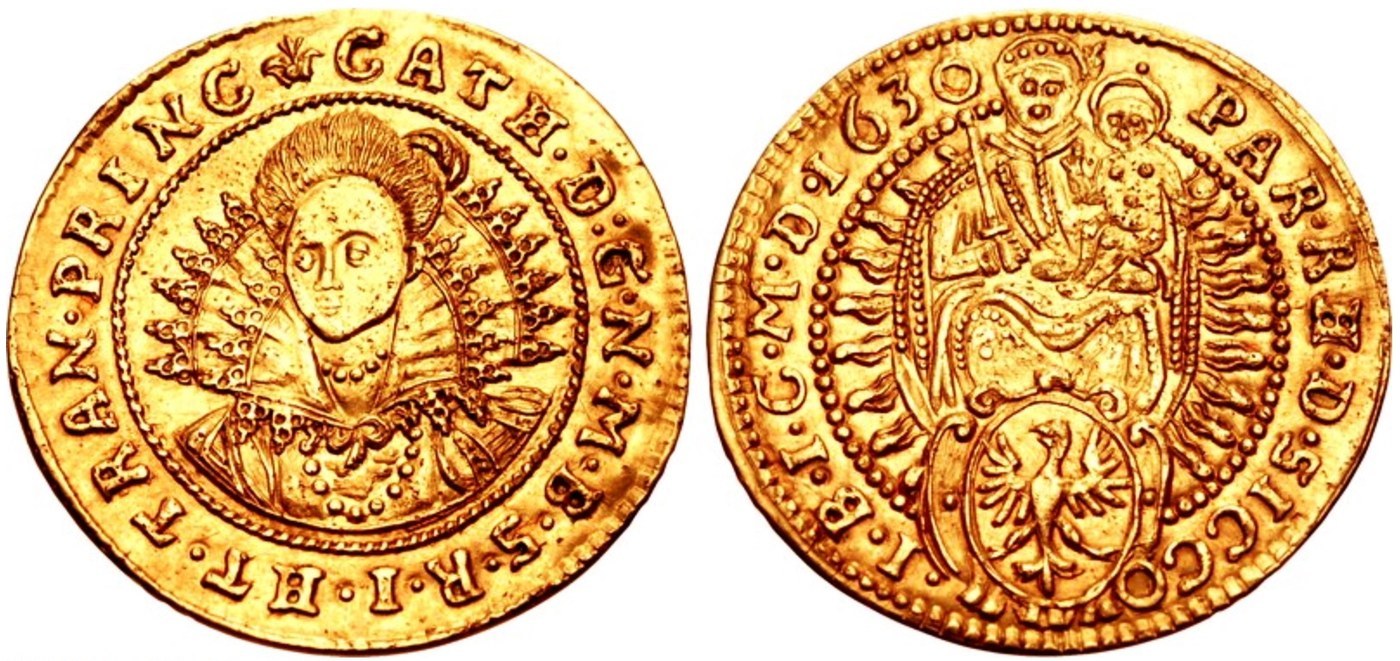
Begin with the obverse legend and portrait. A genuine ducat in Catherine of Brandenburg's name shows her portrait ringed by a Latin inscription that gives her name and her title as Princess of Transylvania. Because the coin is a small gold flan, the legend is tightly packed and may run into the rim, so read it letter by letter and confirm that the ruler named is Catherine — not Gábor Bethlen or a later prince whose coins share the same series and heraldry.
Check the reverse for the arms. Look for a coat of arms built around a double-headed eagle with a shield, and locate the date 1630 in the legend or fields. The double-headed eagle-and-shield motif is the anchor of the reverse; note any small privy marks, letters or rosettes beside the arms, as these mint or die-control marks help attribute the piece and separate original strikings from restrikes.
Measure and weigh the coin against the ducat standard. It should be near-pure gold at roughly 3.4–3.5 g and about 20–22 mm in diameter, thin and slightly flexible in feel. High-fineness gold is soft, non-magnetic and warm yellow; a reddish or pale tone, an off weight, or a diameter well outside this range points to a lower-karat alloy, a fantasy piece, or a plated forgery.
Judge the fabric as hand-struck gold. Expect a bright but not mirror-perfect surface, slightly irregular edges, and some unevenness in the strike. Warning signs include a casting seam on the edge, sandy or porous surfaces, file marks, solder traces or a smoothed area where a mount was removed (ex-jewelry), and legends that look too crisp and mechanical for a 1630 princely striking.
Be cautious with look-alikes and reproductions. Other Transylvanian ducats and Hungarian gold of the period share the same standard and similar heraldry, and gold ducats have long been copied and restruck. Base your attribution on the ruler's name in the obverse legend and the 1630 date, corroborate against published references for Transylvanian coinage, and obtain third-party authentication and provenance before treating any example as genuine.
Frequently asked questions
How do I confirm the coin names Catherine and not Bethlen?
Read the obverse legend for the ruler's name and title rather than relying on the reverse arms, which are shared across the Transylvanian series. Coins of Gábor Bethlen and later princes use similar heraldry, so the personal name in the legend is the deciding evidence.
What measurements should I record?
Record the weight in grams and the diameter in millimeters and confirm the metal. A genuine ducat is near-pure gold at about 3.4–3.5 g and roughly 20–22 mm; readings well outside these figures are a red flag for a copy or a non-ducat piece.
How can I spot a forgery or restrike?
Watch for casting seams, porous or sandy surfaces, solder or mount-removal marks, an incorrect weight or diameter, and legends that are unnaturally sharp. Given the rarity, seek professional authentication and a documented provenance for any example.
Do I need an expert to attribute it?
For a coin this rare and valuable, yes. Even a careful reading of the legend and measurements should be backed by published Transylvanian coin references and a reputable grading or authentication service before you buy or sell.