How to Identify the Trajan Denarius
A practical guide to Trajan's silver denarius, covering his distinctive portrait, the many personifications used on the reverse, and the titles that help pinpoint when a given coin was struck.
Read the full Trajan Denarius encyclopedia entry →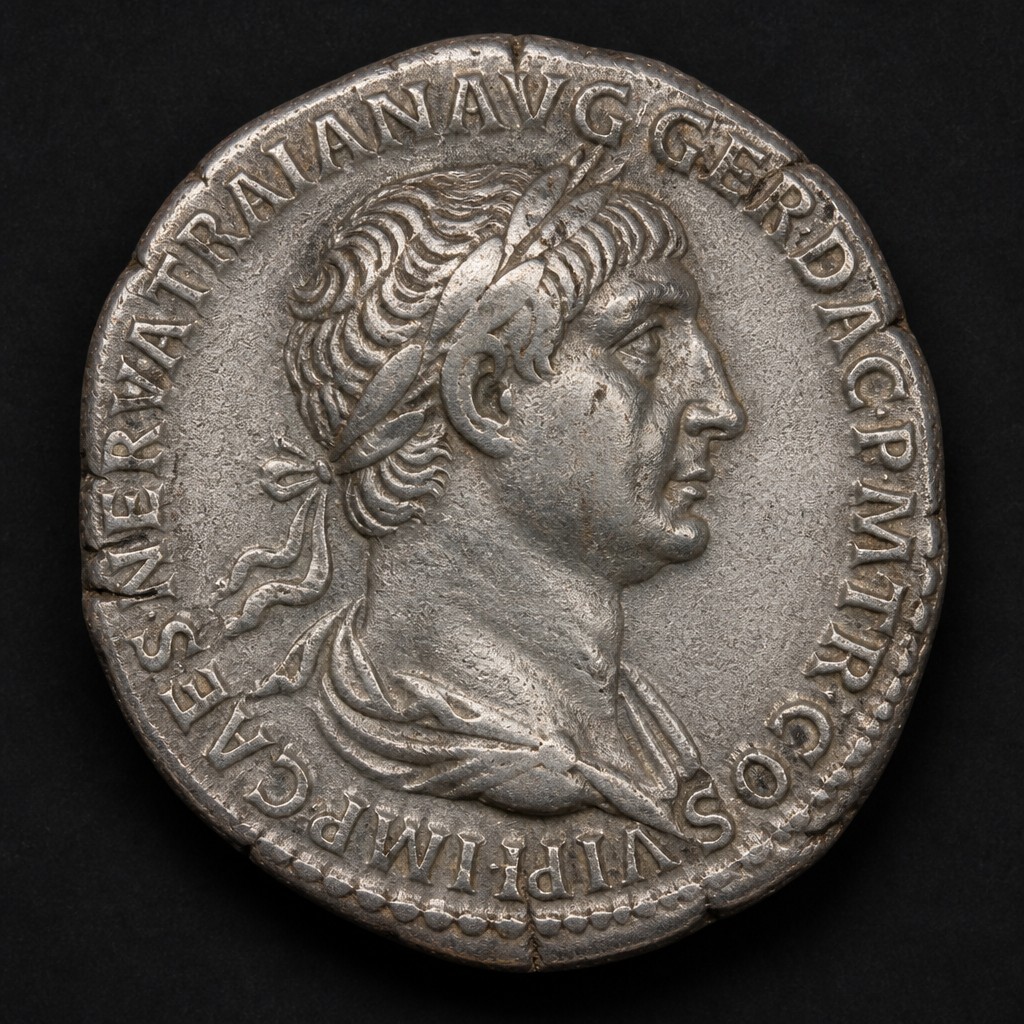
What This Coin Is
This silver denarius was struck under Emperor Trajan, who reigned from AD 98 to 117, during a period of significant military expansion including the Dacian Wars. It is considered among the better-struck, higher-quality denarii of the so-called "good emperors" era.
Obverse Design
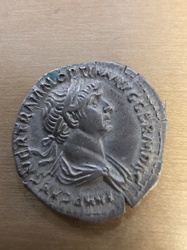
The obverse shows a laureate head of Trajan facing right, typically with a strong, square-jawed, realistic portrait style. The legend commonly reads something close to IMP TRAIANO AVG GER DAC P M TR P, with abbreviations reflecting his German and Dacian victory titles.
Reverse Design
Reverse types are wide-ranging, including personifications of conquered or associated regions such as Dacia seated in a posture of mourning, Arabia standing with a camel, and Genius standing with a patera and cornucopia. The legend SPQR OPTIMO PRINCIPI, meaning "to the best of leaders," frames a standing figure on several issues, referencing a title the Senate specifically granted Trajan.
Size, Weight, and Metal
These denarii measure roughly 18-19mm across and weigh around 3.3-3.4 grams, reflecting the gradually declining fineness standard inherited from earlier reforms.
Mint Marks and Dating
Struck primarily at Rome, these coins typically carry no separate mint mark. The specific combination of tribunician power (TR P) and consulship (COS) numbers in the legend lets specialists narrow the exact year of issue.
Telling It Apart From Similar Coins
Trajan's blunt, realistic portrait style is distinct from the softer Flavian portraits of Vespasian, Titus, and Domitian that preceded him, and from Hadrian's more idealized, bearded successor portraits. The Dacia and Arabia reverse types are specific enough to tie a coin directly to Trajan's documented conquests.
Grading at a Glance
Check sharpness on the portrait's hair and facial features, as well as the reverse figure's drapery and accompanying attributes such as a spear, patera, or animal. Trajanic denarii are often well struck compared to earlier issues, so notable weakness may reflect a worn die late in a large issue rather than genuine damage.
Authenticity Red Flags
Compare the portrait's proportions and hair treatment carefully, since forgers sometimes soften Trajan's distinctively blunt features. Verify weight against the roughly 3.3 gram standard, and inspect the edges for plating seams that would indicate a silver-washed base-metal fake.
Frequently asked questions
What does OPTIMO PRINCIPI mean?
It translates roughly to 'to the best of leaders,' a title the Roman Senate formally bestowed on Trajan that appears prominently on many of his coin legends.
Why does the reverse sometimes show a mourning female figure?
This is typically a personification of Dacia, the region Trajan conquered in his Dacian Wars, shown seated in a posture of submission or mourning to commemorate the conquest.
How can I date my Trajan denarius more precisely?
Look at the tribunician power number and consulship number in the legend; because these increased over time, they let specialists match the coin to a fairly narrow date range.
How does Trajan's portrait differ from Hadrian's?
Trajan is shown clean-shaven with a blunt, square-jawed realism, while Hadrian introduced a bearded portrait style that became standard for most subsequent emperors.
Trajan Denarius identified by the community
Recent Trajan Denarius coins identified with Coin Identifier.