
How to Identify the Touchstone Sovereign (Fine Sovereign)
The Fine Sovereign was an Elizabethan gold coin struck from higher-purity gold than the standard sovereign, valued at thirty shillings and identified by its enthroned royal portrait.
Read the full Touchstone Sovereign (Fine Sovereign) encyclopedia entry →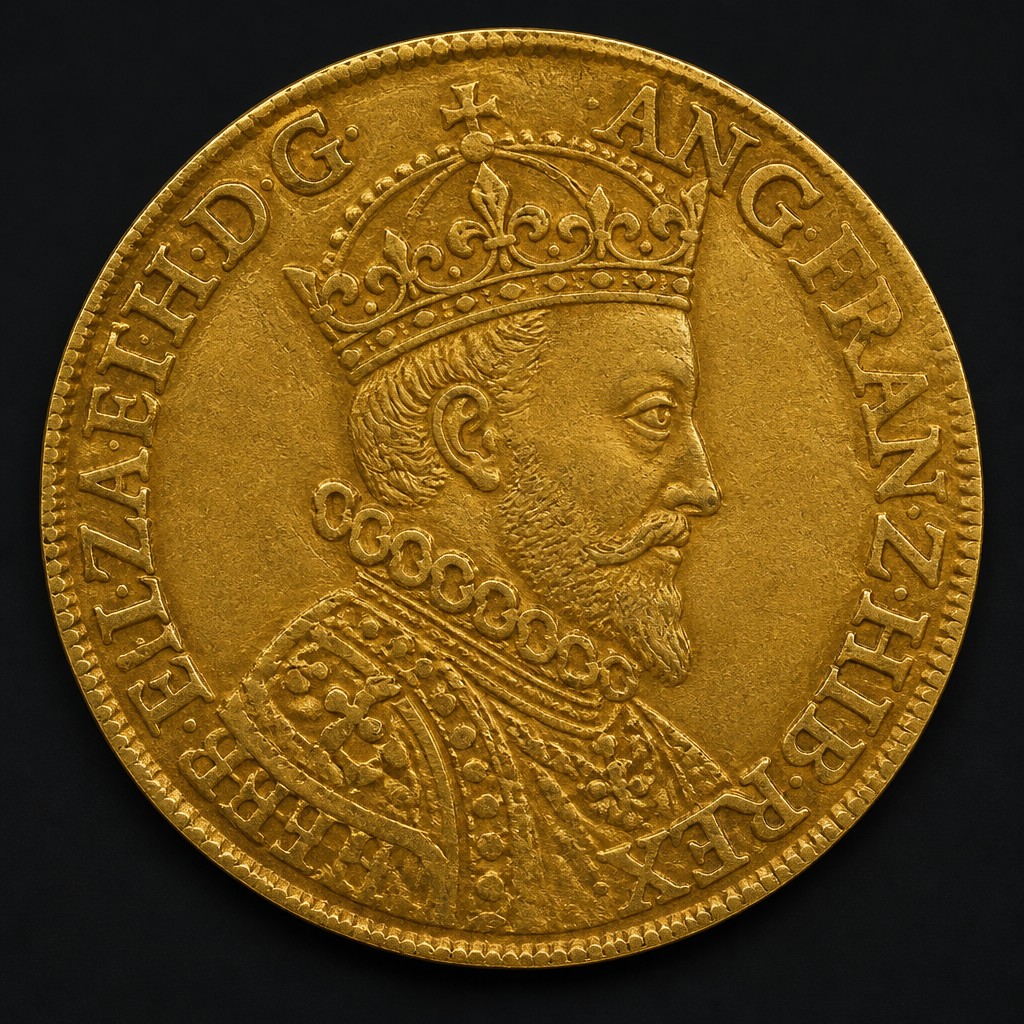
What It Is
The Fine Sovereign, sometimes referred to informally in relation to its gold purity as a touchstone-tested issue, was a high-value English gold coin struck under Elizabeth I. It was made from finer gold than the standard sovereign of the period and carried a face value of thirty shillings, making it one of the highest-denomination coins of the reign.
Obverse Design
The obverse shows the queen enthroned in a formal, majestic pose, holding an orb and sceptre - a design lineage tracing back to the original sovereign introduced under Henry VII, intended to project royal authority through a full seated portrait rather than a simple bust or profile.
Reverse Design
The reverse displays the royal arms on a shield, typically set within or alongside a Tudor rose, reinforcing the coin's high status through elaborate heraldic decoration rather than a plain design, a treatment reserved for the era's most valuable gold pieces.
Size, Weight, Metal & Edge
The Fine Sovereign was struck from gold of notably higher fineness than the standard 22-carat "crown gold" used for regular sovereigns of the time, which is the likely source of its "fine" designation - goldsmiths of the era commonly used a touchstone to verify such gold purity by comparing streak marks against known standards. As a hand-hammered coin, it has an irregular, non-milled edge and a flan that can vary slightly in thickness.
Mint Marks & Dating
Like other hammered coins of the period, dating relies on a small mintmark near the top of the obverse legend rather than a full numeral year, helping specialists narrow the coin to a specific period within Elizabeth I's long and eventful reign.
Telling It Apart From Similar Coins
The Fine Sovereign is easily confused with the standard sovereign of the same reign, which shares similar imagery but was struck from lower-fineness crown gold and carried a different face value. Comparing the stated value in period records and the coin's specific weight standard helps separate the two, since the visual designs alone can look deceptively similar.
Grading at a Glance
Look closely at the queen's enthroned figure and the throne's detail, along with the sharpness of the shield and rose on the reverse. A well-preserved example shows crisp definition in these high-relief areas; wear tends to flatten the queen's facial features and blur the throne's fine lines first, followed by softening of the shield's edges.
Authenticity Red Flags
Be cautious of coins presented as Fine Sovereigns that show inconsistent gold color or purity for the period, an unnaturally round, machine-made shape inconsistent with hand-hammering, or a portrait and throne style that doesn't match known Elizabethan engraving conventions and reference examples. Given the coin's high face value, careful comparison against confirmed genuine pieces is especially worthwhile.
Frequently asked questions
What made the Fine Sovereign different from a regular sovereign?
It was struck from higher-purity gold than the standard 22-carat crown gold used for the regular sovereign, and had a higher face value.
What does 'touchstone' refer to in relation to this coin?
It refers to the traditional method goldsmiths used to test gold purity by comparing streak marks on a touchstone, relevant to verifying the coin's finer gold content.
What is shown on the obverse?
Queen Elizabeth I shown enthroned, holding an orb and sceptre, in a formal seated portrait.
Does the Fine Sovereign carry a printed date?
No, as a hammered coin it relies on mintmarks rather than a numeral year for dating.